
We continue with our special Superman Month coverage during the month of June here on Tales from My Spinner Rack! 85 years ago, the dream of two Cleveland teenagers hit the newsstands for the very first time, kickstarting the entire comic book industry. Jerry Siegel and Joe Shuster’s Superman first appeared in Action Comics #1, cover-dated June 1938. Over the next few weeks, we’ll examine some of my favorite 1960s Super-stories. This is Part 2 of our Super-Month posts!
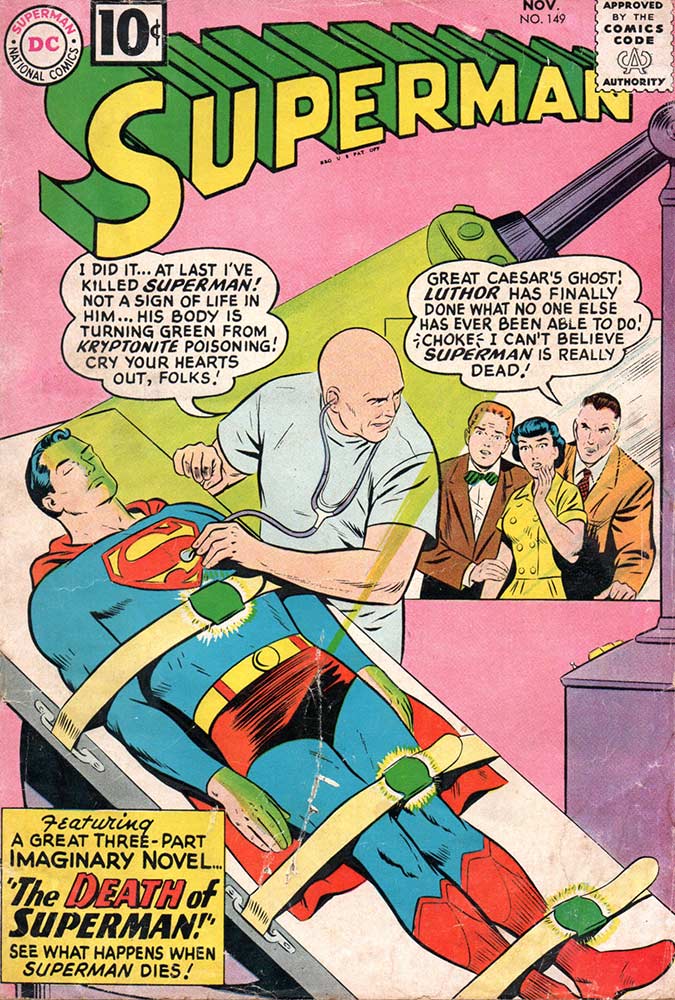
Superman #149, November 1961. Cover by Curt Swan and George Klein. Art in this post TM and © DC.
Click on the images below to see them larger on your screen!
When you’re six years old, you don’t really understand the meaning of the phrase “A Great Three-Part Imaginary Novel,” as stated on the cover of Superman #149. It was the introductory line for a story called “The Death of Superman!” … “See What Happens When Superman Dies!” I mean, they’re all comic book stories, right? If Superman dies, who will be in issue #150?
At some point, I’m sure my older brother, Rick, must have explained to me that an “imaginary story” meant it didn’t really happen in the otherwise imaginary world of Superman comics. It was just a story that conjectured what it would be like if, say, the Man of Steel was finally killed by Lex Luthor. He’ll be back next issue, don’t worry.
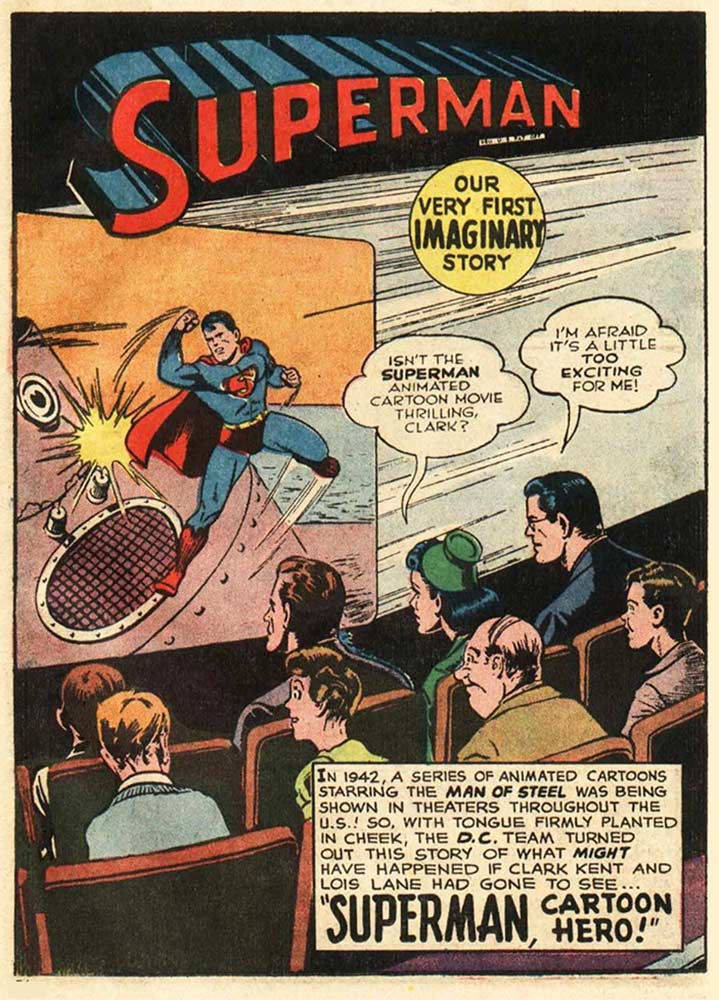
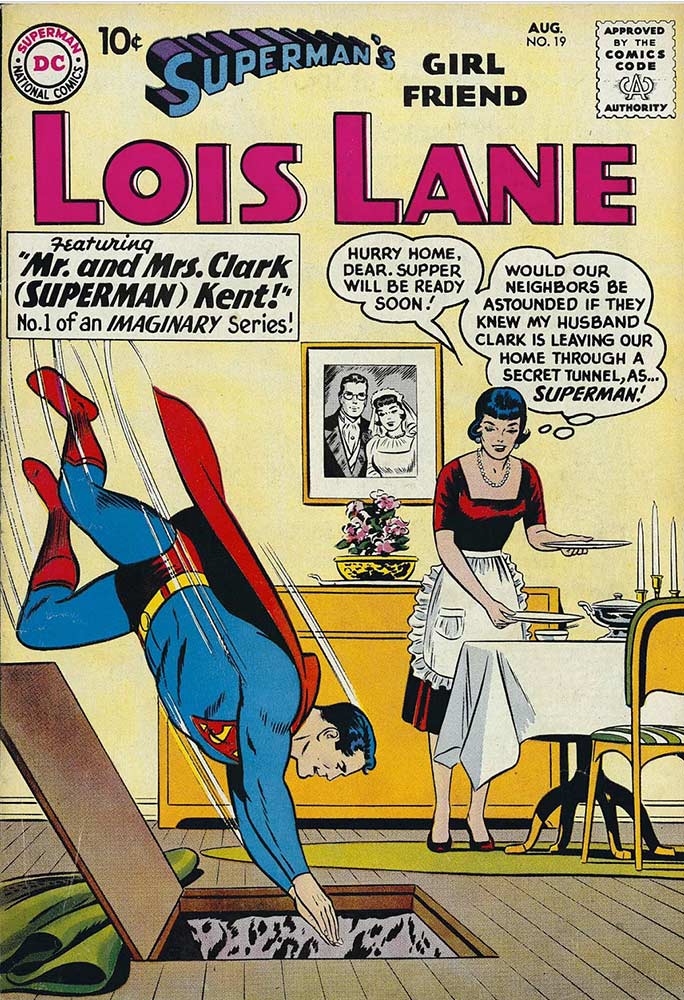
DC’s Superman and Batman titles were big on these so-called imaginary stories in the 1960s. Superman married Lois Lane in the very first story officially called “#1 of an Imaginary Series,” and billed inside as the “First of an Imaginary Series.” That story, “Mr. and Mrs. Clark (Superman) Kent!” appeared in Superman’s Girl Friend Lois Lane #19, cover-dated August 1960. It opened up the floodgates for a whole new realm of storytelling for editor Mort Weisinger and his super writers and artists. DC later retroactively decided that a story from Superman #19 (cover-dated January 1942), titled “Superman: Matinee Idol,” was “Our Very First Imaginary Story,” declaring it so when it was reprinted in the 80-Page Giant issue of Superman #183 (January 1966) and re-titling it “Superman: Cartoon Hero.” Clark Kent and Lois Lane go to the movies and Clark has to divert Lois’s attention while the Max Fleischer Superman cartoon plays on the big screen, so she doesn’t see the parts where he turns into Superman!
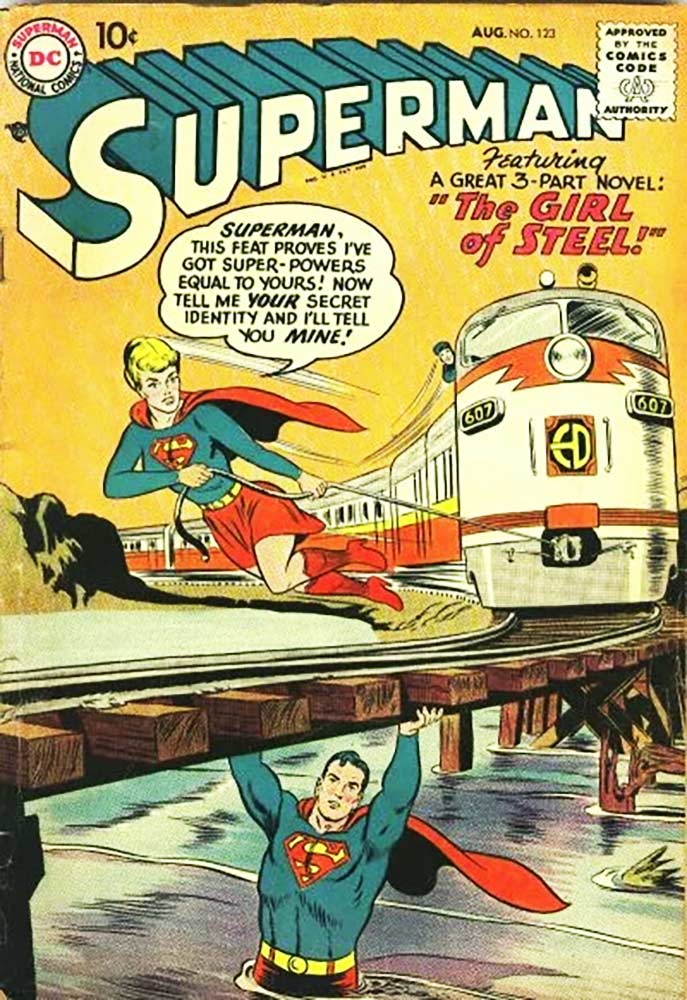
Later on, Superman featured a few stories that had magic or dreams involved. The first appearance of Super-Girl (not the Kara Zor-El Supergirl—no hyphen—we know and love) in Superman #123 had a magical angle to it. When Jimmy Olsen gets his mitts on a magical totem, he’s granted three wishes, and his first is for a “Super-Girl” companion for Superman. She eventually saves Superman from a lethal dose of Kryptonite, before Jimmy Olsen wishes her out of existence, which saves her from dying. I guess non-existence is better than death. Nice job, Jimmy.
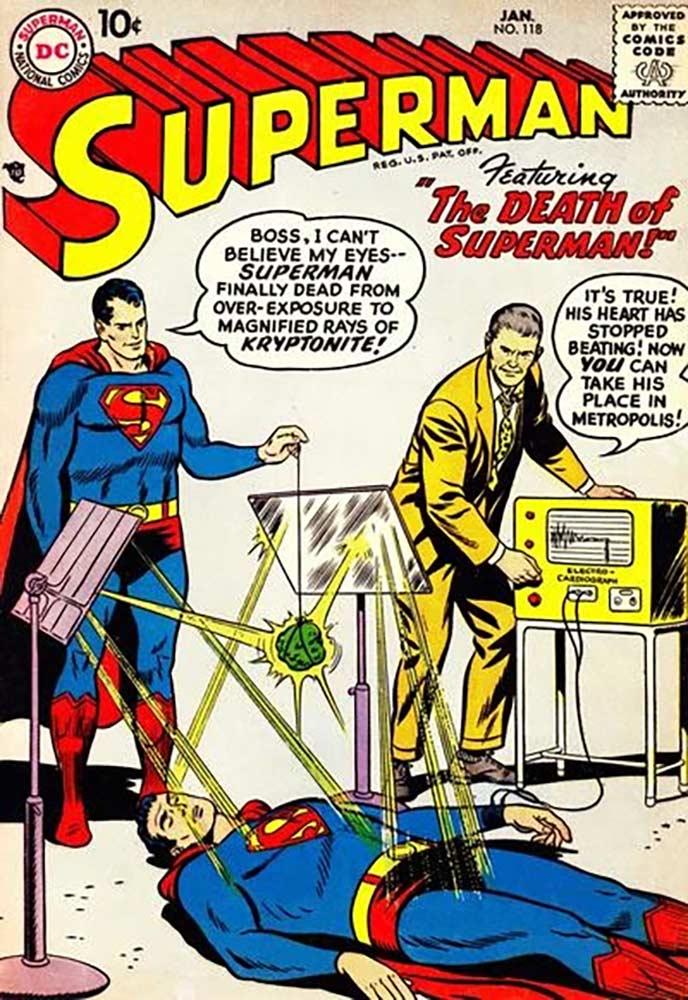
Yep. Superman “died” a lot … real and imaginary.
Meanwhile, in the “real” comic book world of Superman, a story titled “The Death of Superman” had first appeared in issue #118, drawn by Al Plastino. In that story, Superman is lured into a Kryptonite deathtrap by a gangster named Blacky Barton, who impersonates the Man of Steel when he “dies.” Turns out ol’ Supes is faking it—it’s bogus Kryptonite, after all—and comes back in time for Superman #119. But “The Death of Superman” story that appears in Superman #149 is totally different. In this one, Superman “actually” dies, killed by Lex Luthor, who for once in the 1960s seems like a real villain, not an overly-ambitious failure of a mad scientist whose favorite color is prison-gray.
Superman #149 was drawn by Curt Swan and inked by George Klein, who were quickly becoming Weisinger’s Super-Team Supreme in the comic books. Swan would become THE Superman artist for the next quarter century, until he retired in 1986 to make way for the reboot by writer/artist John Byrne (click here for more on that in our Superman Month intro a couple of weeks back). But like last week’s Superman Month featured issue, Superman #137, this issue was once again written by the Man of Steel’s co-creator Jerry Siegel. Siegel had an on-again, off-again relationship with the publisher to whom he reluctantly sold one of the top five fictional characters in the world. At this point in time, he was back at DC once again (after suing them in the mid 1940s for control of the character), toiling away writing stories for Mort Weisinger. His personal feelings apparently didn’t stop him from writing some great stories: This issue and last week’s Superman #137—click here to read that one—are two of my all-time favorite Super-stories.
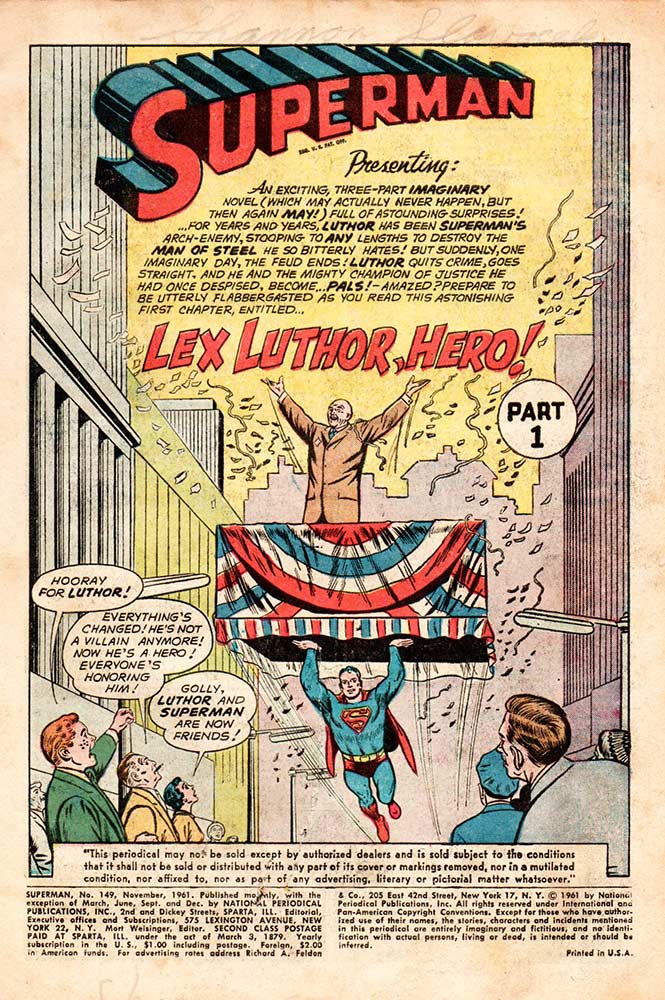
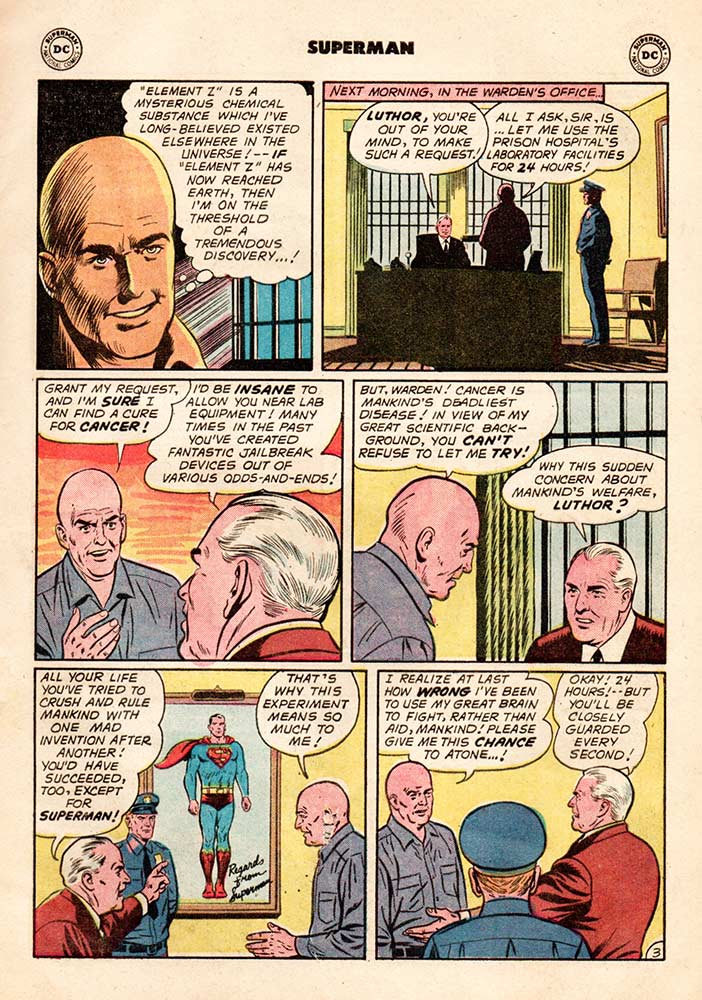
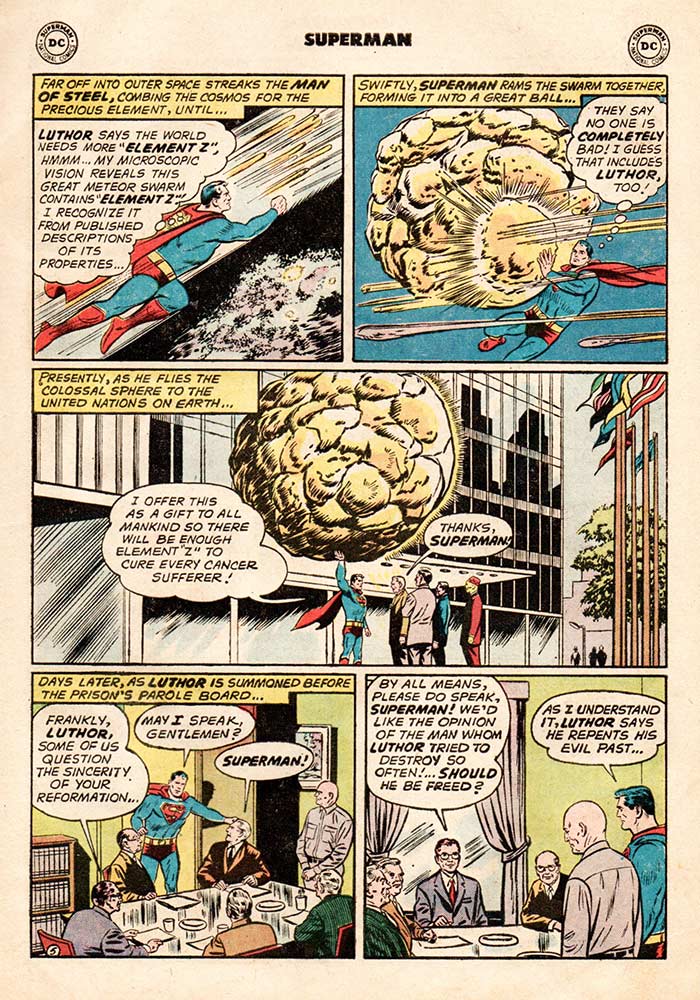
Lex Luthor is doing time in prison when he comes across a rare mineral, Element Z, which just happens to pop up in the exercise yard, in the first chapter of this epic issue, titled “Lex Luthor, Hero!” He persuades the warden to let him have access to a laboratory (“I’d be insane to let you near lab equipment,” quips the warden), so he can use his Element Z to cure cancer. Luthor assures the warden that he’s turning over a new leaf, that he wants to use his “great mind” to aid mankind, not fight it. The warden grants his request and lo and behold, as Jimmy Olsen puts it, “From heel to hero overnight,” when Luthor does, in fact, cure cancer. Superman gathers a whole big pile of Element Z from around the universe and speaks on Luthor’s behalf at a parole hearing. And—believe it or not—the mortal enemies become BFFs.
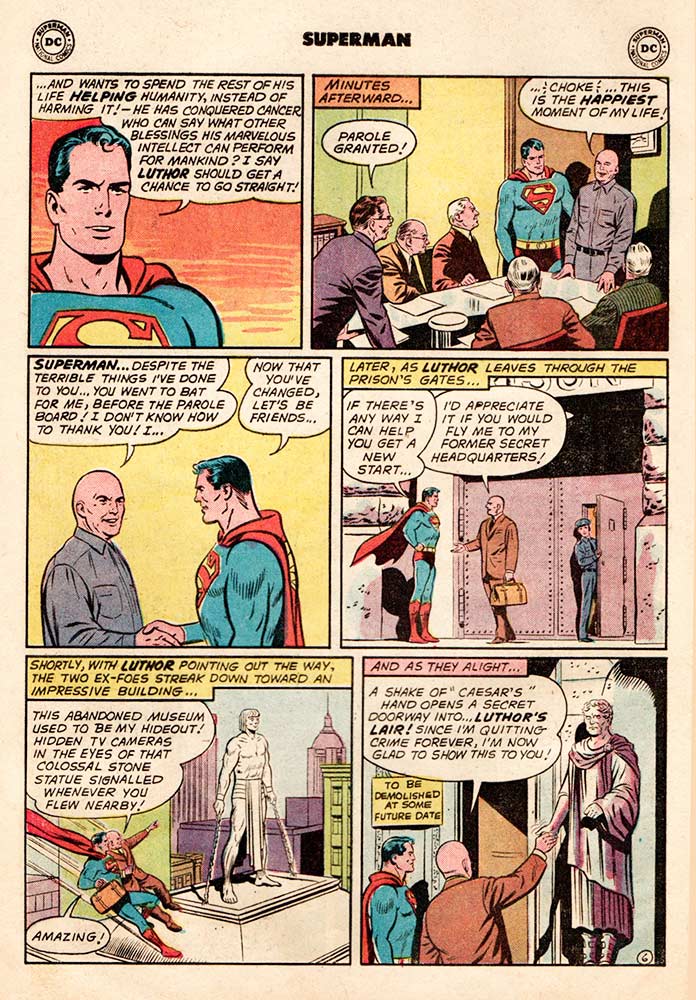
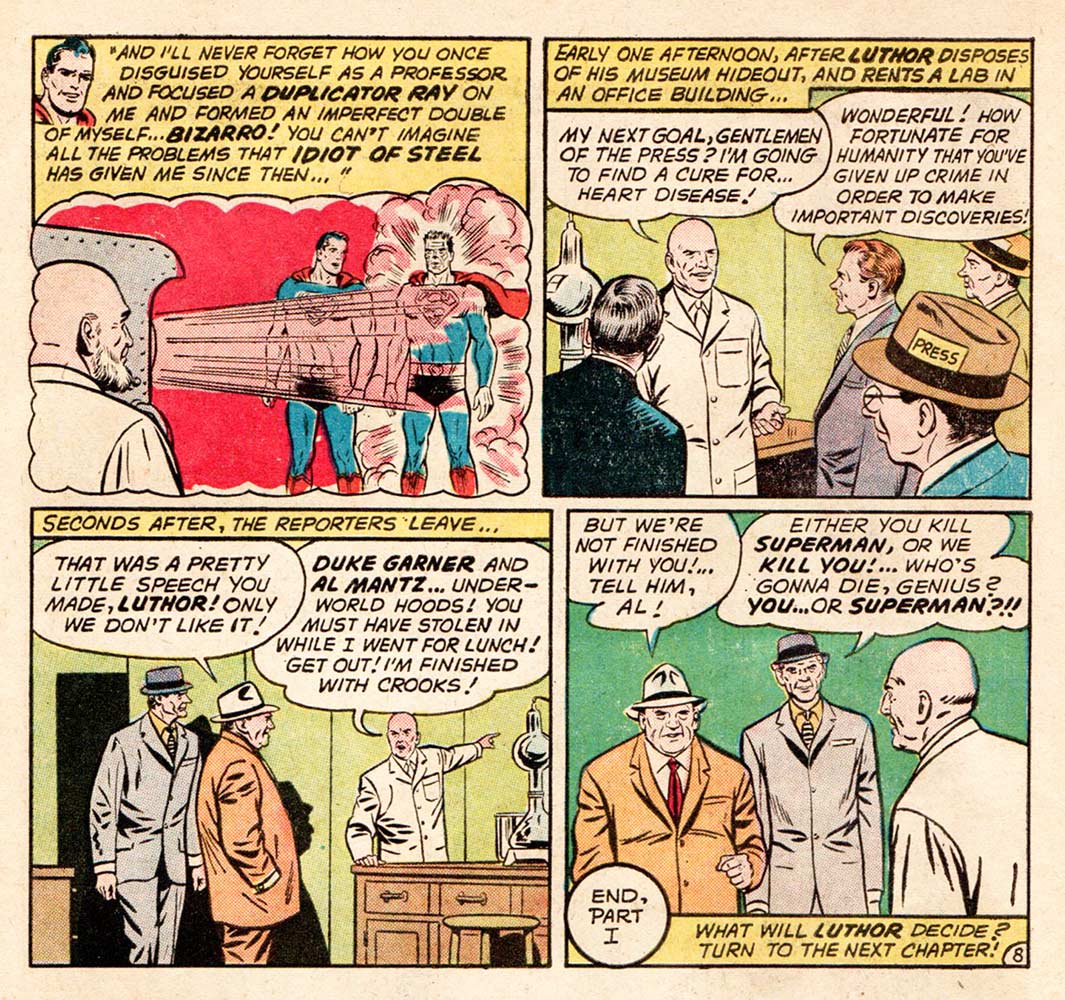

Gangsters try to get Luthor to kill Superman, but the reformed villain turns them in. In the second chapter, titled “Luthor’s Super Bodyguard,” Superman gifts Luthor with a signal watch, just like the one he gave to Jimmy Olsen (poor Jimmy … at least he got to keep his own comic book series). But protecting Luthor quickly becomes a full-time job, so Superman builds him a space station that keeps him safe and sound in outer space … until the day when Luthor uses the emergency signal rocket (which just happens to look like Luthor … talk about branding) to get Superman to come save him.
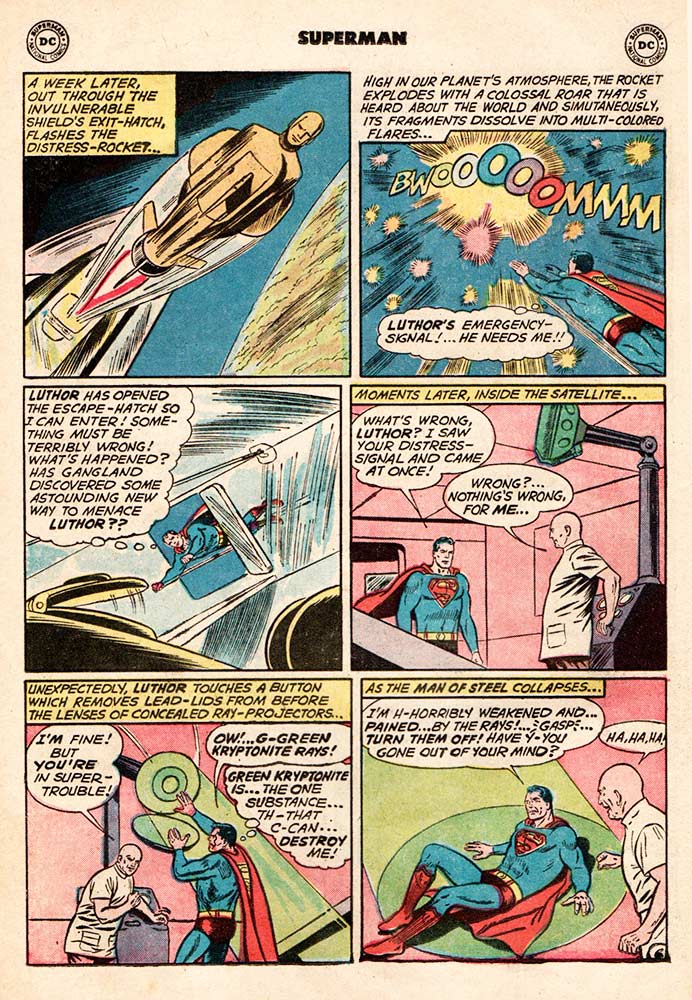
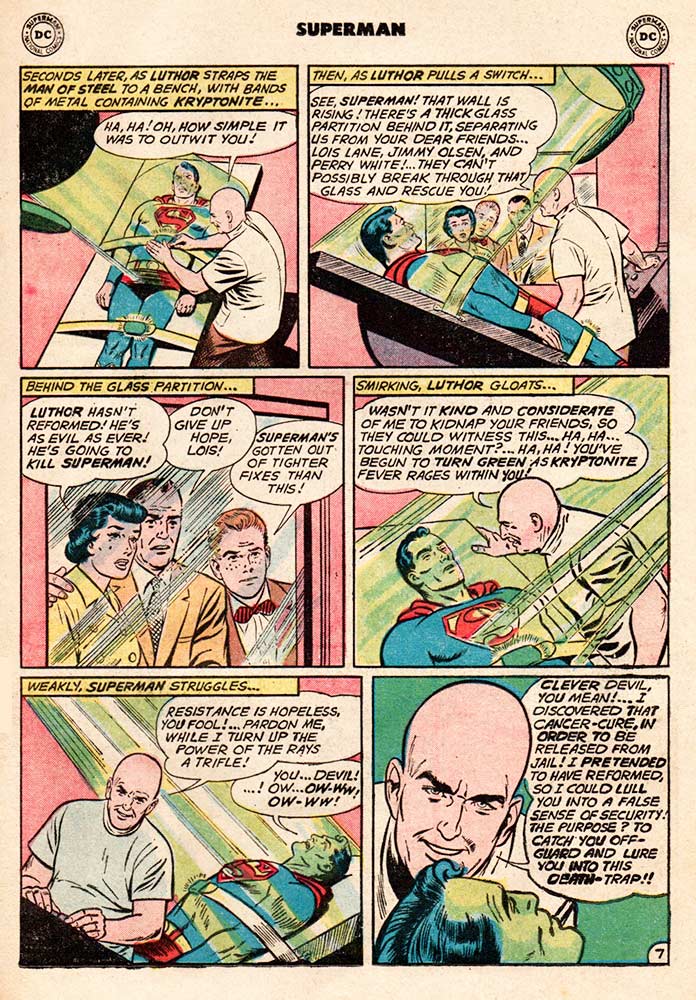
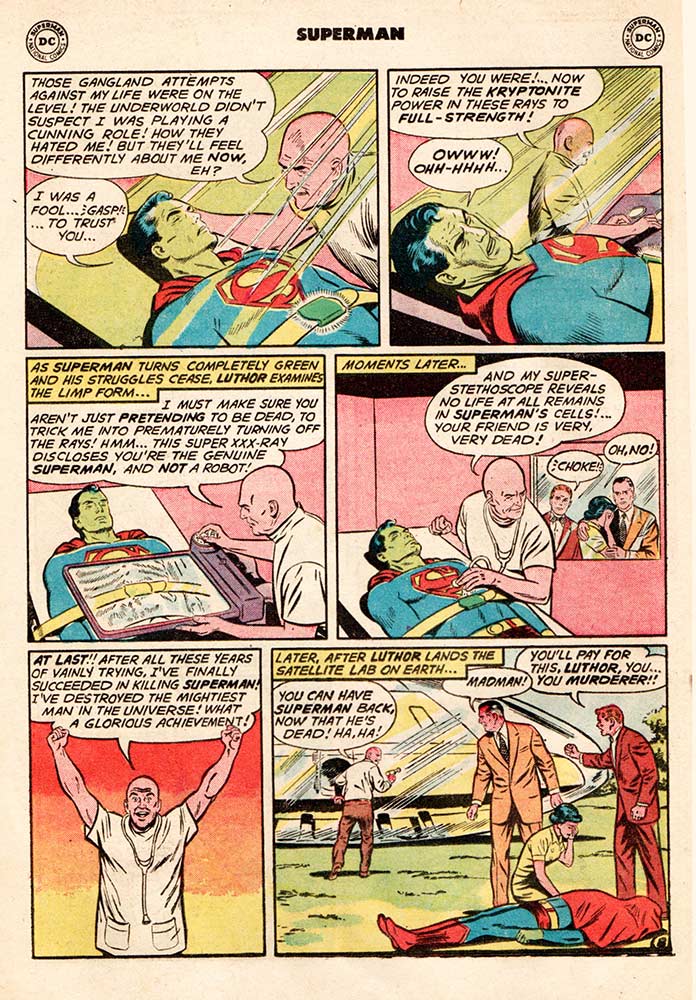
But it’s all been a ruse. Luthor hasn’t changed. He’s been playing the long game and when Superman arrives to see what’s wrong, Luthor traps him with a projector that zaps him with Kryptonite rays. He straps him to a table and makes Superman’s kidnapped friends—Lois Lane, Jimmy Olsen, and Perry White (hmmm … wonder where Clark Kent is during all this)—watch as Luthor slowly kills the Man of Steel, pumping so much Kryptonite into him that the poor (dead) guy turns green … and not in envy.

Okay, Luthor … you don’t have to be such a dick about it. “HA, HA, HA, HA!”
There’s a funeral for Superman in the third chapter of this book-length story, finally titled “The Death of Superman,” where his friends all walk past his green-faced and glass-enclosed body to pay their respects. Even Krypto, the Super-Dog stops by and thinks, “I will never know another master like you! CHOKE—Goodbye.” (“Choke” was DC code for an extreme emotional moment. “SOB” meant crying was involved.) Luthor gathers all his criminal friends together to celebrate (he even dons a spiffy brown suit!), when suddenly Superman bursts through the wall, much to Luthor’s murderous chagrin. Quickly, a costume is ripped off to reveal Kara Zor-El, Supergirl, Superman’s “secret emergency weapon,” who whisks Luthor off to the hoosegow. Luthor is tried in the bottle city of Kandor, the last remaining city of Krypton, where he tries to bargain with the judge and jury, but is ultimately sentenced to the Phantom Zone, a kind of living death (now there’s an oxymoron for you right there), in another dimension. Supergirl and Krypto end the story flying over a giant statue of Superman and having one of those DC extreme emotional moments, we know because she both CHOKEs and SOBs as she says: “CHOKE …All I feel is a great sorrow at the passing of the strongest, kindest, m-most powerful human being I’ve ever known—SOB—my cousin, Superman!” The End, but not before the editor reminds us: “Well, let’s not feel too bad! After all, this was only an imaginary story … and the chances are a million to one it will never happen! See the next issue for new, great stories of the mighty Superman you know!”
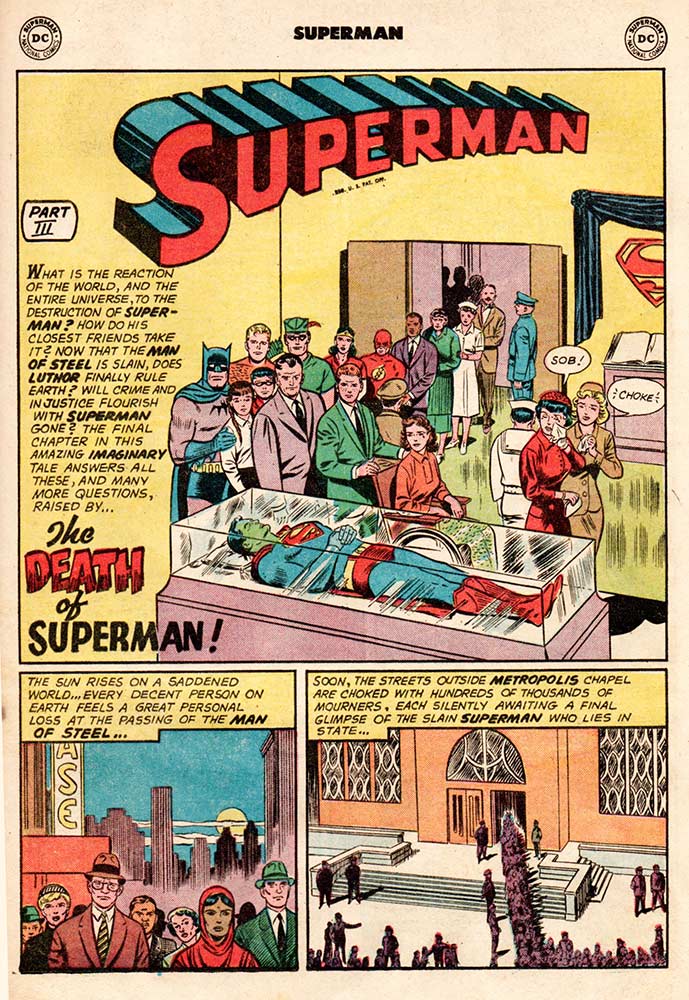
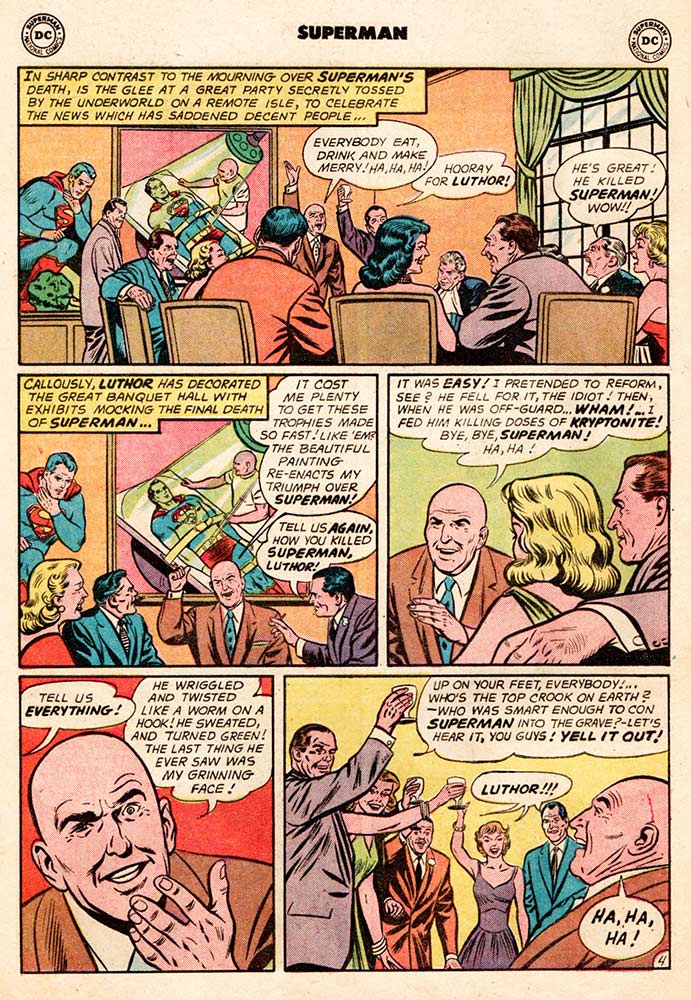
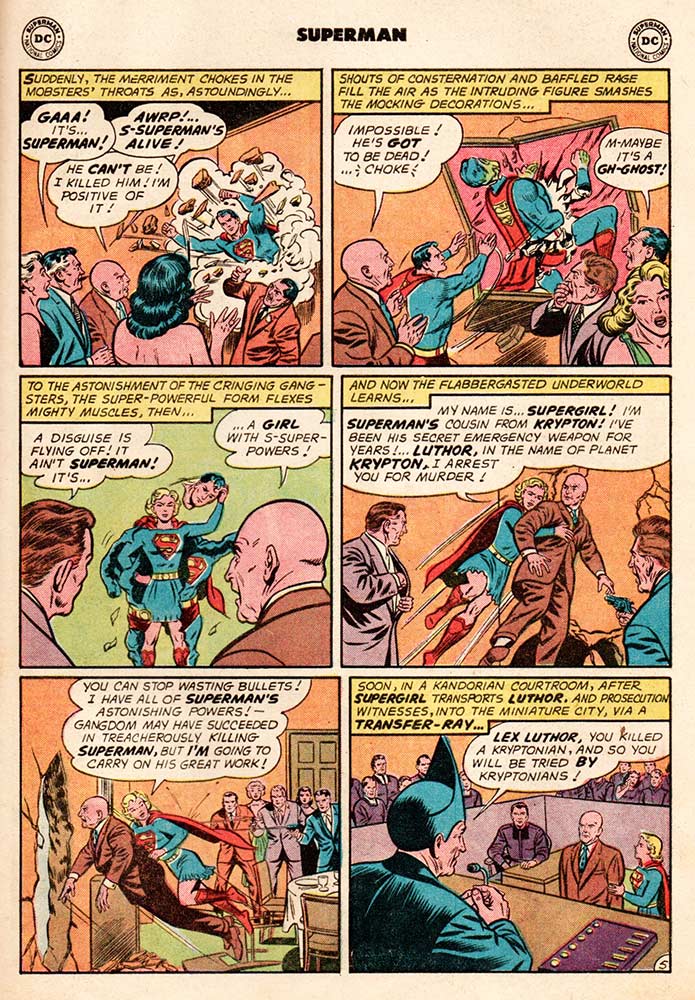
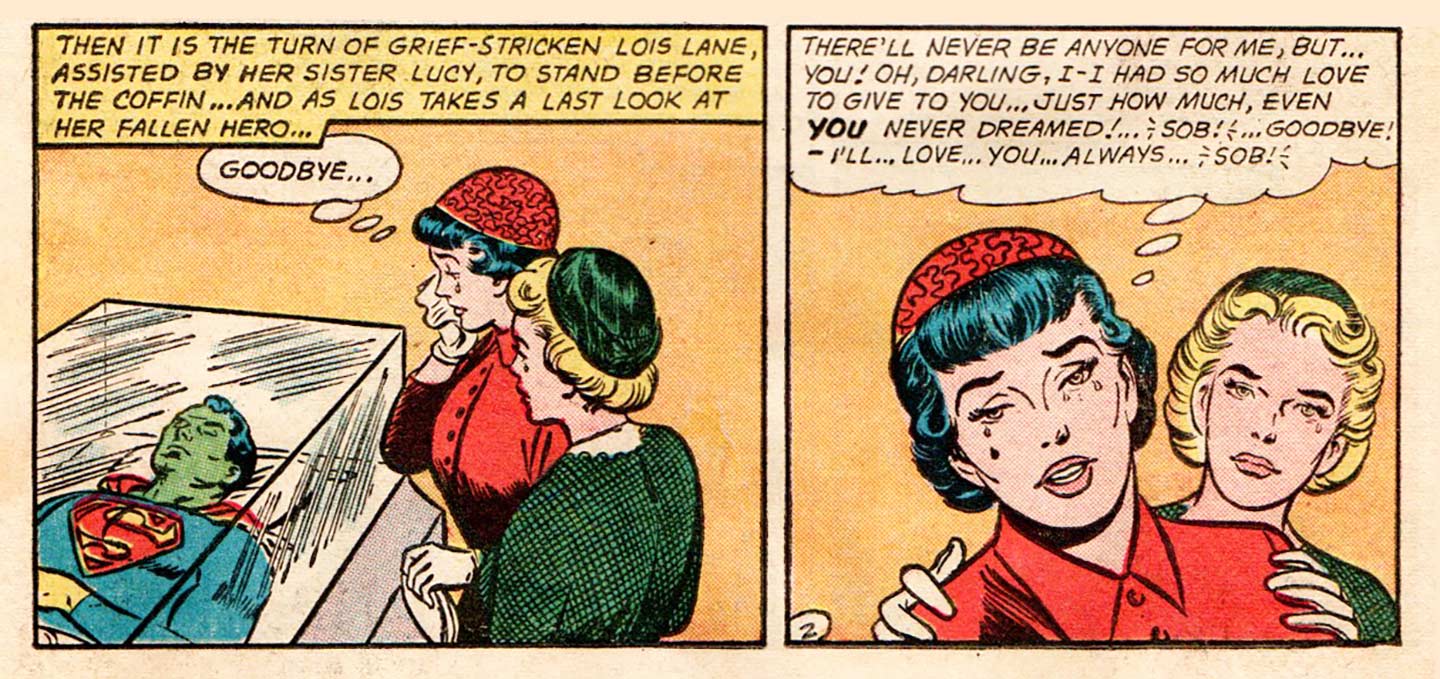
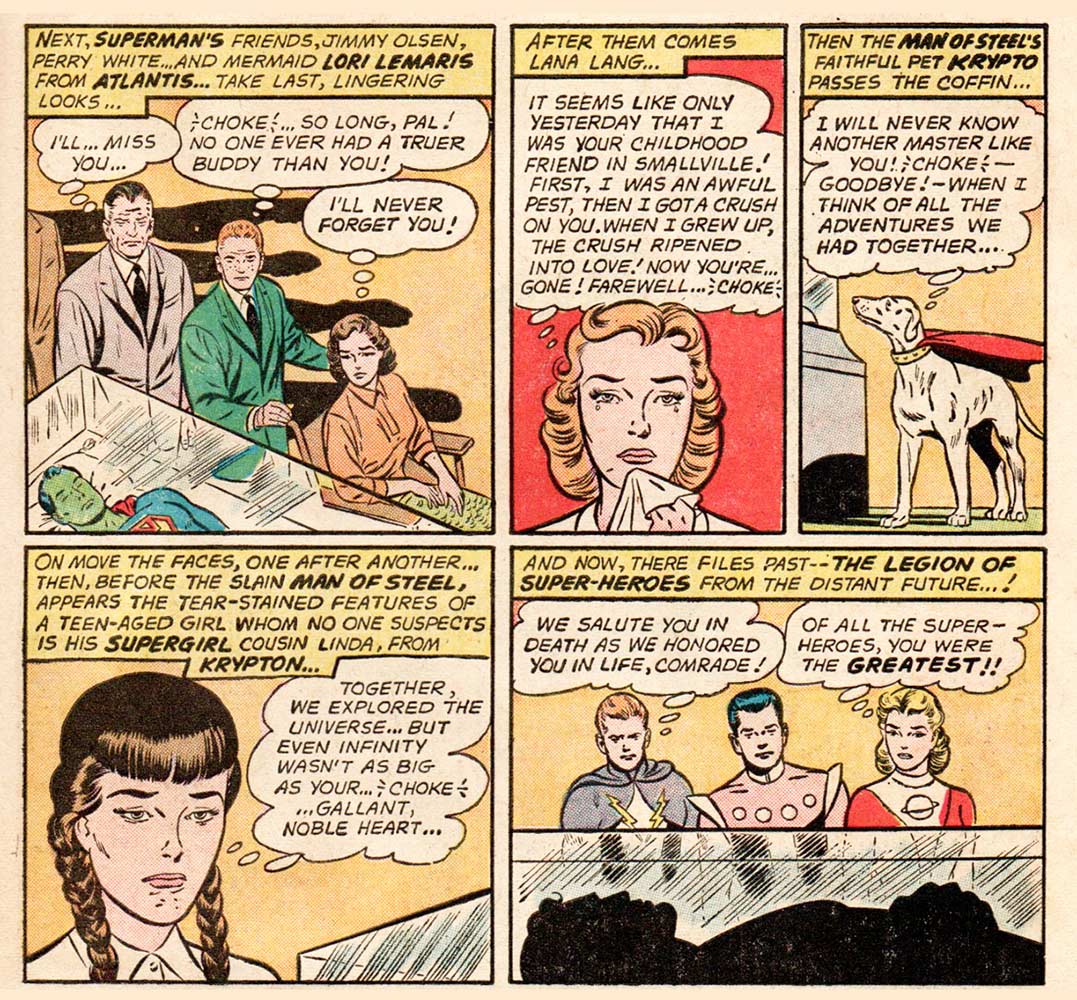
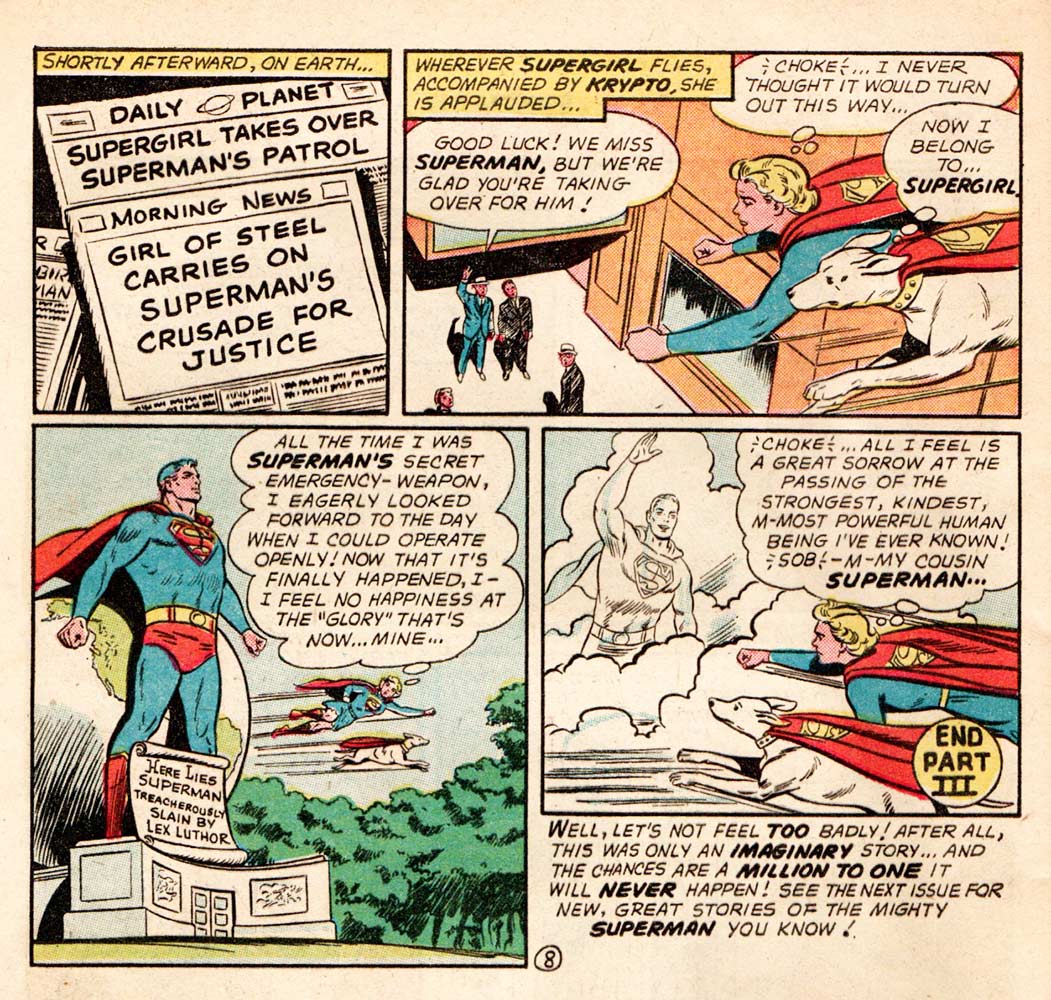
This is the first of two great Superman imaginary stories we’re going to cover during Superman Month. You might be able to guess what the other one is (hint: we’re going in numerical order, so it’s about a dozen issues away). Both of these stories were reprinted in a great DC trade paperback collection in 2005, titled DC’s Greatest Imaginary Stories: 11 Tales You Never Expected to See!, which features a wonderful Brian Bolland cover that includes a lot of the somewhat wacky details from the stories within. (There was also a second volume that featured Batman imaginary stories, which, while still just as imaginary, weren’t quite as imaginative as the Superman ones).
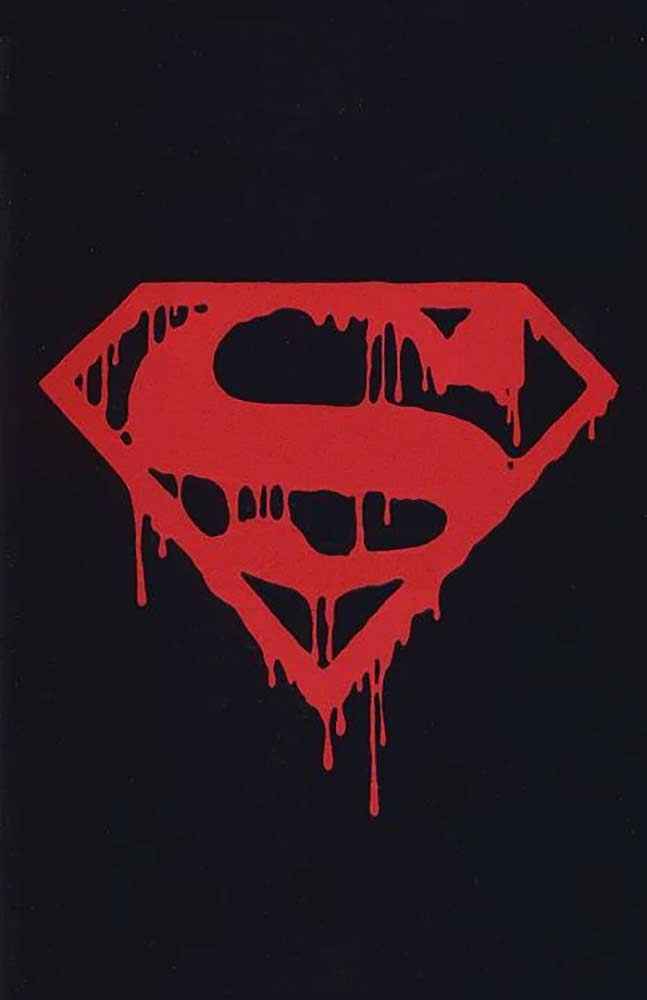
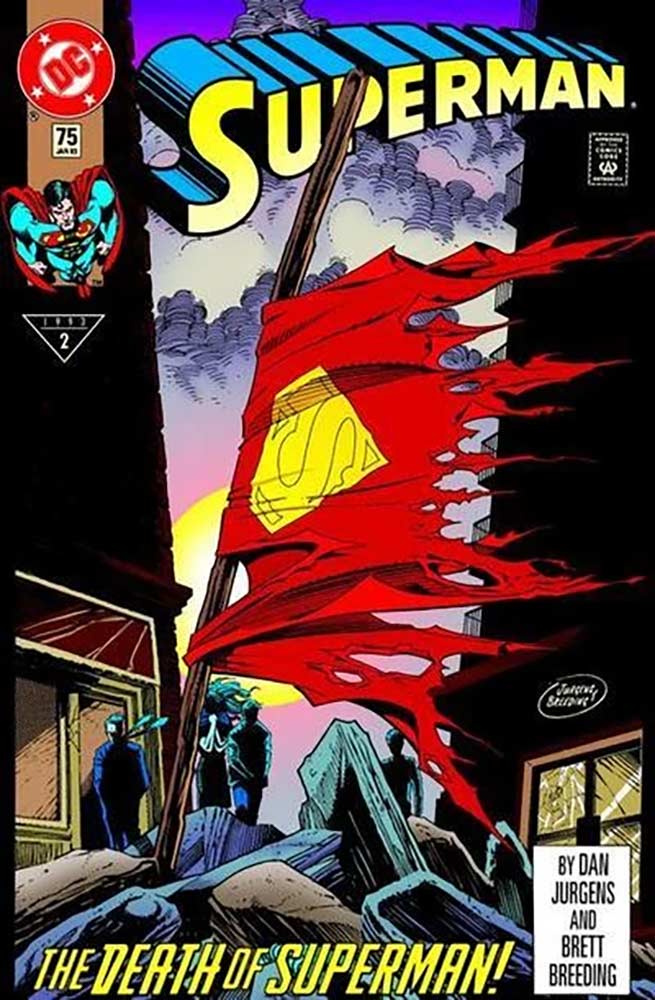

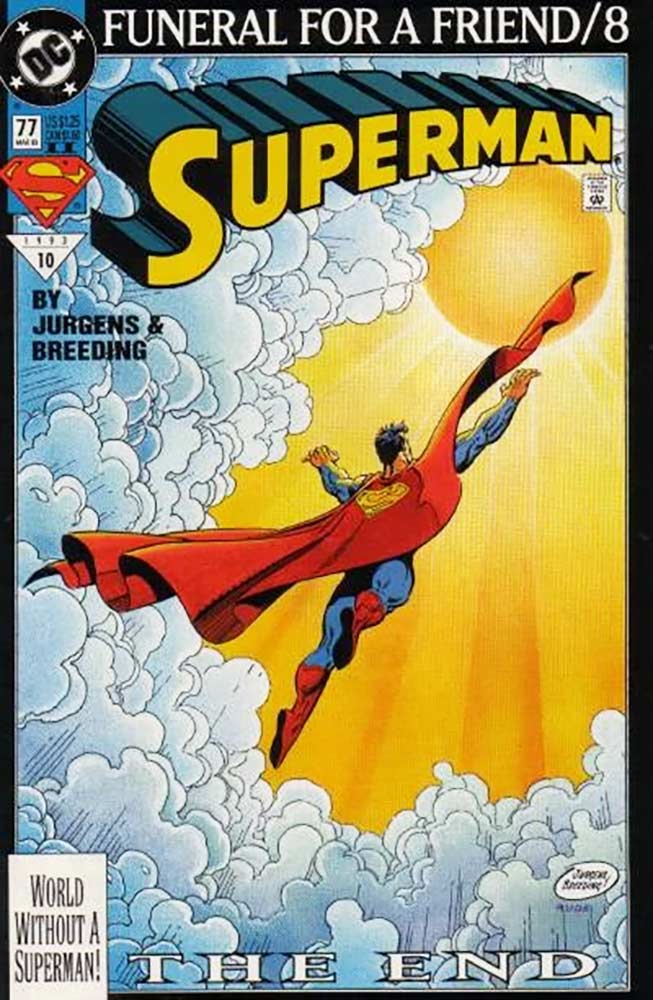
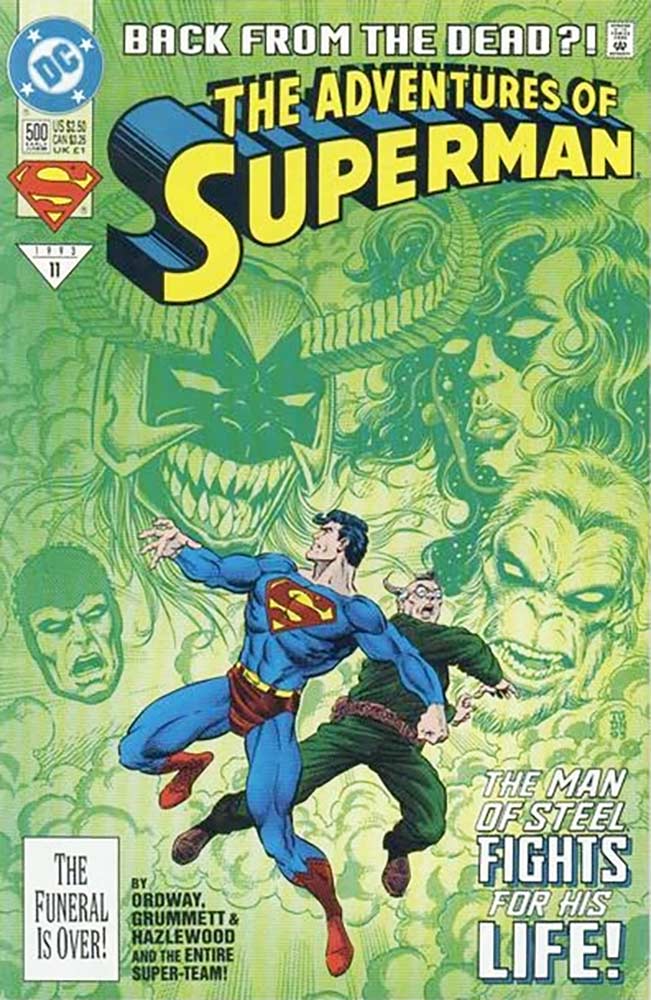
I don’t know how much Superman #149 inspired the famous “Death of Superman” story arc thirty years later, in 1992-93, which ran throughout the then “triangle-numbered” Superman titles: Superman, Action Comics, Adventures of Superman, and Superman: Man of Steel, which basically told one continuous story through all four titles. That time, Superman “REALLY” died, beaten to death by the force of nature known as Doomsday, and DC very patiently let the story play out, keeping Superman dead and out of his comics for quite a few months. The first story arc, “Doomsday,” ends with Superman’s death. Two months after that, “Funeral for a Friend” begins and later ends with the spirit of Superman being rescued by Pa Kent. This is followed by “Reign of the Supermen,” which introduces the new Superboy, Cyborg Superman, the Eradicator, and Steel, all pretending to be the new Superman. The whole saga lasts for 38 issues (including one each of Justice League and Green Lantern), and was told weekly from December 1992 through October 1993. It was an epic story that showed the real ramifications of what would happen if there was a “World Without Superman.” Of course, Superman eventually returned (with a mullet, no less), something any long-time fan could figure out from the start. And every non-fan who went and stood in line to buy the issue where Superman was killed (Superman #75), thinking they could put their kids through college with how rare it would be twenty years down the road … well, you just had DC laughing all the way to the bank while they insisted “Yes, he’s really dead!” (to be fair, he was, for a while). And yes … we were laughing at you, too, because you don’t kill off a pop culture icon. The Death of Superman proved to be a good story idea three decades apart, even if the 1992-93 version milked it for all it was worth for as long as it could.

I’ll always remember the 1961 version more fondly, though, because to my six-year-old mind, that imaginary story was more real and visceral, even if it was totally forgotten a few weeks later when Superman #150 came out, and everything was back to normal in Metropolis. I have so much fondness for that pink (PINK! Who paints their space station laboratory PINK?!) cover, with a dead Superman strapped to that examination table, that it makes me go “CHOKE!” and even “SOB!” “Cry your hearts out, folks!” that dick Luthor says on the cover. And some of us did, I suppose. Some of us did.
Next time: Superman returns from the dead only to get sick again just a few short months later in Superman #156, when he comes down with a bad case of “Virus X.” The cover proclaims: “Not A Hoax! Not A Dream! But REAL!” “The Last Days of Superman!” Jeez, Mort, how many times can you kill the poor guy?

To read all the “Tales from My Spinner Rack” posts, click here!

instagram.com/talesfrommyspinnerrack/
 @innocent-bystander.com