
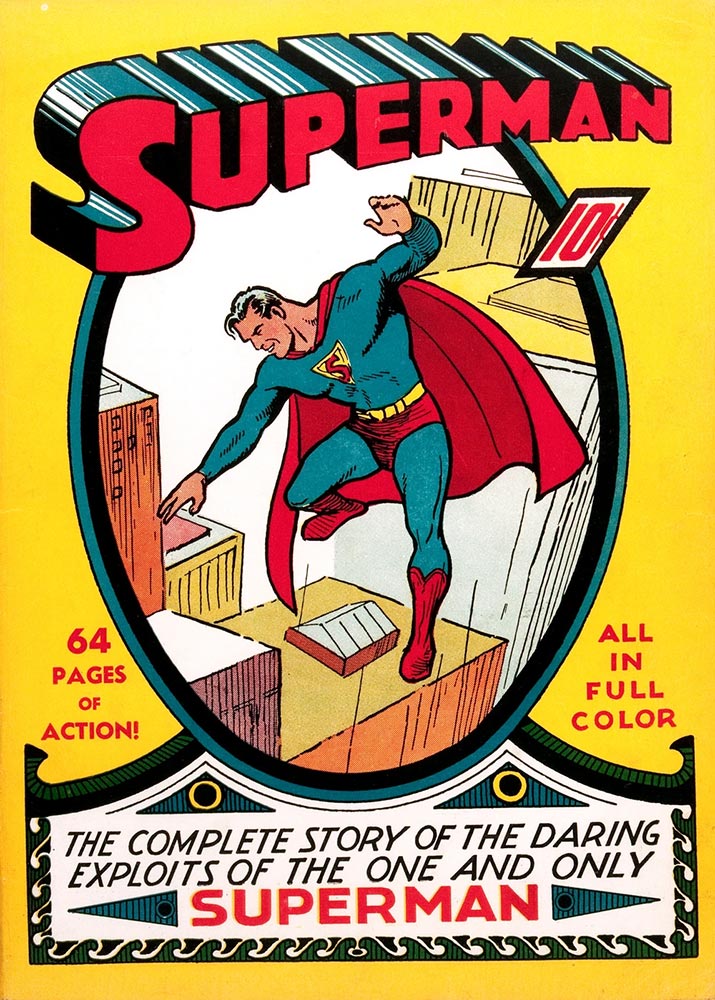
Superman #1, June 1939. Cover by Joe Shuster and Leo O’Melia. All images in this post TM & © DC.
Click on the images below to see them larger on your screen!
Somehow I’ve come back to Superman. No, not necessarily the current comic book incarnation of the Man of Steel; although I am buying and reading both Superman and Action Comics, but not particularly enjoying either. Phillip Kennedy Johnson’s long arc with ‘Kal-El the Barbarian” off on Warworld, out of costume and appearing in wispy art reproduced directly from pencils—which wasn’t a suitable look for ol’ Supes—was abysmal in my humble opinion. The current storyline is marginally better, but bogged down by too much super-family: two Supermans, Superboy (are there two of them, too? … I’m confused), Supergirl, two young orphans from Warworld that have some kind of Kryptonian genes in them, the Chinese Super Man, and Steel and his daughter (or is it niece?), all combine to be too many super-cooks in the super-kitchen. Over in Superman, Joshua Williamson’s storyline about Superman teaming up with an imprisoned Lex Luthor is interesting, and the art by Jamal Campbell is good, but he’s doing his own coloring and the first few issues are so over-saturated with color that the ink just lays on the matte-finish paper, muddying it up. (Maybe a little less painterly-style or a change of paper-stock would help.) I enjoyed Brian Michael Bendis’s recent over-hyped run on both titles, even if it was a bit hard to understand at times, and before that I really liked Dan Jurgens’s run, but those days are gone.
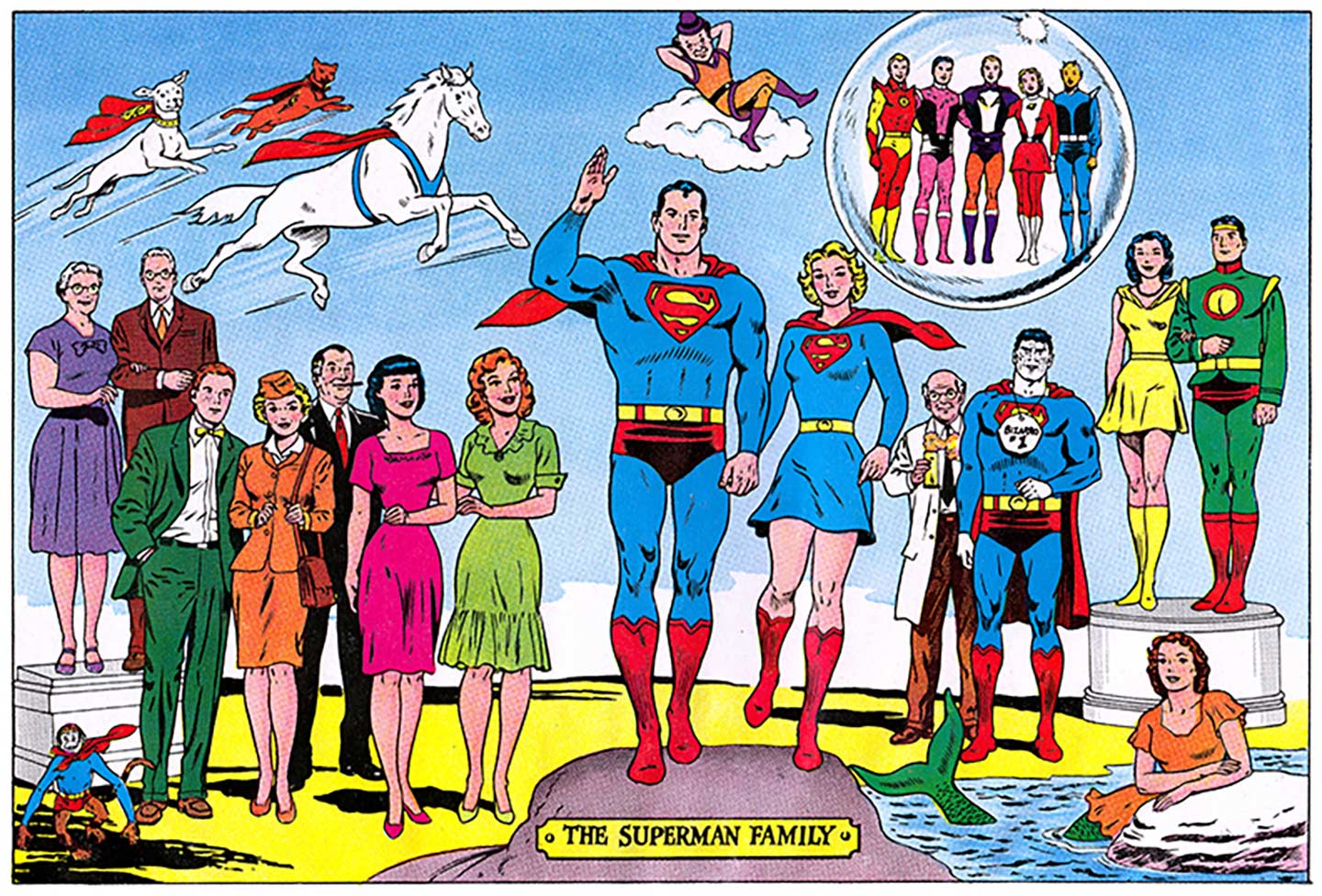
The gang’s all here in this Superman Family portrait from Giant Superman Annual #6 (January 1963).
But I’m not here to talk about Superman 2023 (even though I just did for 200 words or so). I’m here to celebrate the 85th anniversary of the character and to talk about the Super-comics I grew up with as a kid, and sought out as an adult to revisit. We’re talking about Superman in the 1960s and the era of editor Mort Weisinger, when the Superman Family burgeoned and the “Imaginary Story” held sway. These are my Superman comics, the ones I grew up with, and for all four Wednesdays in the month of June, I’m going to talk about them.
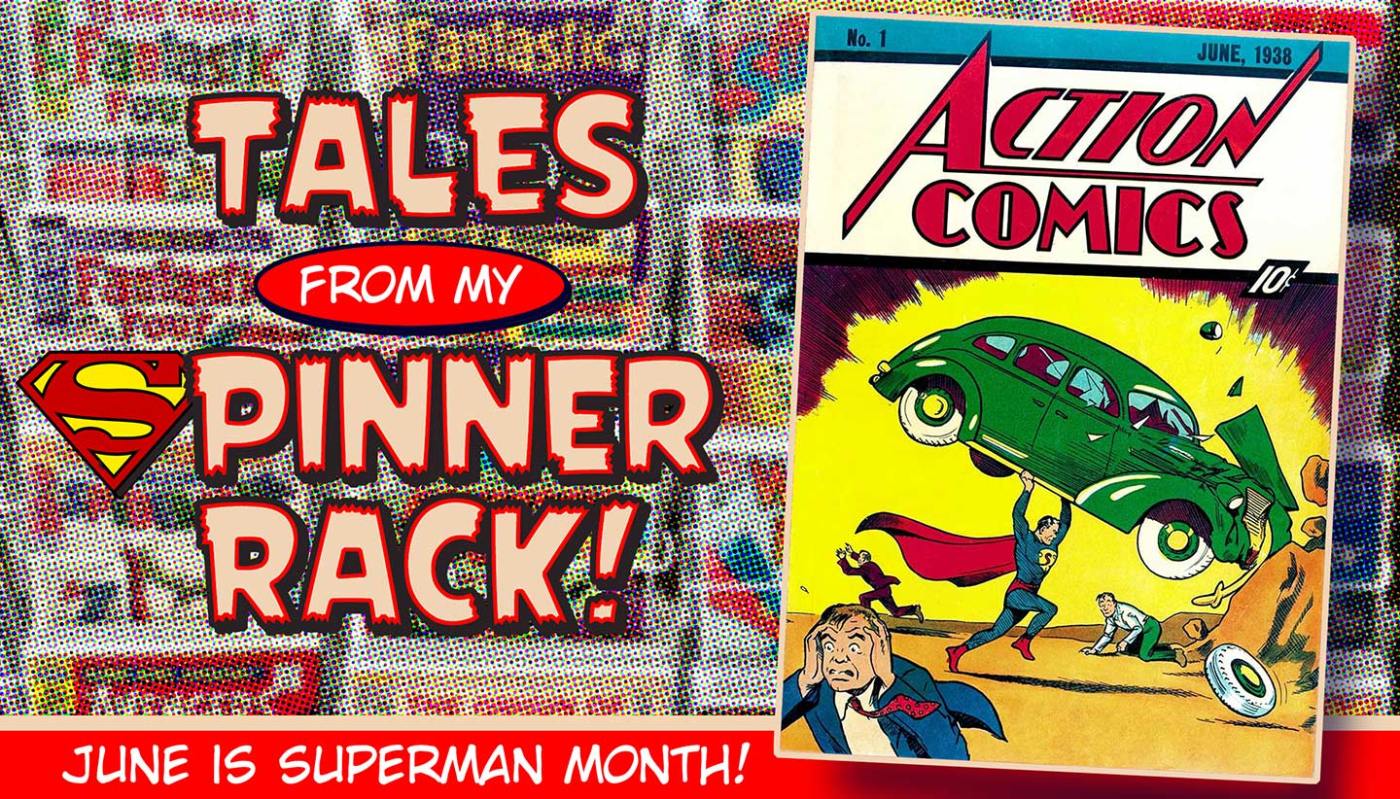
Superman was probably the first superhero I ever encountered, along with Batman. My older brother, Rick, brought home all kinds of comic books, but in the late 1950s the only real superheroes were being published by DC, and Superman and Batman still dominated their line-up with numerous appearances. Wonder Woman was the third of that classic hero Trinity that survived the tumultuous 1950s. In the middle of that decade, editor Julius Schwartz started bringing back some of DC’s original heroes in revamped and rebooted form, like the Flash, Green Lantern, the Atom, and Hawkman. It was a kind of superhero renaissance, especially when they all joined together to form the Justice League of America. But Superman was still the “big blue boy scout,” the one that started it all, way back in 1938 in Action Comics #1, cover-dated for June of that year, but first appearing on newsstands on April 18. Despite that first appearance date, Superman will always be a “June baby,” for me though, testimony to his true Gemini nature with his split identities of Superman and Clark Kent. (Us Geminis have to stick together.) Fun fact: Superman’s birthday is February 29th, a date that occurs only once every four years. So technically he’s only 21.5 years old (yes, I used a calculator). I’m assuming this four years for every one is the equivalent of Kryptonian years, kinda like dog years.
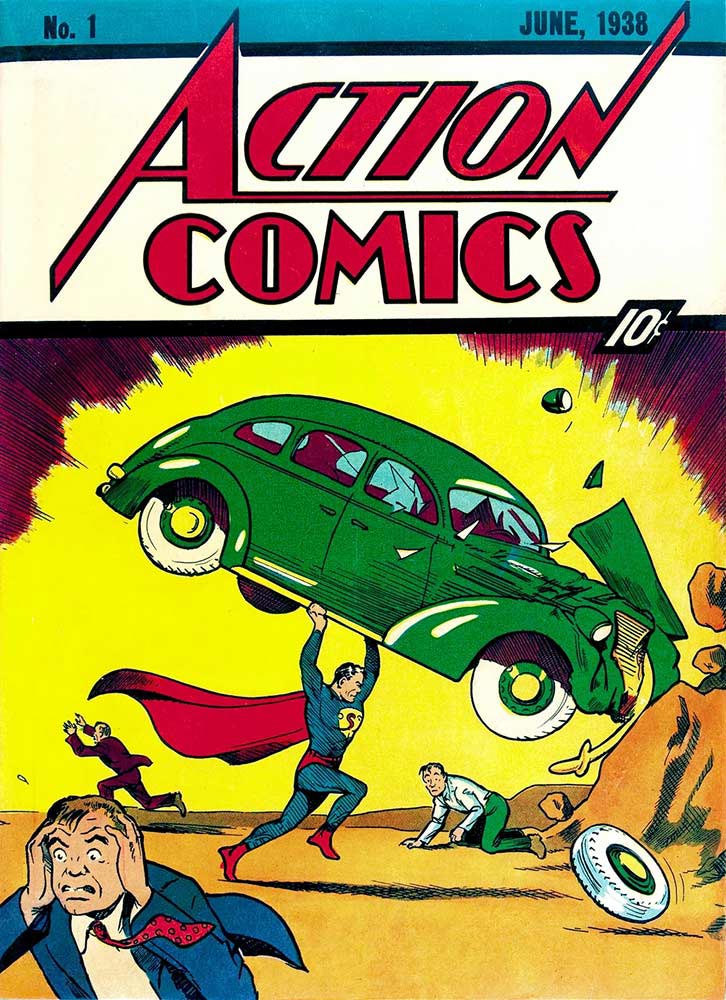


The first three cover appearances of Superman on Action Comics. The brain trust at DC didn’t quite know what they had on their hands and cover-featured the long-johned hero on only three of the first ten covers.
Superman was, of course, created by two Cleveland, Ohio teenagers, writer Jerry Siegel and artist Joe Shuster. They rethought and revamped the character endlessly before they finally settled on the guy in the long-johns with the big red “S” on his chest, which originally stood for Superman but later was retconned to become the Kryptonian symbol for hope. (For many years as a child, I exclusively read the negative space on this symbol and never even saw the S shape within the shield, and then one day—in a “Helen Keller moment”—I saw it, I finally saw it and it all made sense.) Someone at DC (then National)—reportedly Sheldon Mayer—convinced editor Vince Sullivan to put it on the cover of a new title, Action Comics #1, and that drawing of a circus-suited, cape-wearing, big lug effortlessly tossing around a huge green automobile (that vehicle could never be called a “car”), promptly sold out.
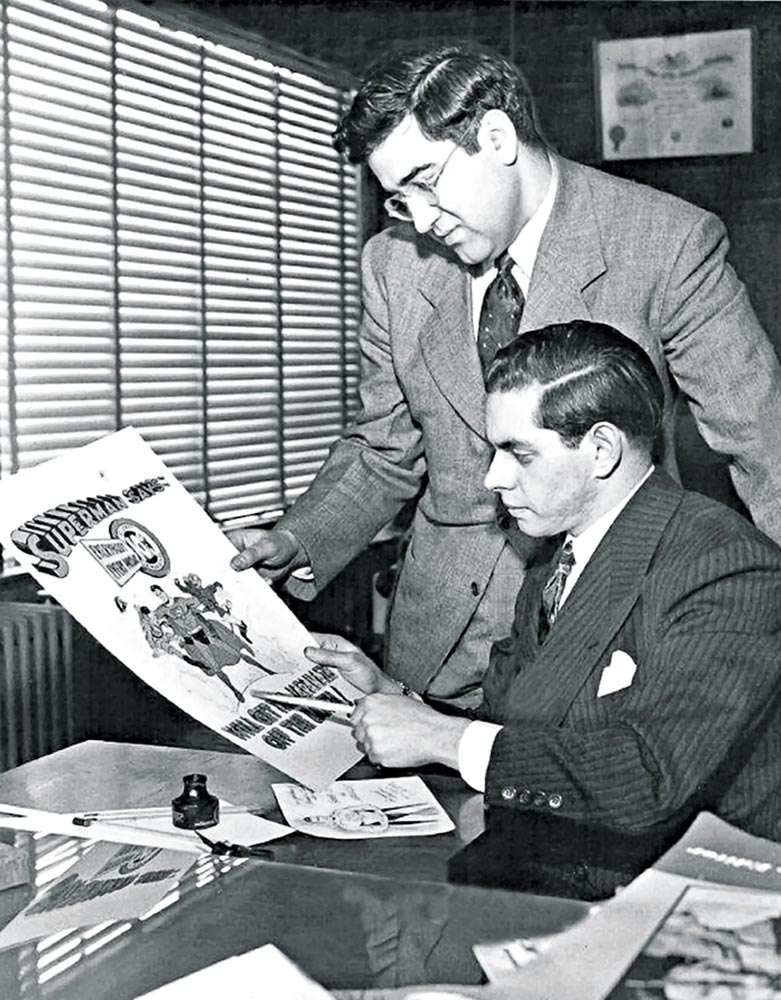
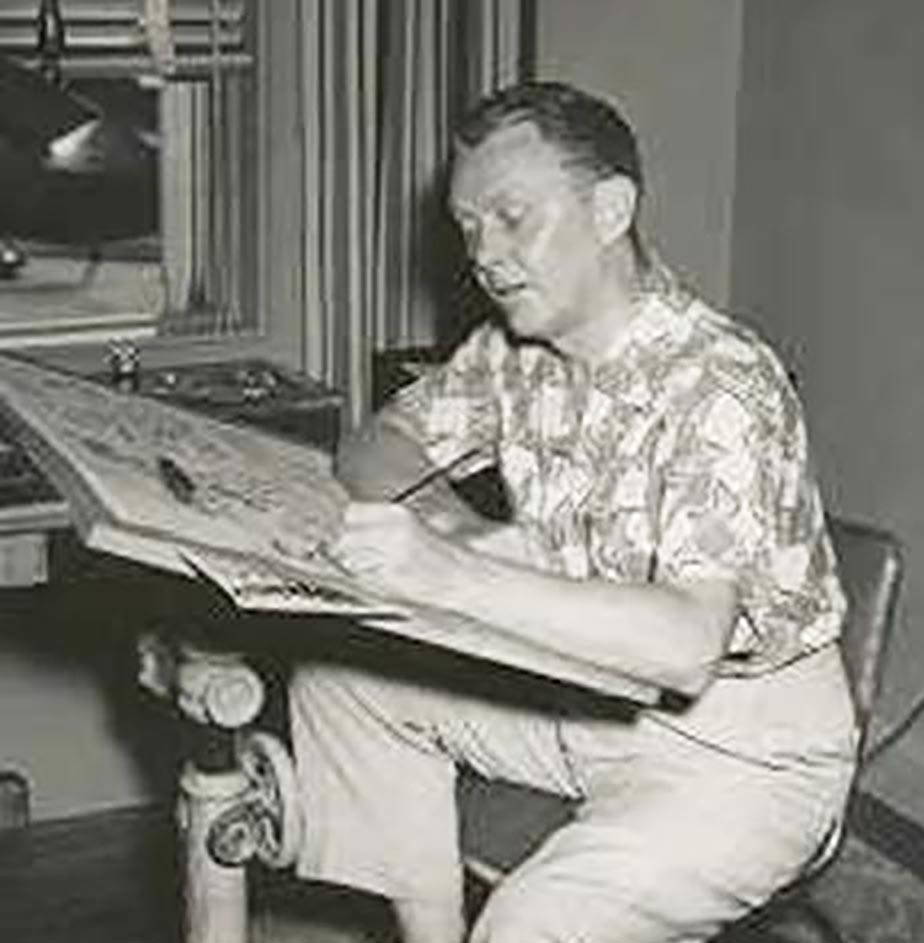
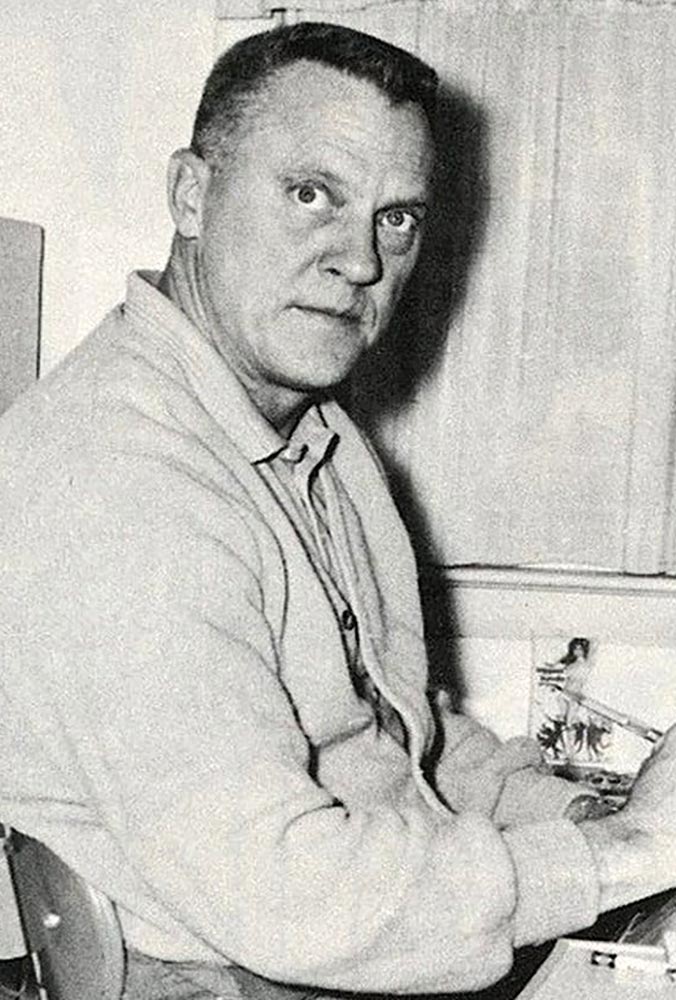
(Left to right) Jerry Siegel (standing) with artist Joe Shuster; artist Wayne Boring; and artist Curt Swan. These four individuals were responsible for a large amount of Superman stories for the first 50 years of the character.
Siegel and Shuster had a contentious relationship with their DC masters, suing the company numerous times for copyright control of their Man of Steel, after signing away all rights for $130.00. (Admittedly, they made a great living while writing and drawing and generally controlling Superman’s stories into the mid-1940s). Shuster’s eyesight started to fail early on, and numerous other artists took over drawing the stories, mainly due to the sheer number of them, which included an ongoing syndicated newspaper strip, the duo’s original intent for the character right from the start. Despite the lawsuits, Siegel continued to write Superman stories for DC off and on into the 1960s, including some major imaginary stories for irascible editor Mort Weisinger (I’m bound by law to include “irascible” at least once when I mention him in any post). Siegel wrote one of my favorite Superman stories, “The Death of Superman” (drawn by Curt Swan), which appeared in Superman #149 in 1961, and which we’ll be discussing in the coming weeks.
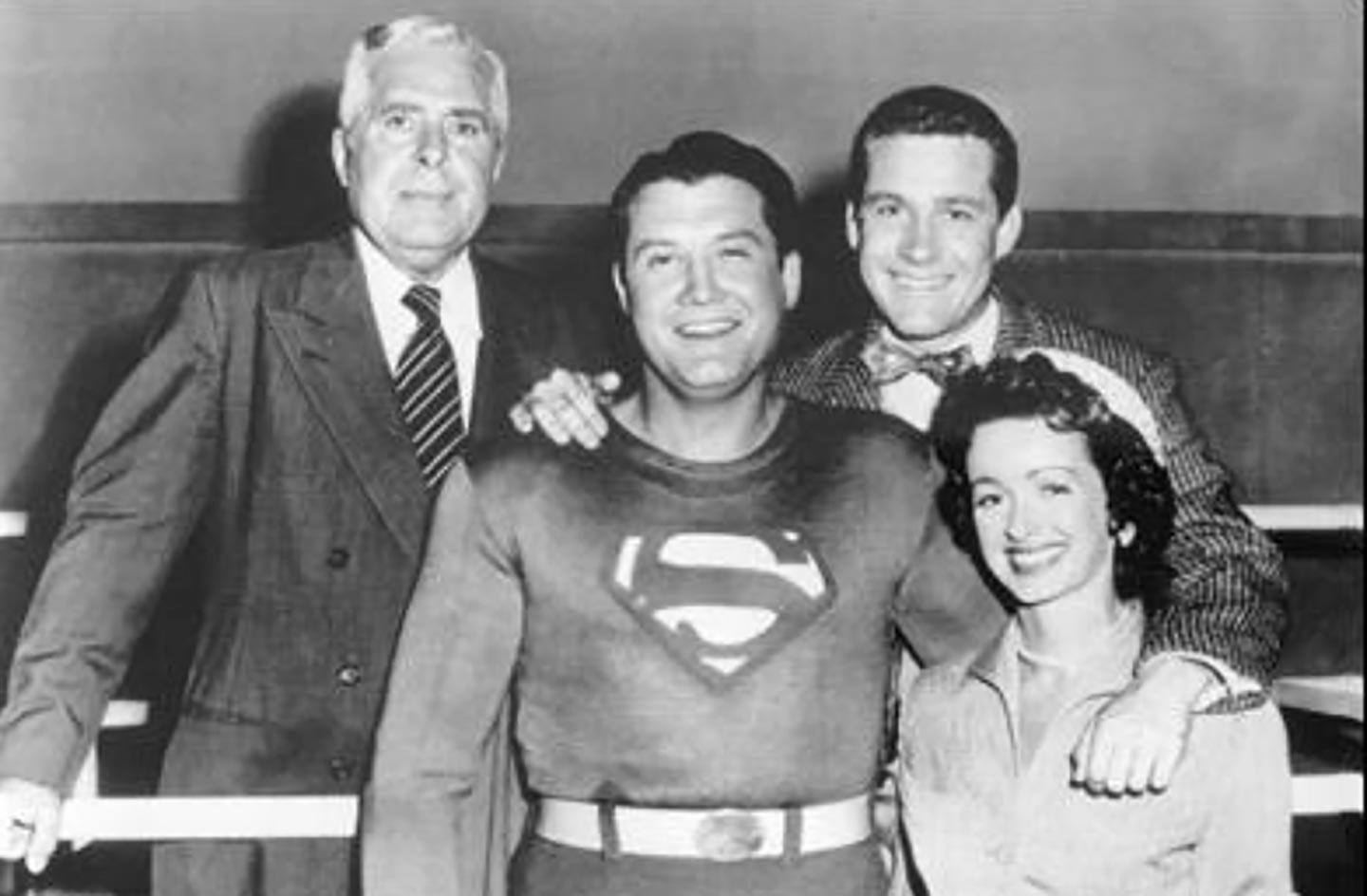
Probably still appearing in syndication somewhere in the world, The Adventures of Superman cast included John Hamilton (Perry White), George Reeves (Superman), Jack Larson (Jimmy Olsen), and Noel Neill (Lois Lane).
In the 1950s, Superman also benefited from being on my TV screen five days a week, usually appearing right around the time millions of kids like myself got home from school. The Adventures of Superman, starring George Reeves as Clark Kent and Superman, Noel Neill as Lois Lane, and Jack Larson as Jimmy Olsen, was the best advertisement ever for DC Comics. The popularity of Neill and Larson’s portrayals begat their own comic book titles, with Superman’s Pal, Jimmy Olsen debuting in 1954 and Superman’s Girlfriend, Lois Lane in 1958 (after a few tryout issues in Showcase). Jimmy Olsen was more of a wonky comedy series, and Lois Lane was a quasi-romance title, but both series lasted for years and found their way into my home on a regular basis in the late 1950s and early 1960s.
By the time the 1960s rolled around, Superman was appearing in seven different titles: the monthly Action Comics; the “monthly” (actually eight times a year) Superman; Superboy, featuring the adventures of Superman as a teenager, Adventure Comics also featuring Superboy; Superman’s Pal, Jimmy Olsen; Superman’s Girlfriend, Lois Lane; and World’s Finest, where Superman teamed up with his BFF, Batman (and, of course, Robin). That’s seven separate titles, with a total of more than 60 issues per year—augmented by the debut of Giant Superman Annual (the Annual was “Giant,” not Superman), in August 1960, which was actually published twice each year through 1964, when DC threw in the towel and created a separate 80-Page Giant publication, that published annual-like books for 25¢ each. Eventually these 80-page specials were incorporated into the regular numbering of the various titles, with a small notation (“G45”) appearing next to the 80-Page Giant logo.
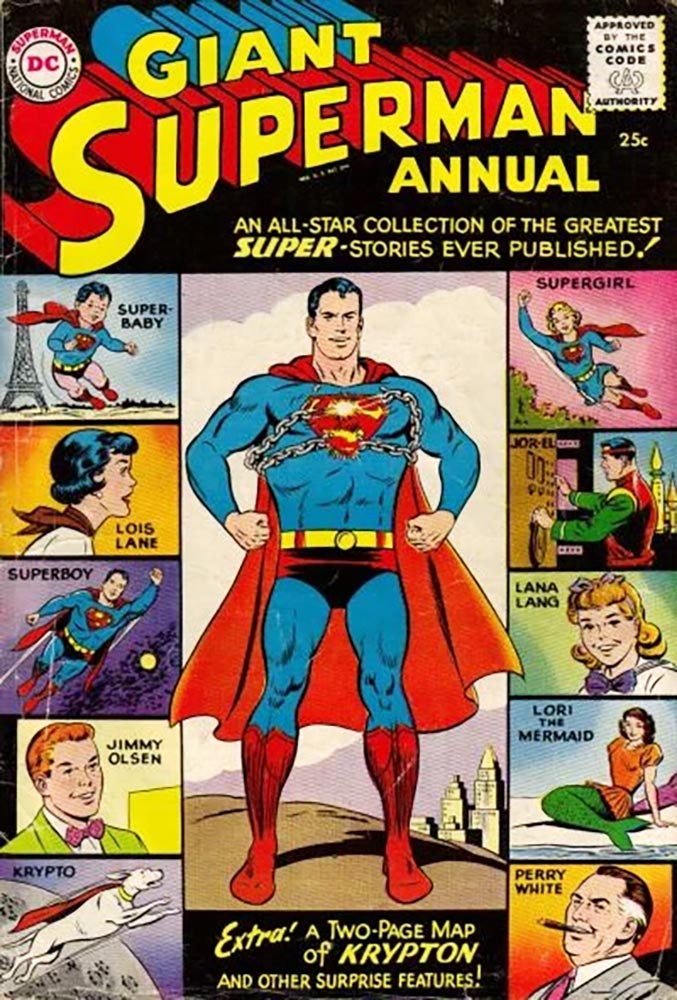
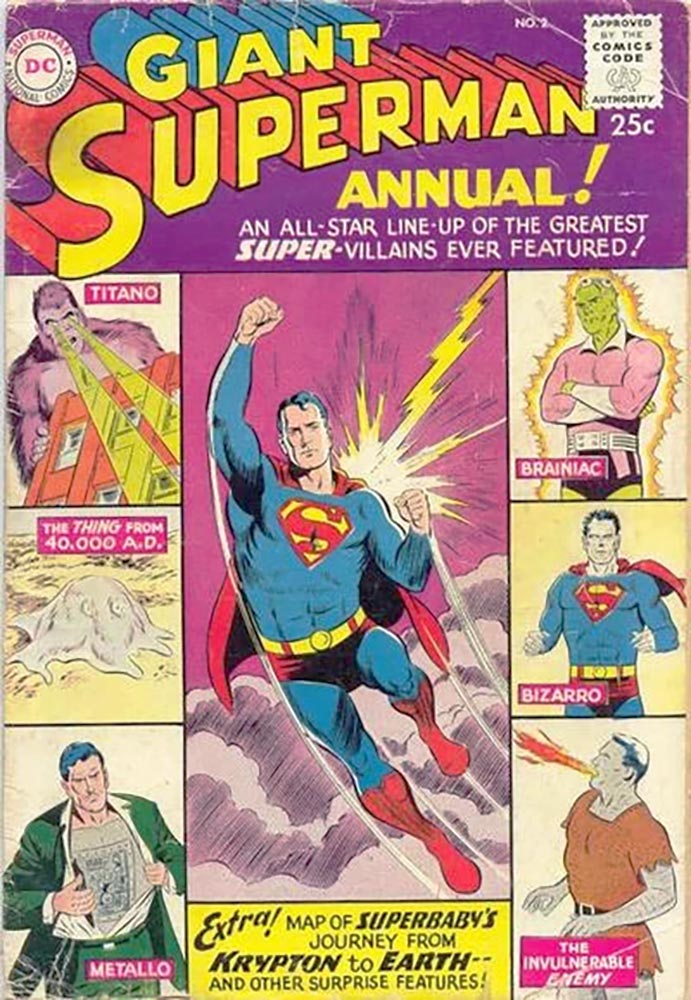
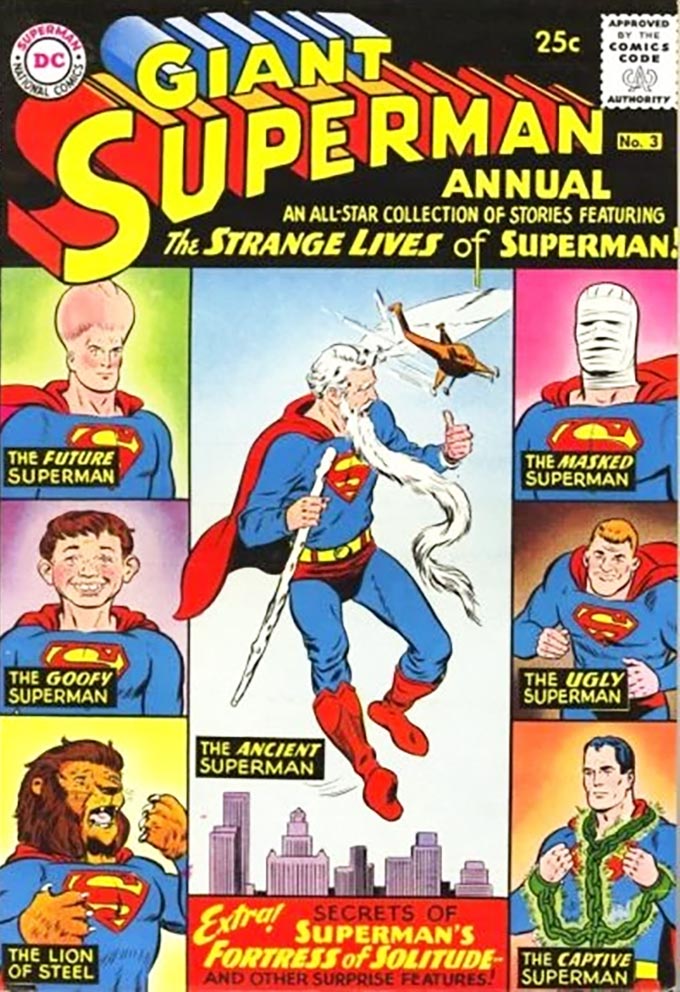
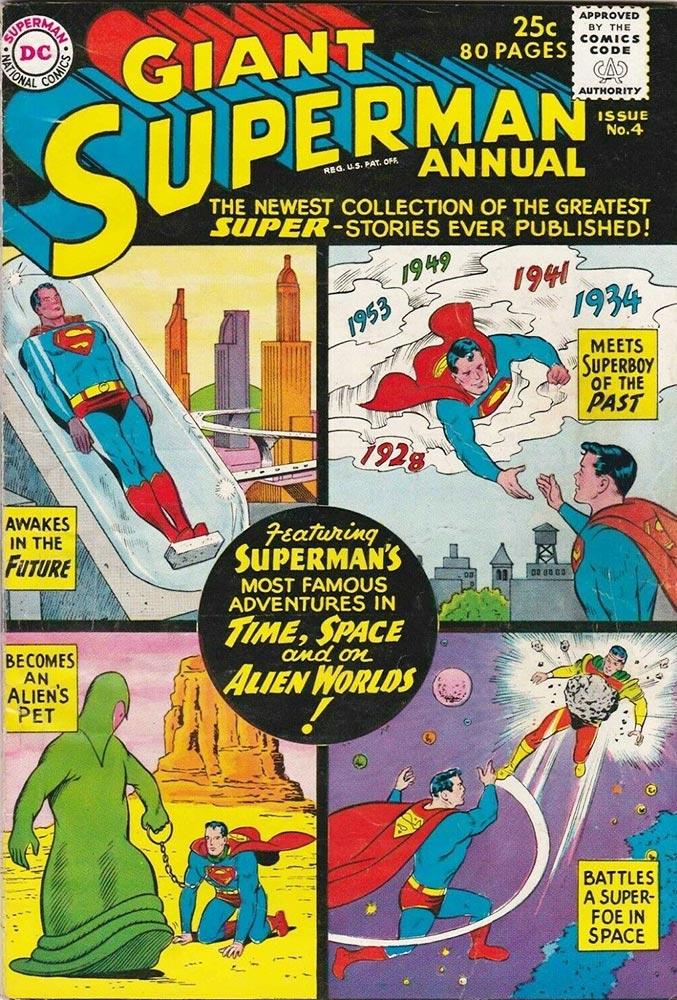
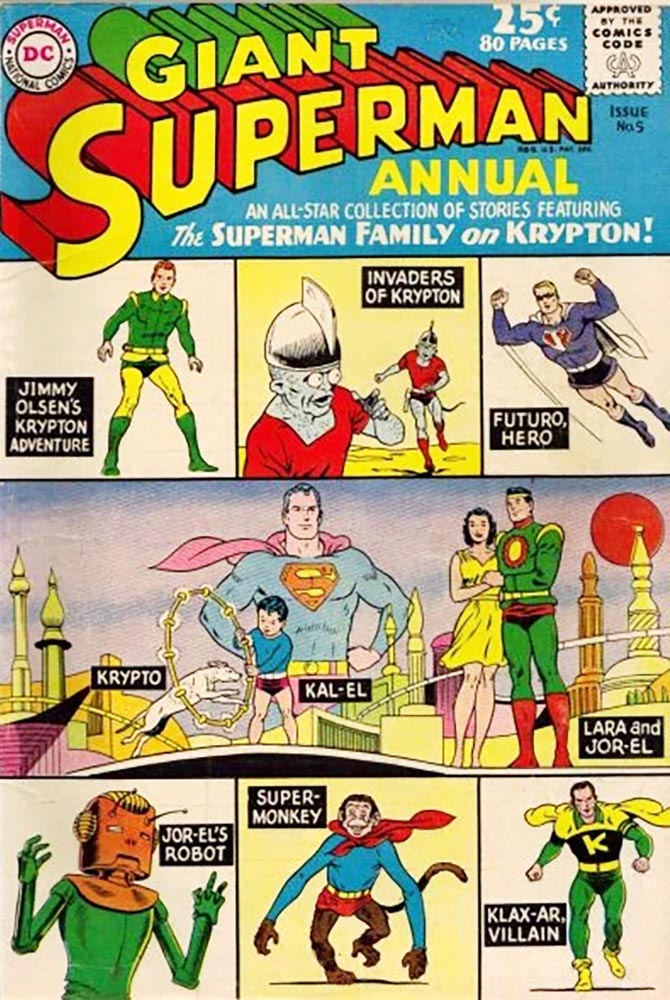
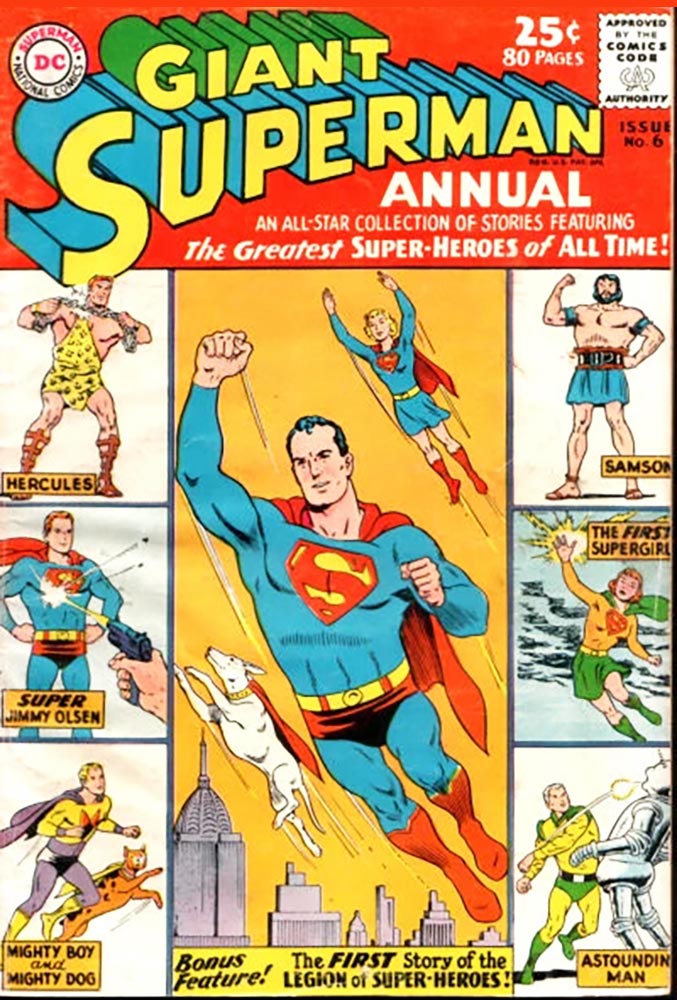
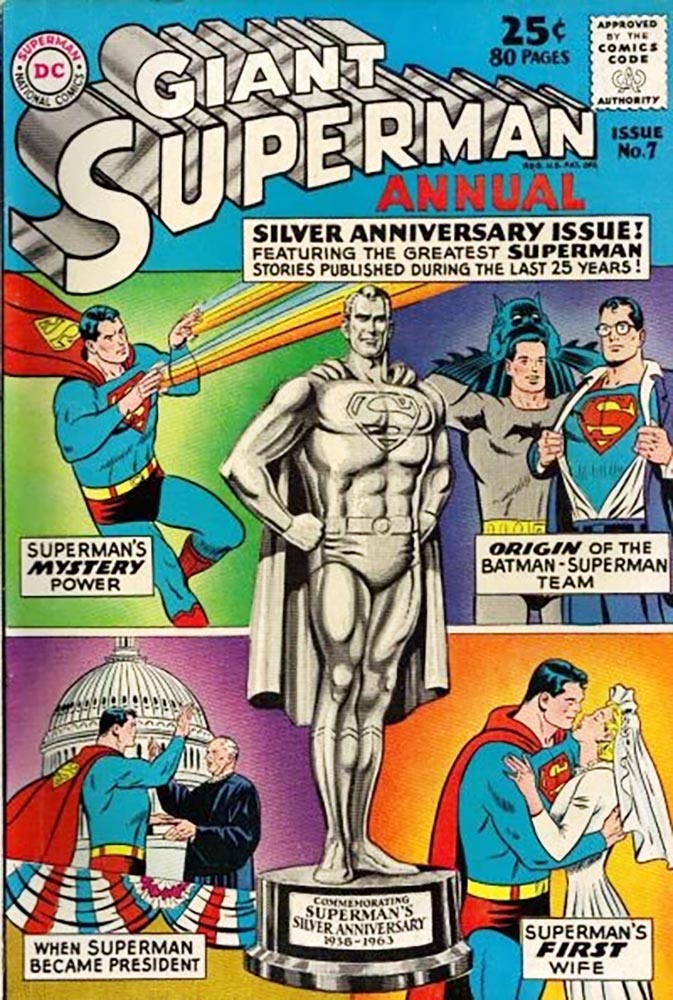
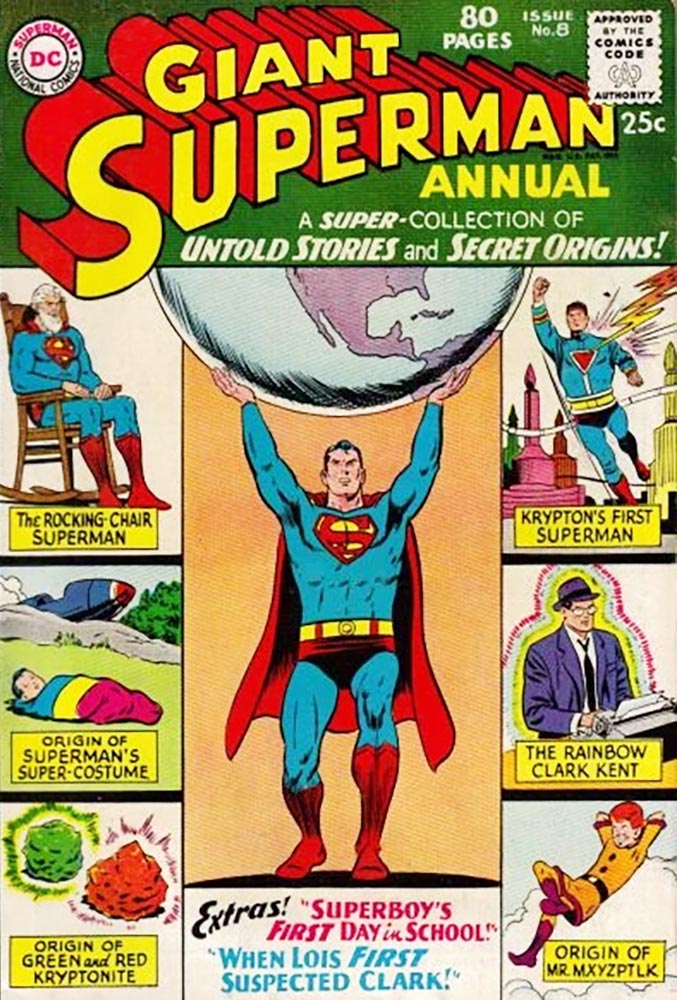
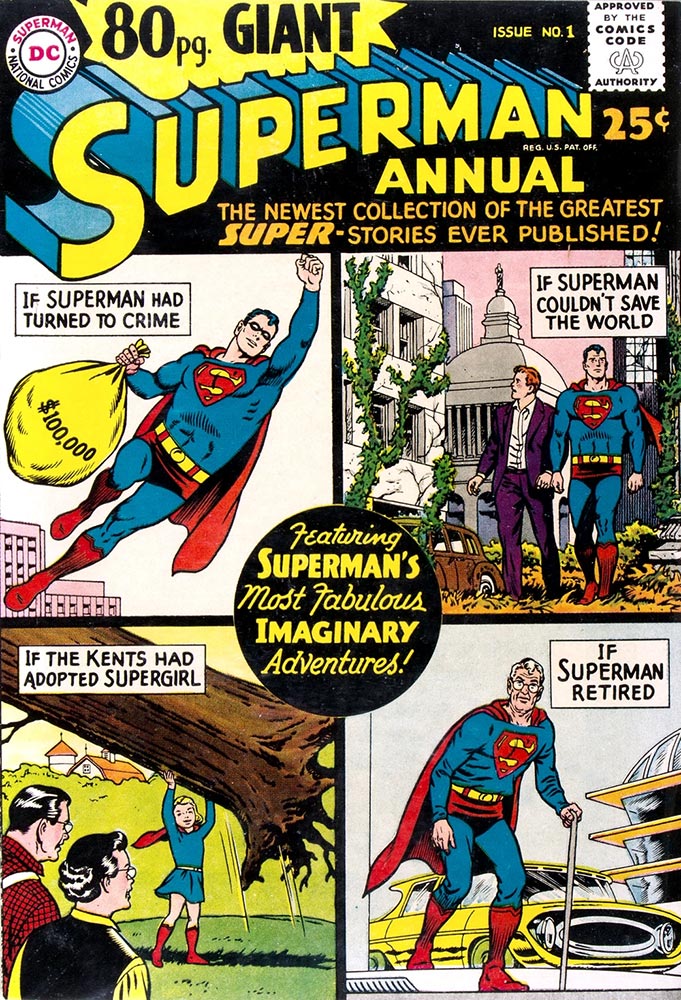
Always a welcome sight on my local newsstand, the Giant Superman Annuals included occasional special features like old covers, a map of Krypton, and a portrait of the Superman family, but for me the Curt Swan covers were the main attraction … because the insides were always a bit of a disappointment.
That first Giant Superman Annual was a watershed moment for me, though. I discovered it stacked away from the other comic books when I was just five years old. It may have been placed there to be put out later on the comic racks, or the 25¢ price may have confused the vendor, I’ve never been certain. Dell and Harvey Comics had been publishing some 25-centers for a while, so I can’t imagine the confusion. Either way, Giant Superman Annual #1 was very special to me, the first superhero annual I had ever seen. And even though the interior content was less than special (a bunch of lackluster 1950s Supes stories), that cover—and all the covers for the subsequent annuals, with their segmented designs, all drawn by Curt Swan—was instantly memorable, an iconic image for decades to come.
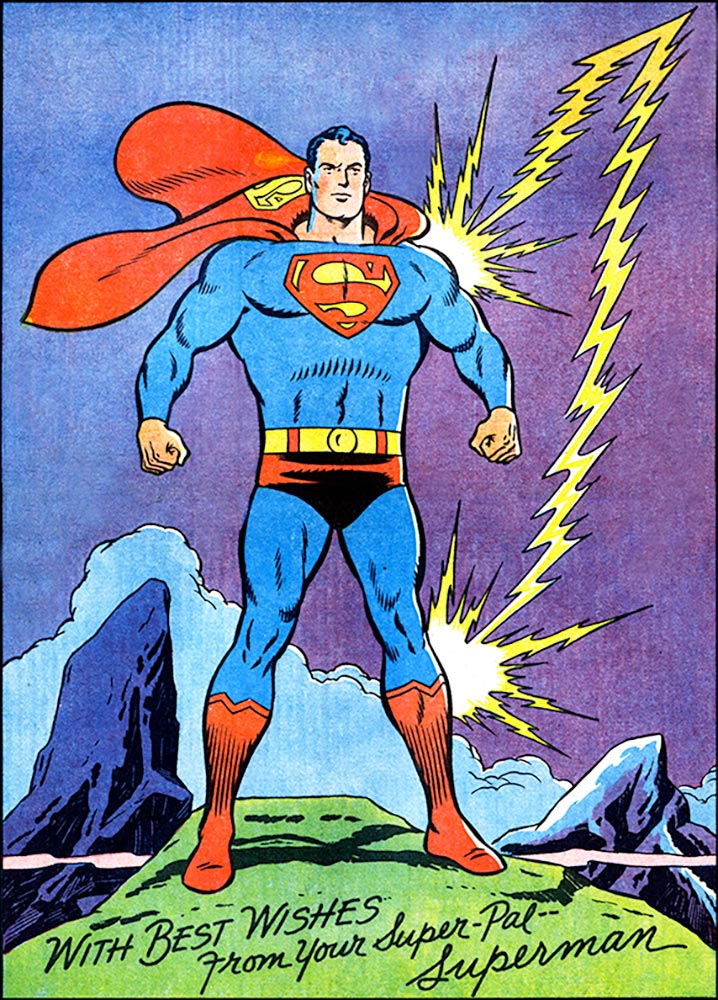
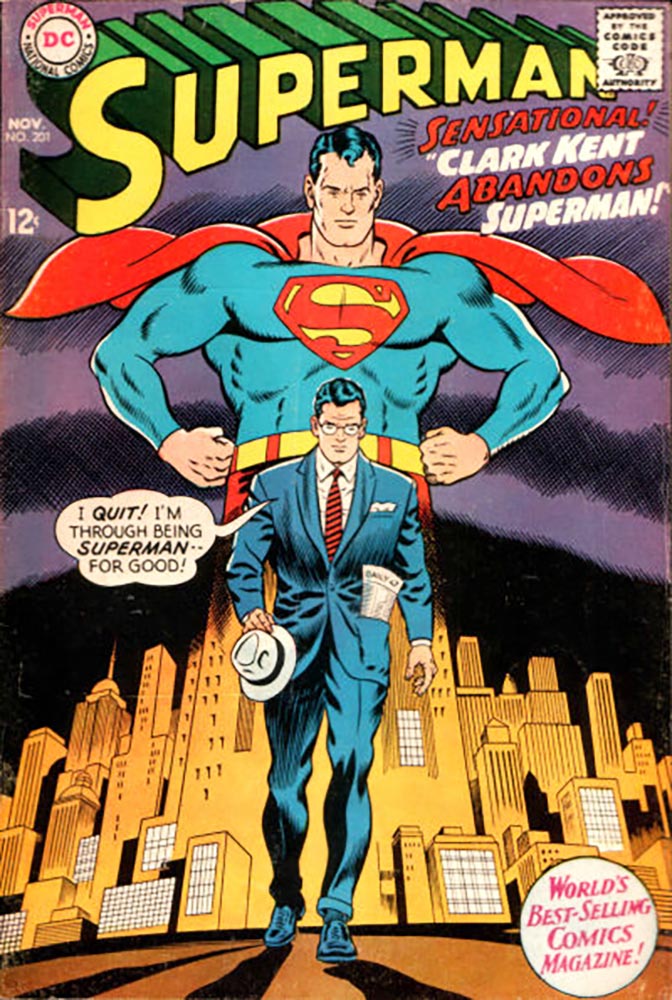
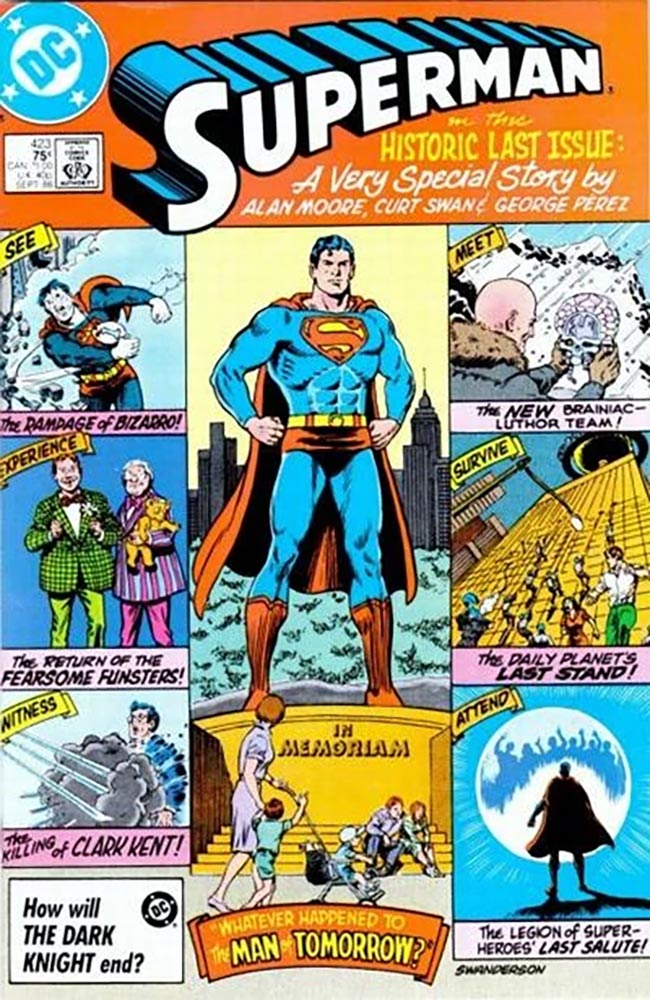
Three memorable Curt Swan images: a pin-up; the cover to issue #201 (reminiscent of John Romita’s Amazing Spider-Man #50 cover a year or so earlier); and the “historic last issue” cover to Swan’s … um … swan song on Superman, #423, part one of a two-part Alan Moore story that paved the way for the John Byrne reboot in 1986.
Curt Swan was THE Superman artist of the 1960s and pretty much the Superman artist for me, period. I think each decade had an artist that could be identified with the character, starting with Joe Shuster in the 1940s, Wayne Boring in the 1950s, then Swan, who basically dominated through the mid-1980s when John Byrne took over for a too-short period of time. After that, it was Jerry Ordway and Dan Jurgens through the 1990s, and sadly—for me at least—no one else stands out from 2000 on as being “the” artist of the moment for Superman.
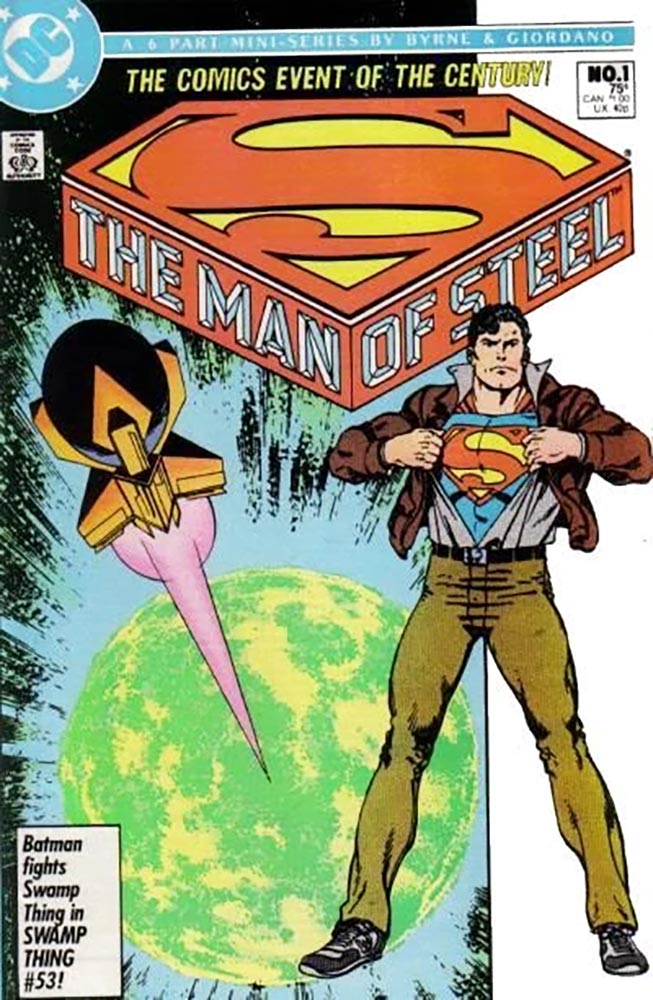
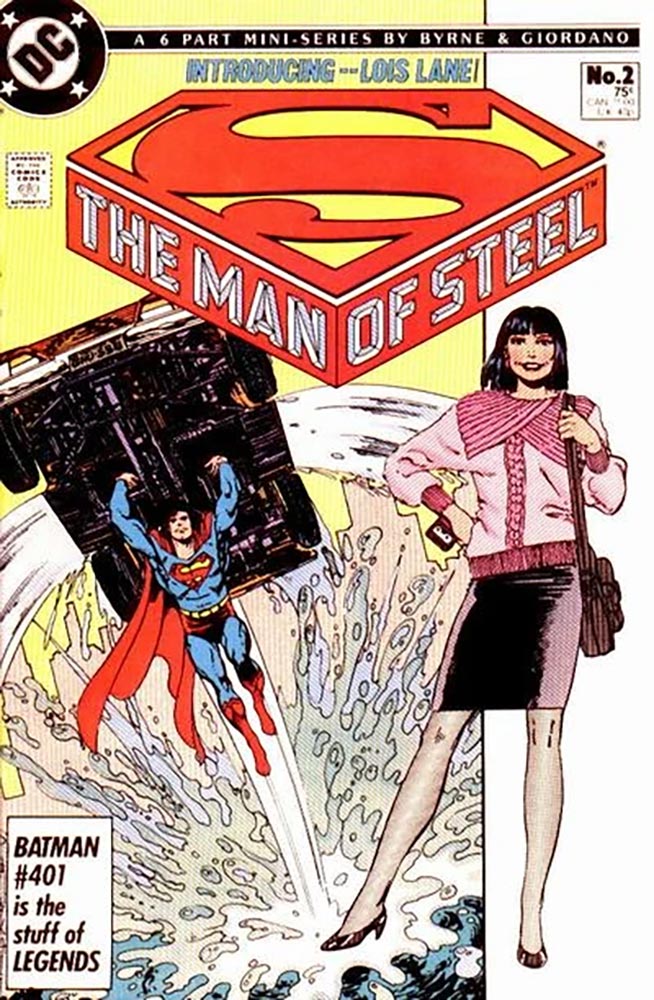
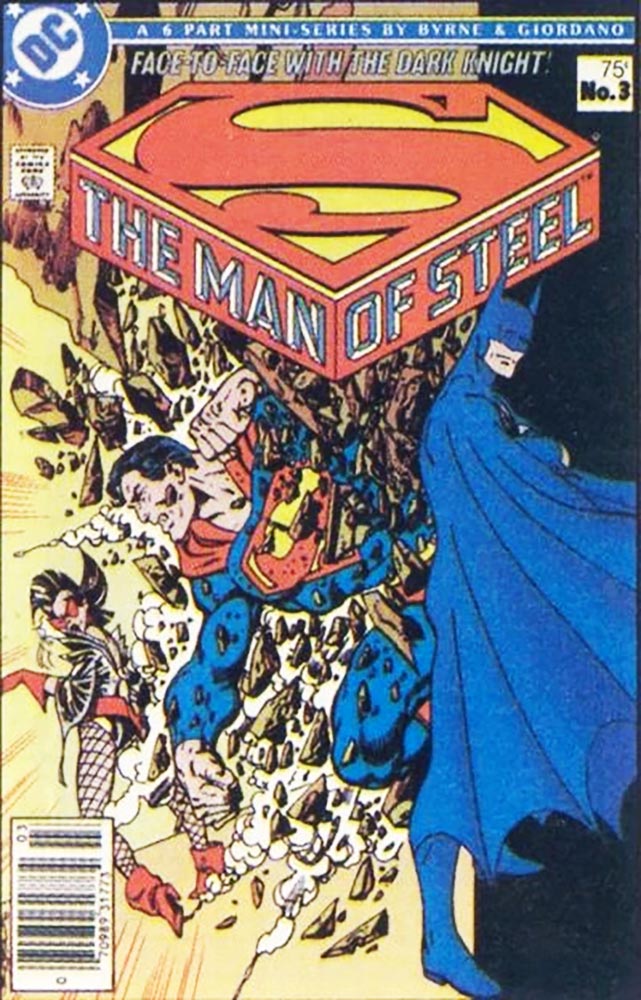
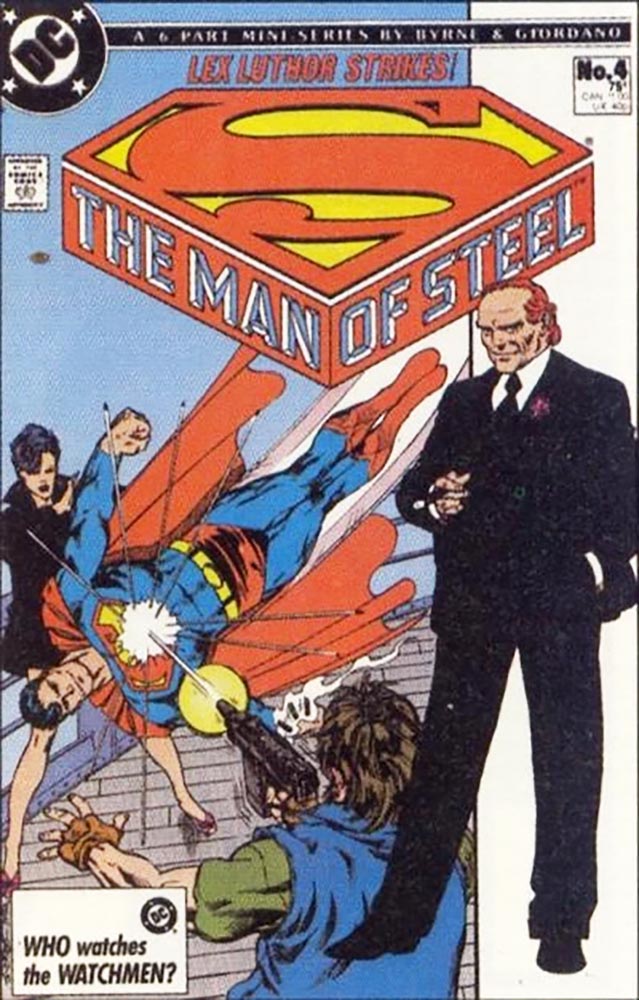
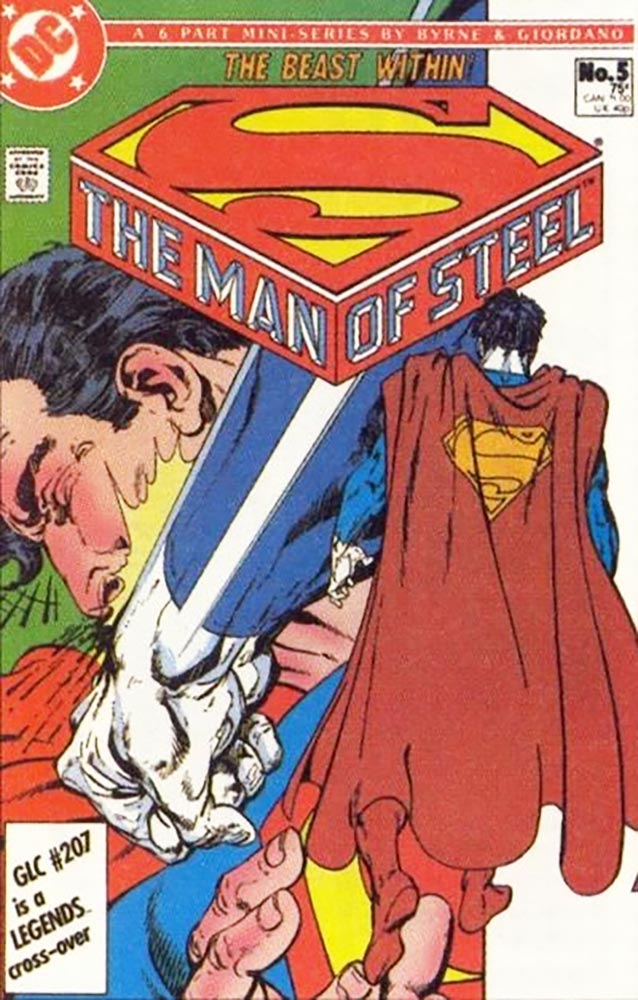
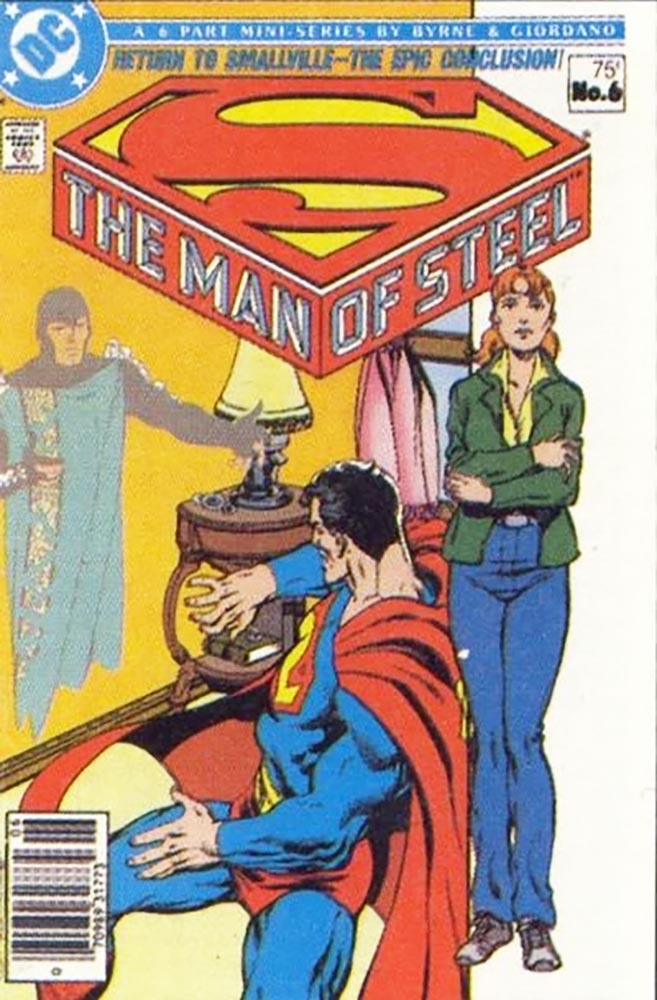
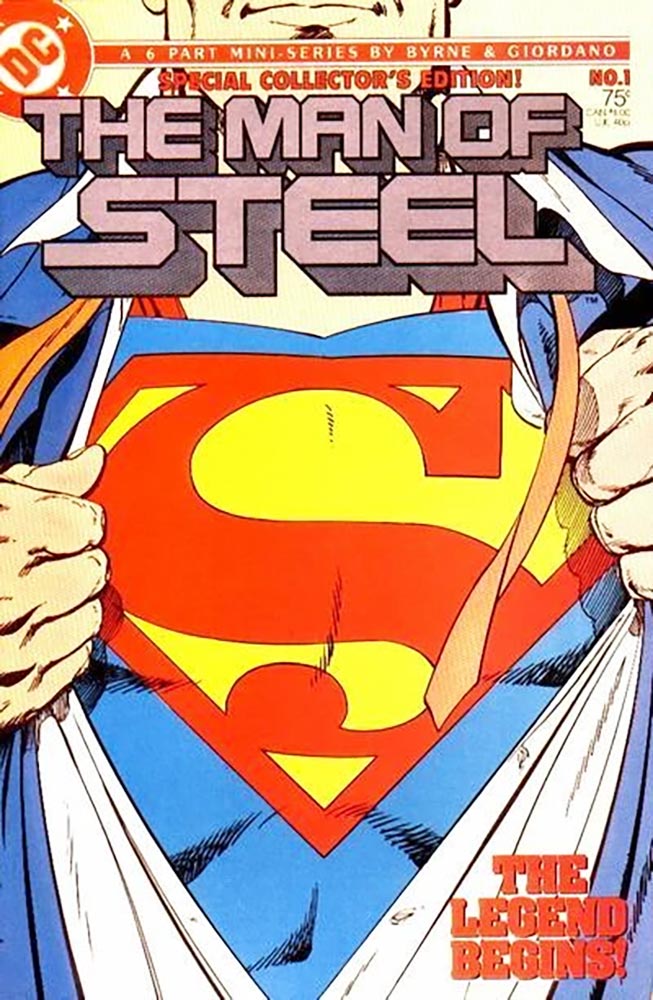
John Byrne’s 1986 reboot of Superman started with a six-issue mini-series called The Man of Steel.
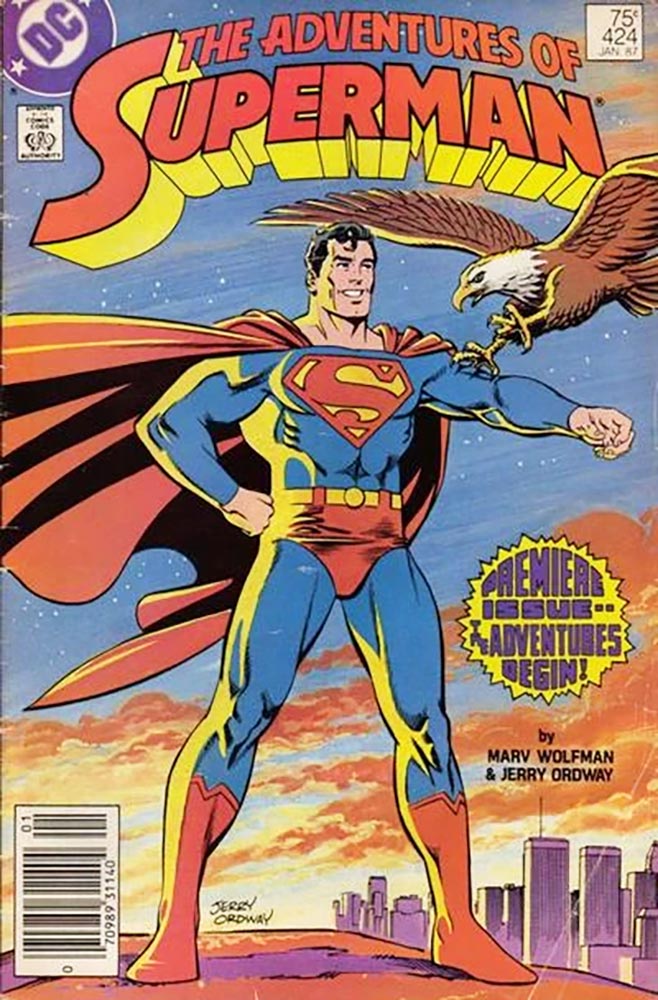
It was my recent rediscovery of Byrne’s run that brought me back to Superman. I was digging through a series of “three for $10.00” long-boxes at WonderCon this year and found Man of Steel, the six-issue mini-series that rebooted Superman and brought the John Byrne version of the character to the world. I found issues #2 through 6, and the subsequent Superman #1, which relaunched the series with a new #1 issue for the first time since 1939, along with Byrne’s first Action Comics team-up issue and Marv Wolfman and Jerry Ordway’s Adventures of Superman #424, which continued the numbering of the original series. I threw in Superman #82 (the return of Superman from the 1990s “Death of Superman” saga), with a fancy—yet typical for its era—1990s foil cover, to make a total of nine comics, and $30.00 later, I had the start of a new collection. I found Man of Steel #1 at another booth for $5.00, and since then, I’ve been buying up Byrne’s Superman run and re-reading them. It’s only 22 issues, sad to say, because I really enjoyed his take on the character, along with his art. I would have liked to have seen him continue.
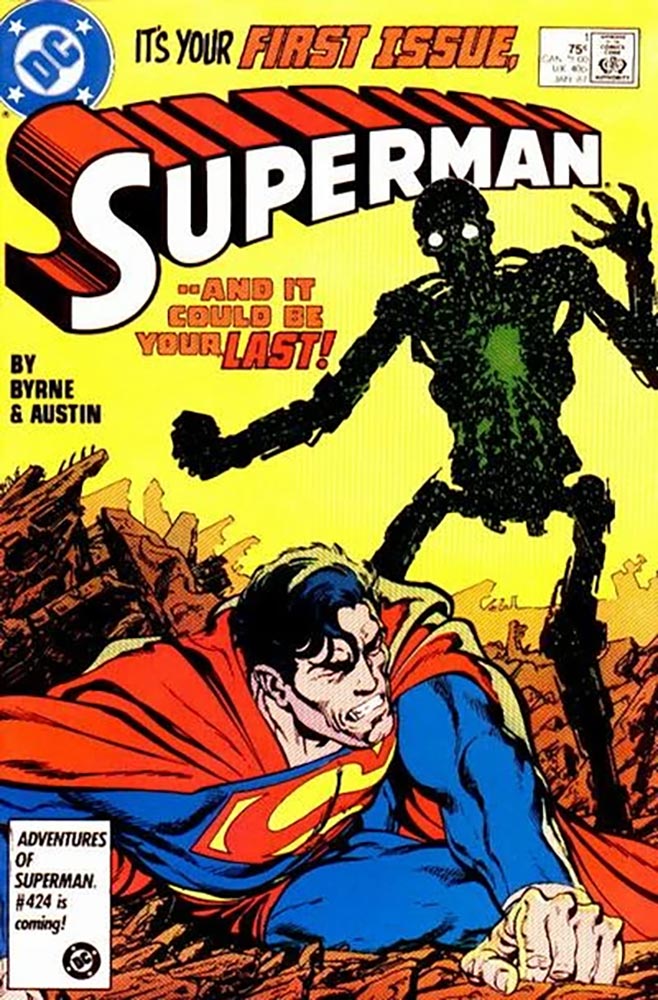
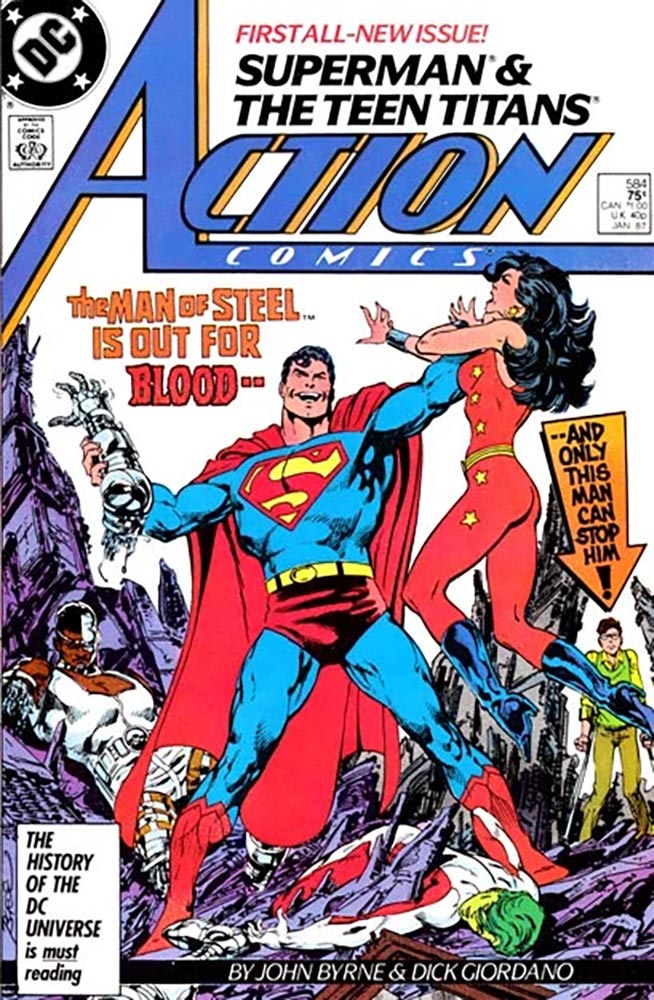
My WonderCon haul—including the six Man of Steel issues, above—that rekindled my interest in Superman.
While searching for the rest of Byrne’s run in local comics shops—sometimes relegated to $1.00-comics bins, thankfully—I’ve come across some other 1980s Super-gems, like Gil Kane’s sporadic run of Superman stories in Action Comics, many of which were written by Marv Wolfman. This was Kane’s magic marker period, I believe, where he pretty much pencilled and inked every story he did, along with a string of really great covers. Julius Schwartz was editing the Superman line then, taking over for the retired Mort Weisinger (remember, only one “irascible” adjective per post, please) and the stories still had a certain stodginess to them, but the art, frequently by Curt Swan with inks by Murphy Anderson (forming the beloved “Swanderson” team) or by Gil Kane, more than made up for the often square scripts that Schwartz seemed to favor.
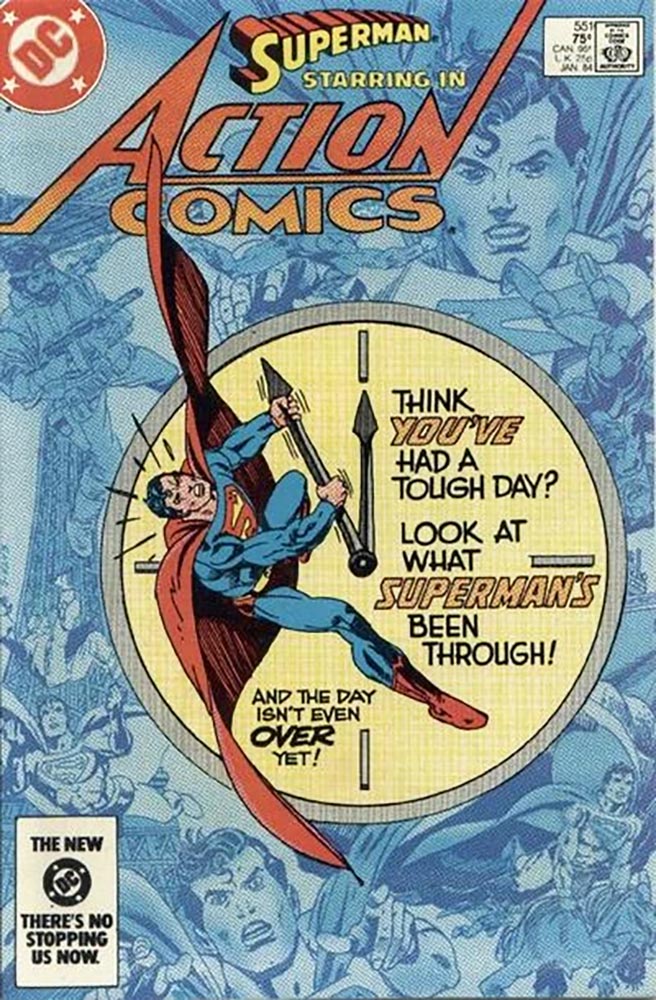
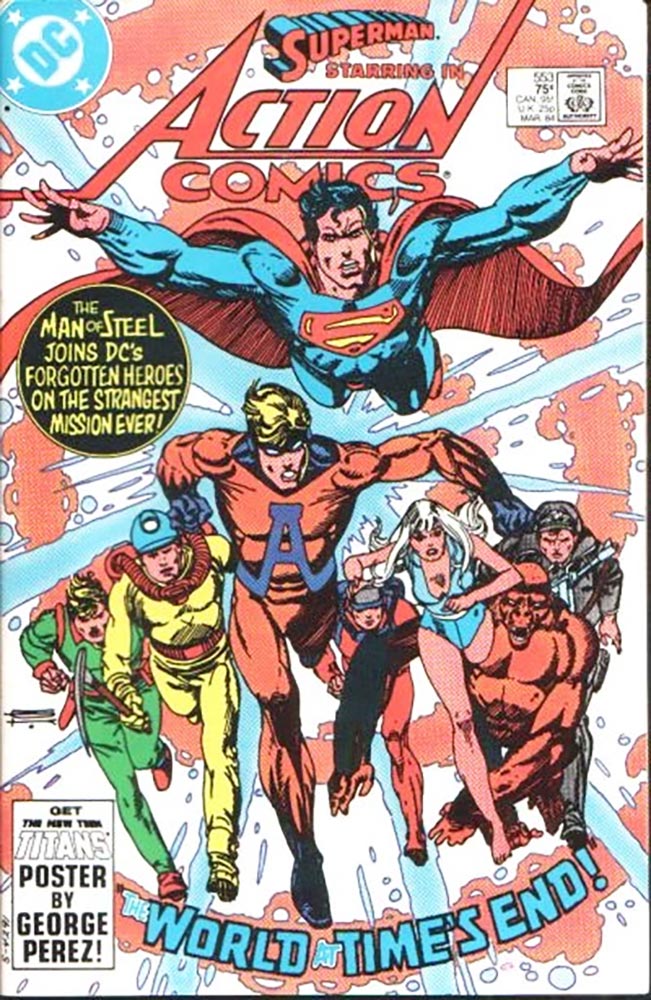
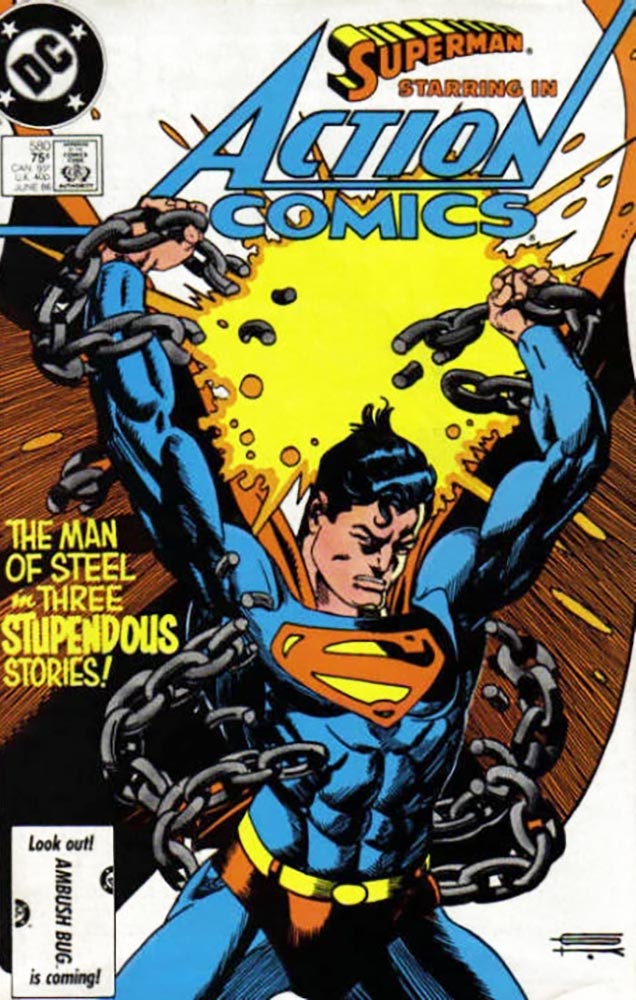
A trio of Gil Kane Action Comics covers from the 1980s:
You can argue that there is no DC Comics or DC Universe movies (animated or otherwise), or even Marvel Comics or Marvel Cinematic Universe without Superman. He’s the spark that started the superhero flame, a firestorm that engulfed the entire comics industry and still burns today. Mainstream comics by the big two are synonymous with superheroes in gaudy costumes, flying and fighting their way into our lives on a monthly basis. While the comics industry has grown to feature amazing storytelling and masterpieces in all genres from publishers and creators of all kinds, for the general public the term “comic book” still means overly-muscled men in long-johns, beating the holy crap out of each other. All of that—for better of worse—is due to Superman.
Over the next four Wednesdays we’ll explore some of my favorite Superman tales from the 1960s, with some deep dives into specific issues and some side trips into other stories. Join us, won’t you?
For my first Tales from My Spinner Rack about the Man of Steel, click here to read post 005 featuring Superman #146, “The Complete Story of Superman’s Life!”
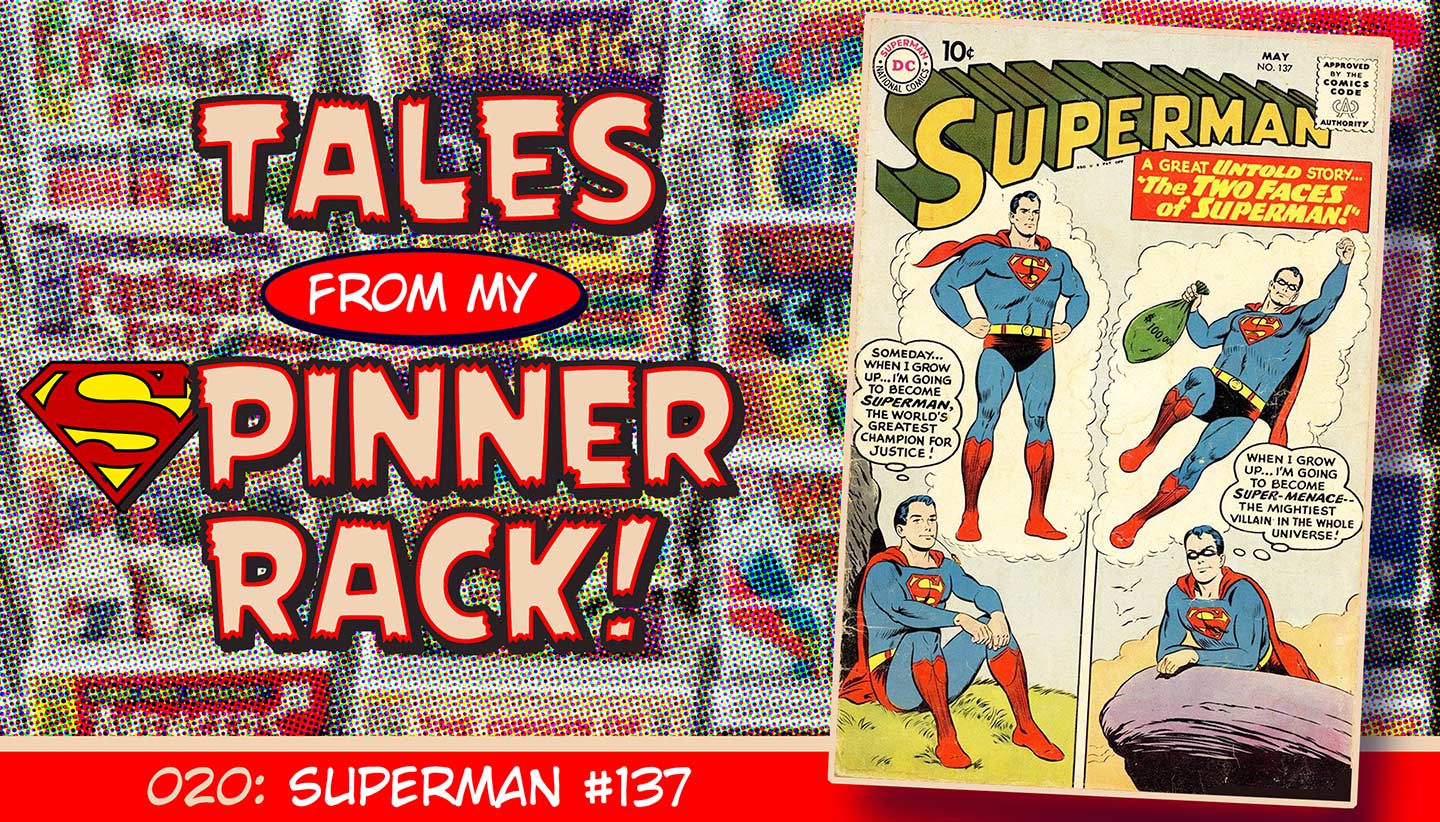
Next week: Superman #137, “A Great Untold Story … The Two Faces of Superman!” What if TWO Superman landed on Earth at the same time, and one was raised to be EVIL?!
To read all the “Tales from My Spinner Rack” posts, click here!

instagram.com/talesfrommyspinnerrack/
 @innocent-bystander.com