
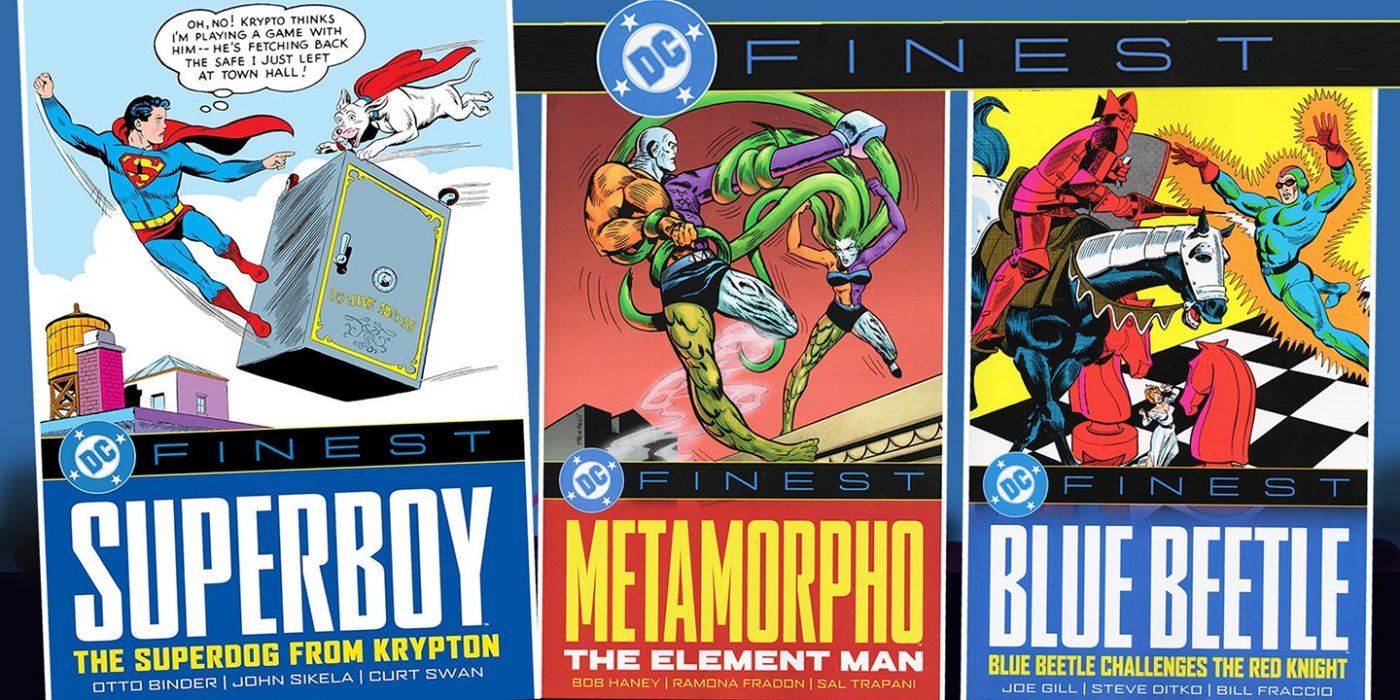
My obsession with DC Finest continues with three very different books, including another member of the Superman Family getting the spotlight, a wonky hero from the 1960s when DC seemed to almost pick names and concepts by throwing darts, and a—at times—horribly bad, but fondly remembered Charlton character who really tried to be great but was held back by the publisher’s crappy printing and production values. Let’s start with …
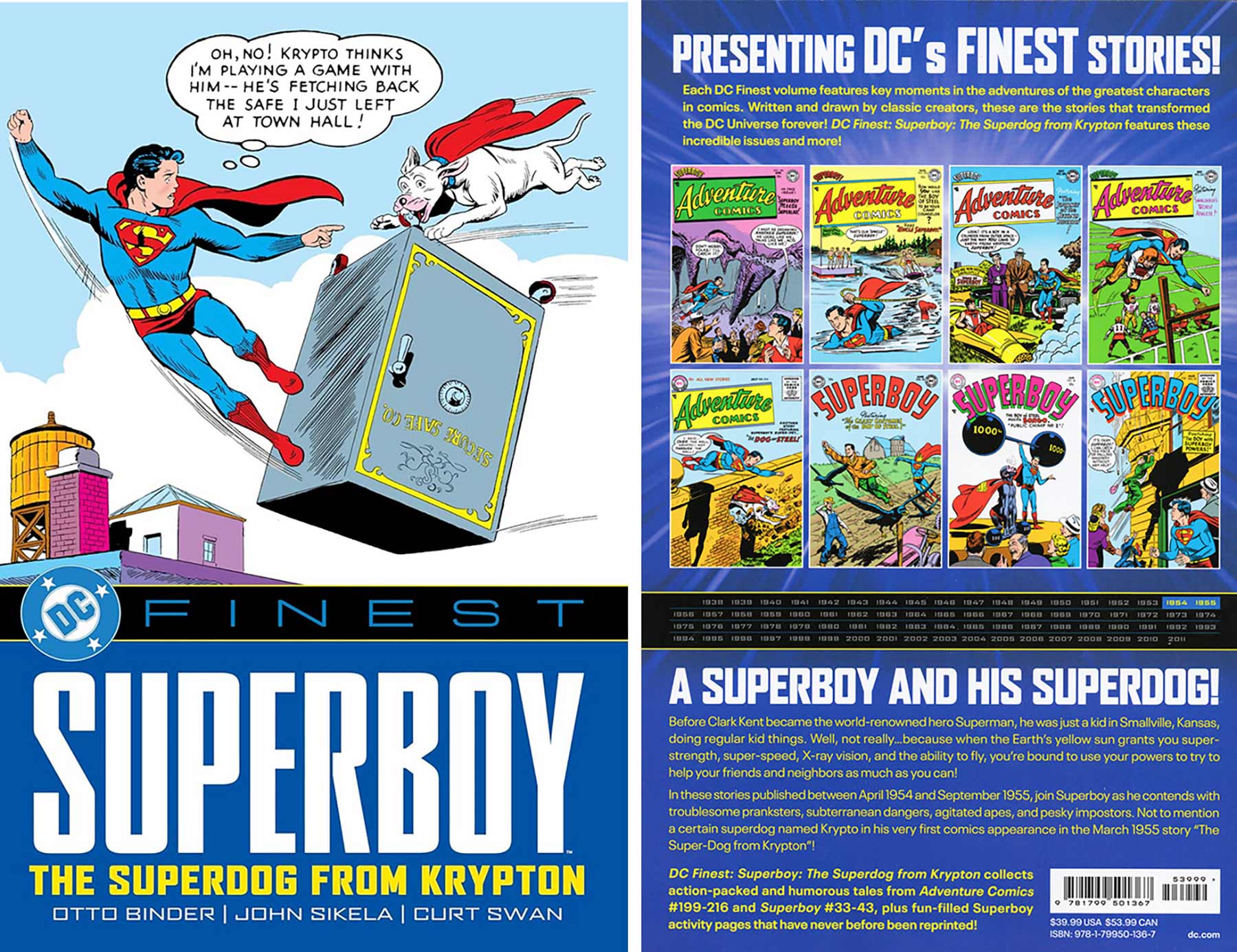
DC Finest Superboy: The Superdog from Krypton by Otto Binder, John Sikela, and Curt Swan
This 540-page volume—reprinting the Boy of Steel tales from Adventure Comics 199 through 216 and Superboy 33-43—are pretty much uncharted territory for reprints, with a cover feature—“The Superdog from Krypton,” introducing Krypto (a rather cartoony and dumb-looking mutt in his earliest appearances, even drawn by Curt Swan) as the hook to get people to buy this book (what with Krypto being the real star of James Gunn’s Superman movie this summer). All the stories are from 1954 and 1955 and I’ve never seen most of them, which is refreshing in and of itself. It’s a fascinating read; Superboy is definitely a gateway title for Superman, and these stories are written for a younger crowd, mainly by Otto Binder, Jerry Coleman, and Alvin Schwartz. As such, they kind of mimic the later Supergirl stories in that Superboy saves the day a lot by doing something at super-speed, thus averting catastrophes. All of the villains are petty crooks and schemers (like “Angles Anthony”), who have come up with some kind of plan to trick Superboy or to otherwise occupy him while they rob the Smallville bank. Both Lana Lang and Kryptonite figure heavily into a lot of stories, with the redheaded teenager trying her hardest to prove that Clark Kent is really Superboy. And there’s so many of the green rocks from Krypton laying around, it’s almost like they’re bananas (and in fact, they ARE in one story!).
The art is pretty much split between John Sikela and Curt Swan—Superboy seems to be Swan’s entry into the Superman family, art-wise, along with Jimmy Olsen. Sikela is an artist not talked about much these days; he has a simplistic style of art, kind of like halfway between Swan and Jesse Marsh, who drew Tarzan for decades when it was published by Dell and Gold Key. His Superboy is about a head too short, figure-wise, giving him an almost charming, gnome-like look. The stories are enjoyable, but man … are they text-heavy! Not sure how kids waded through some of them, but maybe it made the comics-reading experience more enjoyable in the mid-1950s while making each issue last, and last, and last. While the industry was burning, Superboy seems to be a solid beacon of innocence for comic book buyers, good clean fun amongst the horror and crime comics that dominated this particular era.
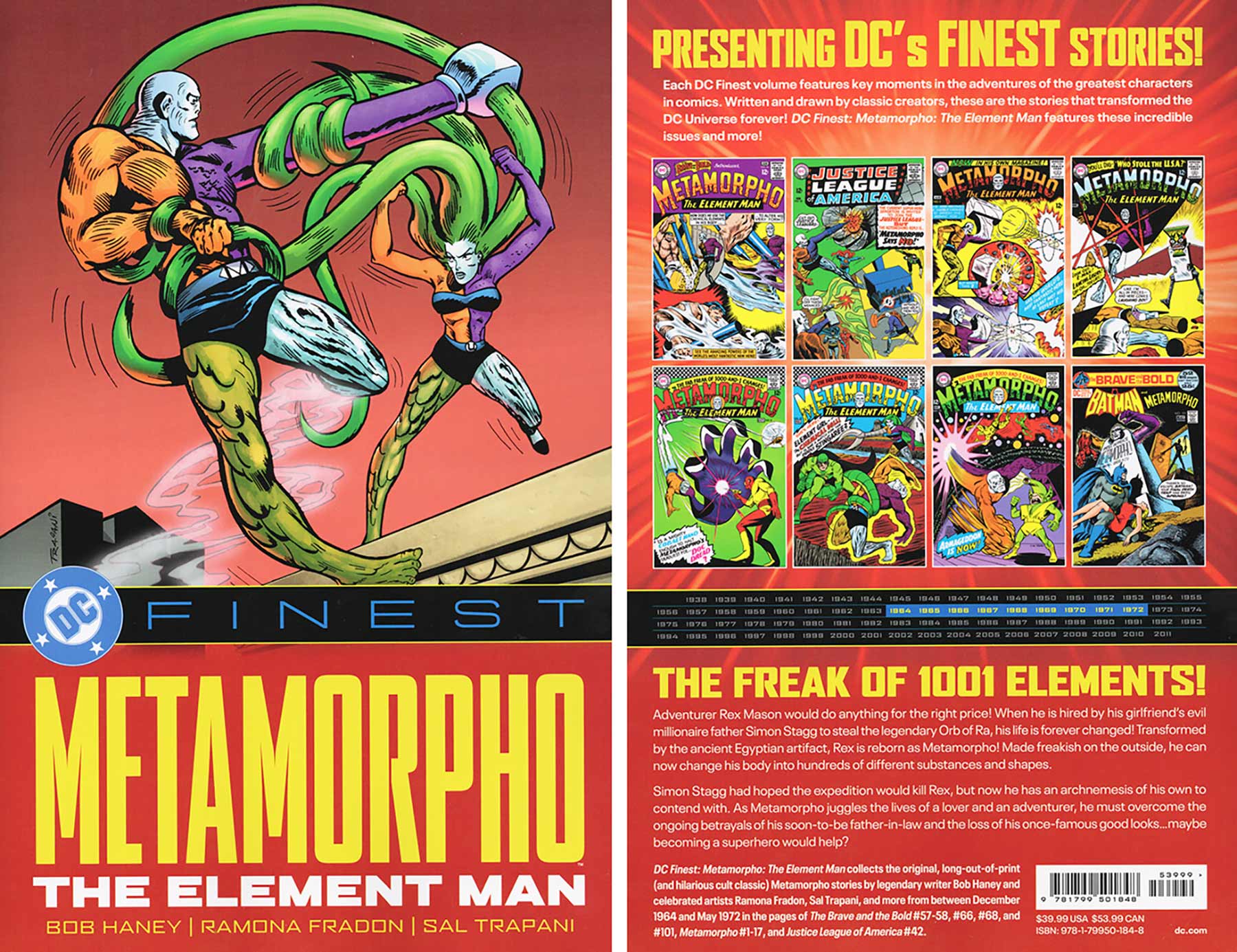
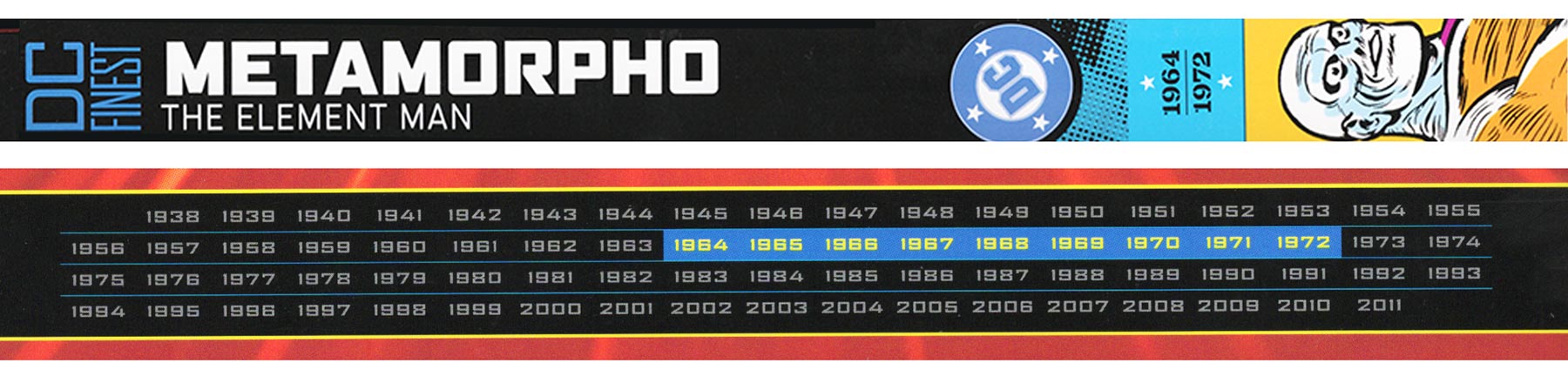
DC Finest Metamorpho: The Element Man by Bob Haney, Ramona Fradon, and Sal Trapani
This one was an impulse buy for me … I was at San Diego Comic-Con and came across a big booth that was selling graphic novels at 25% off, and they had one copy of this Metamorpho volume and I felt like it was calling my name.
This DC Finest volume weighs in at 592 pages and contains The Brave and the Bold 57 and 58 (the first appearances of the character), plus team-up stories in that title in issues 66, 68, and 101, plus Justice League of America 42, and Metamorpho, the Element Man issues 1 through 17, the entire first run from August 1965 through April 1968. Bob Haney was the writer/co-creator alongside artist Ramona Fradon. One of the things that struck me about this volume is that I thought Fradon drew the whole series; she actually dropped out pretty early, with issue 4, only doing six issues total (including the two B&B try-out stories). Sal Trapani draws the bulk of Metamorpho’s short series, with Joe Orlando and Jack Sparling contributing stories; there are a few pages labeled “unknown” as to the both writer and artist in the credits on the Contents pages of this volume, but they’re all devoted to a contest for the series.
Metamorpho was adventurer Rex Mason, conned into going after an ancient artifact by his girlfriend’s father, industrialist/millionaire Simon Stagg. Mason gets more than he bargains for when Java, a reanimated Neanderthal given modern day intelligence by Stagg, strands Mason in an Egyptian pyramid where he encounters a meteor that changes him into Metamorpho, the Element Man. As MM, Mason can become any element, solid, liquid or gas, and can form himself into objects based on any element, but his handsome, adventurer visage becomes scarred and ugly. Still, Stagg’s beautiful daughter, Sapphire, continues to love Mason, much to Java’s jealous chagrin.
As a kid, I remember not liking the character very much when it first premiered in late 1964; now I really appreciate and enjoy Fradon’s art. The stories are as wonky as you’d expect from Haney, who steadfastly avoided any DC Comics continuity at the time (not that there was that much available), especially in his long run of The Brave and the Bold team-up stories featuring Batman, which ran the DC characters gamut from Sgt. Rock to Kamandi, the Last Boy on Earth. To be honest, this is not my favorite DC Finest volume so far … I found it to be a bit of a slog to read, although Trapani did a credible job of aping Fradon’s style once she was gone, but Charles Paris’s inks may have helped give the series it’s uniform look.
This book is a quaint relic from DC’s 1960s era when they tried a number of different characters while trying to figure out why Marvel Comics was becoming more popular. Metamorpho is one of them who had staying power, appearing recently in a new mini-series written by Al Ewing and drawn by Steve Lieber, and in James Gunn’s Superman movie this summer.
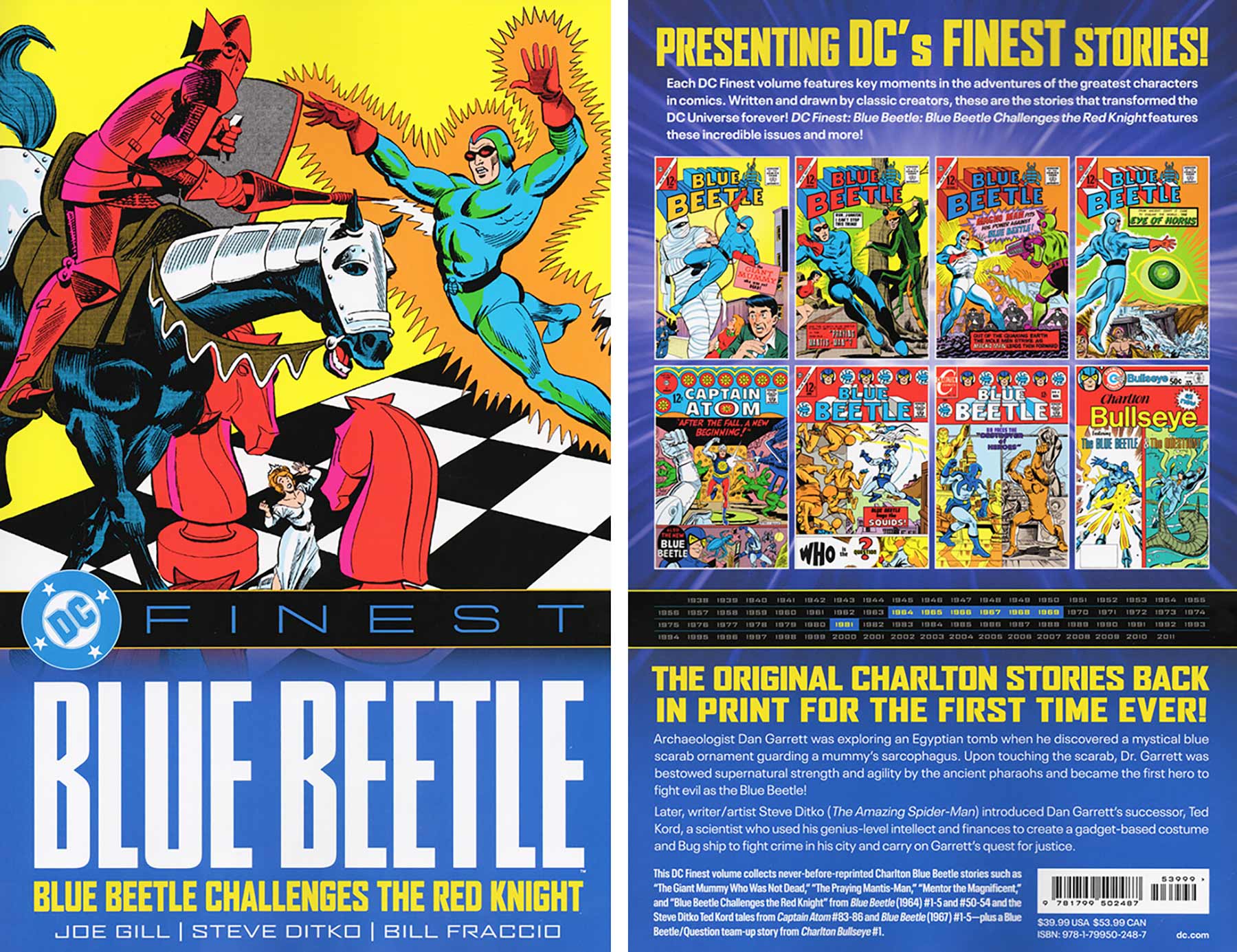
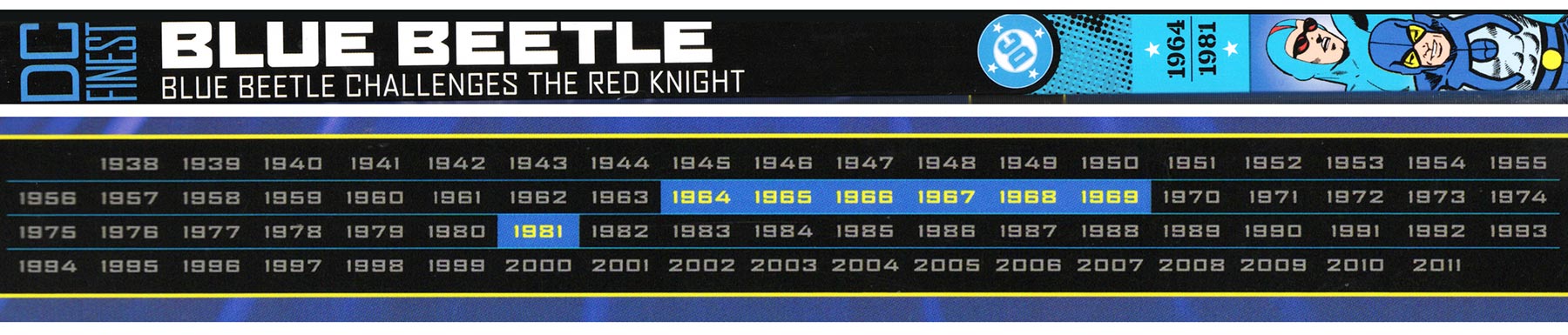
DC Finest Blue Beetle: Blue Beetle Challenges the Red Knight by Joe Gill, Steve Ditko, and Bill Fraccio
This was another unexpected buy for me, since I’m sticking with the Superman and Batman DC Finest books (yeah … right), but i did enjoy it. In addition to the fondly-remembered Steve Ditko revamp of the Blue Beetle character in the mid-1960s, under editor Dick Giordano and as part of his “Action Heroes” line for Charlton, this book reprints the earlier Blue Beetle issues by Joe Gill, Bill Faccio and Tony Tallarico, comics that are not so … well, let’s just say as fondly remembered. Both the writing and art on those books (there are 10 issues reprinted from 1964 to 1966, with a very early story by Roy Thomas in the final issue) are pretty horrible. I do have a weird childhood memory of having the first issue (“The Giant Mummy Who Was Not Dead!”) at my grandmother’s house after she died while my mom and aunt cleaned out her stuff. I think the book was bought to keep me entertained, but boy, was that a bad choice!
Ditko revamped the character with issue 83 of Captain Atom, and Blue Beetle continued in that title for four issues until he got his own book in June 1967. Ditko’s version featured Ted Kord, a scientist/inventor, but it didn’t jettison the previous incarnation of the character, Dan Garret, which was actually a minor stroke of genius, both acknowledging the character’s past (it started in the Golden Age at Fox) and building mystery and suspense as to what happened to Garret. Some of the early stories are scripted by Gary Friedrich, with later ones credited to D. C. Glanzman, who was a brother of prolific comics artist Sam Glanzman; however Ditko later claimed he wrote most of those stories, and it shows. While issues 1 through 4 are about as good as Charlton ever got, superhero-wise, issue 5 (“Blue Beetle Faces the Destroyer of Heroes!”) shows Ditko’s lean towards his personal philosophies and has some of the longest (and mostly unreadable) word balloons I’ve ever seen in a comic book story, made all the worse by them being “Lettered by A. Machine,” a typewriter font that’s hard to read and just plain ugly. Ditko’s technological bent for the character was coupled with a very Spider-Man like approach, with a wise-cracking, bug-costumed, swingin’ superhero. And once again, Ditko designed a kick-ass costume for his version of the Beetle. His Blue Beetle costume ranks up there with his Spider-Man and Doctor Strange designs.
This is the smallest DC Finest volume I’ve seen so far, at only 368 pages, and I have one problem with it: There’s a Blue Beetle story missing. Ditko completed Blue Beetle issue 6, and a black and white version of it was reprinted in DC Archives Action Heroes Vol. 2 back in 2007; I’m a bit mystified why that wasn’t included in this volume, unless DC Finest has a mandate to only include published stories. There’s also a story from Charlton Bullseye issue 1 from 1981, that teams up Blue Beetle and The Question, so the timeline on this volume is 1964-1968 plus 1981. That story could have omitted in favor of issue 6.
I liked this volume a great deal. Reading those Ditko revamp stories once again made me realize they were a lot better than I remembered. Blue Beetle eventually ended up as a DC Comics property, and I’m sure at some point we’ll see a DC Finest volume reprinting that 1980s series, too.
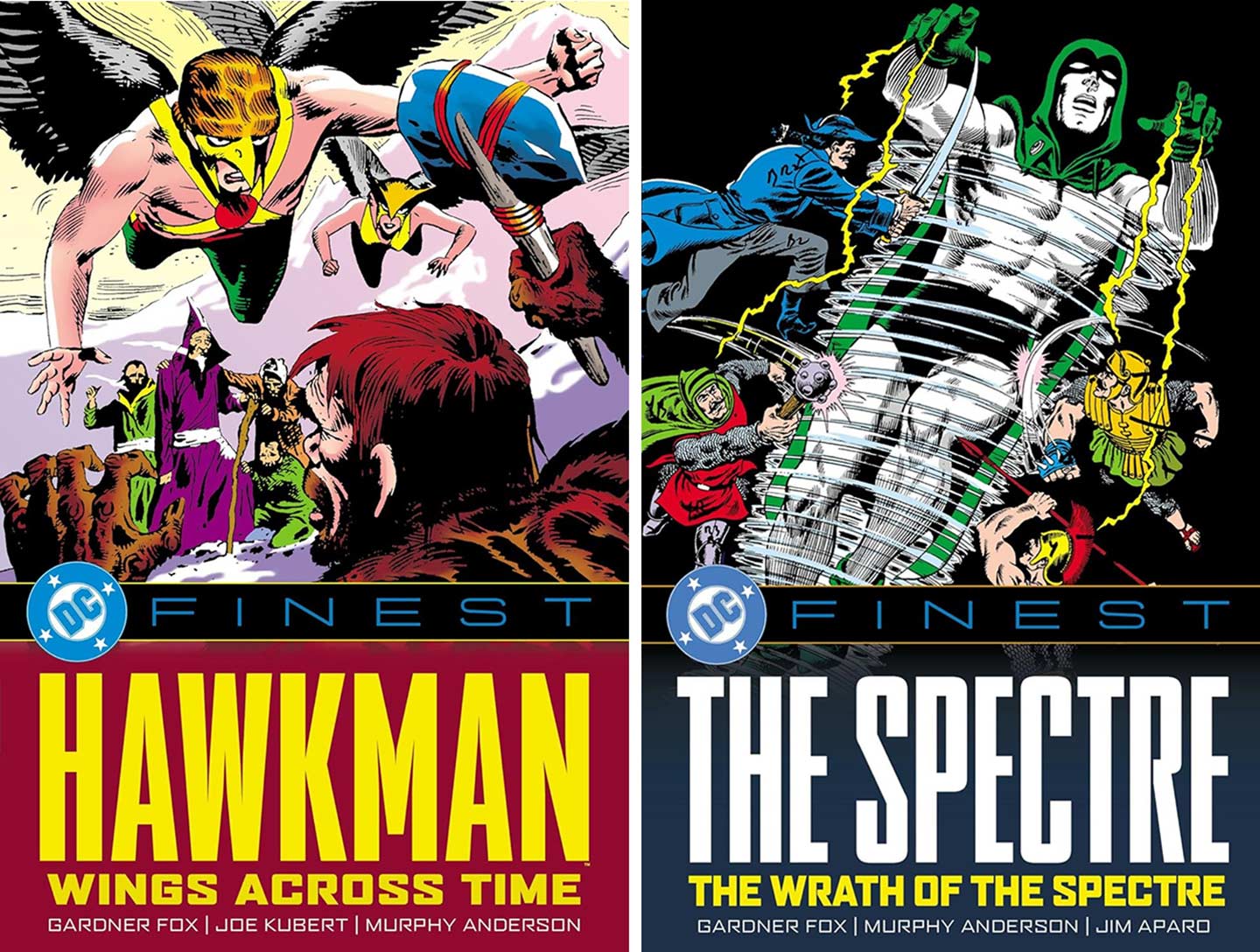
Up next for me in the DC Finest line: Two Silver Age classics that feature primarily Murphy Anderson art … Hawkman: Wings Across Time by Gardner Fox, Joe Kubert, and Murphy Anderson and The Spectre: The Wrath of the Spectre by Gardner Fox, Murphy Anderson, and Neal Adams.
 @innocent-bystander.com
Leave a comment