
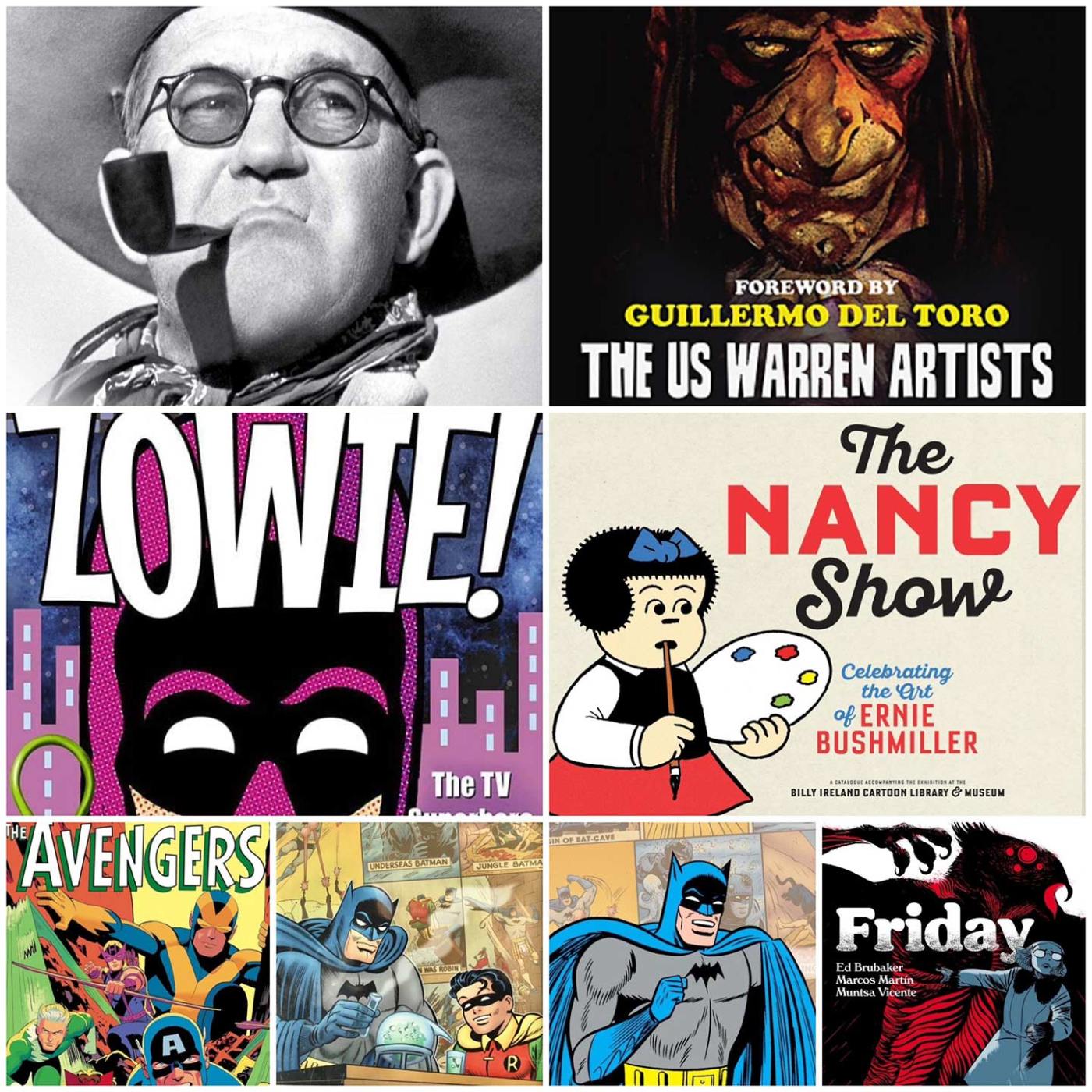
Back to “normal” this month, after the very welcome—and hectic—distraction of Comic-Con 2024 in July. Here are the books I read in August, many on my very lovely balcony, even though they tore down all four of the huge pine trees in my courtyard (thankfully they kept the palm trees), I’m so glad I bought a big umbrella to keep me cool in the shade!
Print the Legend: The Life and Times of John Ford by Scott Eyman
I’ve read many movie history books by author Scott Eyman, but I think this is his best. I got fascinated about John Ford from the recent seven-part TCM podcast, The Plot Thickens, Season 5 hosted by Ben Mankiewicz, called “Decoding John Ford.” Eyman was heard frequently during the podcast and I decided to take a chance on this voluminous book, which weighs in at over 600 pages. I’m glad I did. Eyman has a way of humanizing his subjects, while still doing a very thorough examination of them. Ford is a fascinating subject; while the bulk of his films are Westerns—categorically NOT my favorite genre—his eye for composition and his straight-forward method of storytelling make him one of the most—if not THE most—respected filmmakers in Hollywood history, revered by just about all of his peers and subsequent directorial giants. He’s also an extremely flawed man, at times petty and intractable, but also capable of great generosity and caring. At this point, I’ll pretty much read anything from Eyman on movies. I think he’s one of the best film historians out there, and I look forward to whatever he has up his sleeve next.
Illustrators Magazine Special #18: The US Warren Artists by Peter Richardson
This is one of the best books of the year for me, and I feel lucky to have gotten a copy, since my understanding is it’s already sold out worldwide and was limited to just 1,500 copies. It’s an overview of the careers of the top 25 Warren Publications artists (Creepy, Eerie, Vampirella, et al) and includes everyone from Frazetta to Basil Gogos, Al Williamson to Angelo Torres, Neal Adams to Wally Wood and many more. It’s a great looking package, too, so much more than a magazine. It’s a large format hardcover book with great printing (I think the binding feels a bit cheap, though, and I have a problem with the cover finish, which picks up fingerprints way too easily on the black backgrounds). The bios of each artist include more than just their Warren work, although that is the main focus; for example, the Jerry Grandinetti section has some of his amazing DC war comics wash-tone covers, in addition to some of his quite quirky Creepy/Eerie art. The writing is a bit pedestrian, but pretty thorough and I have some minor quibbles with the layout (especially how the author/designer—Peter Richardson—handles art and photo captions, which are bunched up against the text too closely for my taste). Illustrators Magazine previously published a few Warren Publications specials, including a history and one devoted to the Spanish artists, but this one is mind-blowing. If you love US comic art and can grab one of these, do so. It’s so worth it.
The Batman Annuals Vols. 1 and 2 by Various
I found both of these DC Comics Classics Library volumes in a half-price box at Comic-Con, and i’m so glad I picked them up. Published in 2009, Volume One reprints the 80-page Batman Annuals from the early 1960s, #s 1, 2, and 3. These are little time capsules of the Batman and Detective titles in the mid to late 1950s. All the annuals had special themes: #1 was “1,001 Secrets of Batman and Robin!”, #2 was “Batman and Robin in Their Most Thrilling Action Roles!”, and #3 (my personal fave as a kid—we purchased all of these as they came out in the ‘60s) was “Batman and Robin’s Most Fantastic Foes!”. There’s also a great introduction by Michael Uslan, the executive producer of the Batman films (and pretty much everything Batman in movies, TV, and animation) and an afterword by DC creative director (at the time) Richard Bruning, about collecting collections (annuals) into yet another collection. The stories reprinted are primarily written by Bill Finger and Edmond Hamilton and drawn by Dick Sprang, Lew Sayre Schwartz, and Sheldon Moldoff … all masquerading as “Bob Kane.”
The Batman Annuals Vol. 2—published in 2010—was a continuation of Vol. 1, reprinting Batman Annuals #4, 5, 6, and 7, before DC shifted all their Annuals to the 80-Page Giant format and eventually consolidated them into the regular Batman series numbering. Once again, the Annuals had special themes: #4 was “The Secret Adventures of Batman and Robin!”, #5 was “The Strange Lives of Batman and Robin!”, #6 was “Batman and Robin’s Most Thrilling Cases!”, and #7 was “Thrilling Adventures of the Whole Batman Family!”. Michael Uslan offers another fact-filled intro, exploring each story in each annual, and pointing out that Annual #6 appeared on newsstands a week before JFK was assassinated in November 1963; the final Batman Annual, #7, appeared just before Memorial Day 1964. The stories reprinted are primarily written by Bill Finger and Edmond Hamilton and drawn by Dick Sprang, Lew Sayre Schwartz, and Sheldon Moldoff, with a couple of World’s Finest stories by Curt Swan.
Mighty Marvel Masterworks: The Avengers Vol. 4 by Stan Lee, Roy Thomas, and Don Heck
Not my favorite era of Avengers comics, this volume reprints issues #31 through #40, all with art by Don Heck, who also inks some of the stories. Heck is better with a good inker, and he has both Frank Giacoia (good!) and George Bell (bad!) in this volume. There’s a bit too much emphasis in these stories on Goliath, who used to be Giant Man, who in turn used to be Ant-Man. Yep, Goliath is a much better concept and the costume is nice, but he’s just a big strong guy with a lot of angst. With issue #35, Roy Thomas takes over the scripting, and somehow manages to be even more wordy than Stan Lee. Thomas would quickly make Avengers his own, and write it over the next 70 issues, really hitting his stride with his collaborations with John and Sal Buscema and Neal Adams. Unfortunately, this isn’t those stories, but hey … they’re a’coming!
Friday Book Three: Christmas Time Is Here Again by Ed Brubaker and Marcos Martin
Friday Book Three finishes the story of Friday Fitzhugh and Lancelot Jones, “the smartest boy in the world.” The story continues its supernatural bent, marking Friday and Lance’s hometown as kind of a nexus for that kind of activity and sending Friday back in time to save Lance’s life. It’s an enjoyable read—I loved the first two volumes—and Marcos Martin’s art is extraordinary. He reminds me at times of Tim Sale, in that his work is so stylistic, it’s unmistakably his, and its quirkiness is its greatest asset. I found Vicente Munsta’s coloring a little too dark, especially on the paper stock chosen for this volume. Like all continuing stories, this one would be best read all at once, and I’m sure Image and Brubaker will publish a deluxe hardbound book collecting all three of the original volumes into one package. I find this series—which originally appeared online—to be a really refreshing one from writer Brubaker; I’d grown tired of his “Reckless” series of graphic novels with high price points, drawn by Sean Phillips and also published by Image. I still think Ed is one of the best writers in comics, and I really enjoy it when he goes out of his comfort zone (crime) and does things like this and Velvet (hey, Ed … bring back Velvet!).
The Nancy Show: Celebrating the Art of Ernie Bushmiller
I have a confession: I hated reading Nancy as a kid, but she was seemingly always there, hindering me from getting to Tarzan or Dick Tracy or Secret Agent Corrigan (nee X-9). But, as Wally Wood once put it, “By the time you’re looking at a Nancy strip, you’re already reading it.” And over the past few years, I’ve grown to have a small, but nonetheless strange, fascination with the cartoon kid, created and illustrated by Ernie Bushmiller. Inherently timeless yet old-fashioned, Nancy is a little like Krazy Kat, in that both characters live in their own special worlds. This is the catalog for a 2024 exhibition at the Billy Ireland Cartoon Library & Museum in Columbus, Ohio, and is distributed by Fantagraphics, the company responsible for some lovely Nancy reprints in the past and—evidently—again in the future (like next year). The book is a capsule history of both the strip and its artist—artists, really, including those that took up the Nancy challenge after Bushmiller’s passing—with lots of original art and a chronological selection of Sunday pages in color, too (and smartly printed on tanned paper, to approximate that newsprint look). I maybe chuckled once or twice while reading this—I don’t find Nancy particularly funny—but I certainly marveled at Bushmiller’s simplistic but expertly wrought cartooning. if you’re curious about Nancy and the art of the American newspaper comic strip, this is a great place to start.
Zowie! The TV Superhero Craze in ‘60s Pop Culture by Mark Voger
This is the fifth in a series of deluxe, full-color, hardbound books by author/designer Mark Voger for TwoMorrows Publishing that deal primarily with 1960s pop culture. I loved the first four (Monster Mash, Groovy, Holly Jolly, and Britmania, which—respectively—dealt with the 1960s’ monster craze, psychedelic era, Christmas, and the British invasion of musical groups. Voger both writes and designs these books and they’re like little pop culture time capsules, chock-full of colorful images and content. Zowie! is no exception. It very thoroughly mines the Batman TV show craze and everything associated with it—from comics to magazines to toys to bubble gum cards, with everything in between. Included are interviews Voger conducted years ago as a newspaper journalist with the likes of Adam West, Burt Ward, Julie Newmar, and comic book creators like Julius Schwartz, Carmine Infantino, and Joe Giella. It’s a very satisfying and nostalgic read, especially for someone like me, who grew up immersed in this era. Kudos to both Voger and TwoMorrows for continuing this series of high-quality books for boomers just like me—and anyone else interested in pop culture.
 @innocent-bystander.com
Leave a comment