


Click on the images below to see them larger on your screen!
All images and art in this post TM & © MARVEL.
By the time the summer of 1964 rolled around, the “Marvel Age of Comics” was in full swing. Captain America, the last of the Timely (Marvel’s company name in the 1940s and ‘50s) “Big Three”—along with the Human Torch and the Sub-Mariner—returned in Avengers #4 (released in January), and would debut as the second feature alongside Iron Man in Tales of Suspense #59 in August. Daredevil had finally premiered in February after a prolonged and difficult birth (click here to read more about that), marking the end of the first wave of Marvel’s new superhero titles. The Incredible Hulk, cancelled after its initial six-issue run in 1962 and 1963, would return as a co-feature in Tales to Astonish #60 in July, after bouncing around in guest appearances in books like Fantastic Four #12, and a classic two-parter in issues #25 and 26, plus Amazing Spider-Man #14. Things were definitely looking up for the little company that could, less than three short years after Fantastic Four #1 hit the stands.
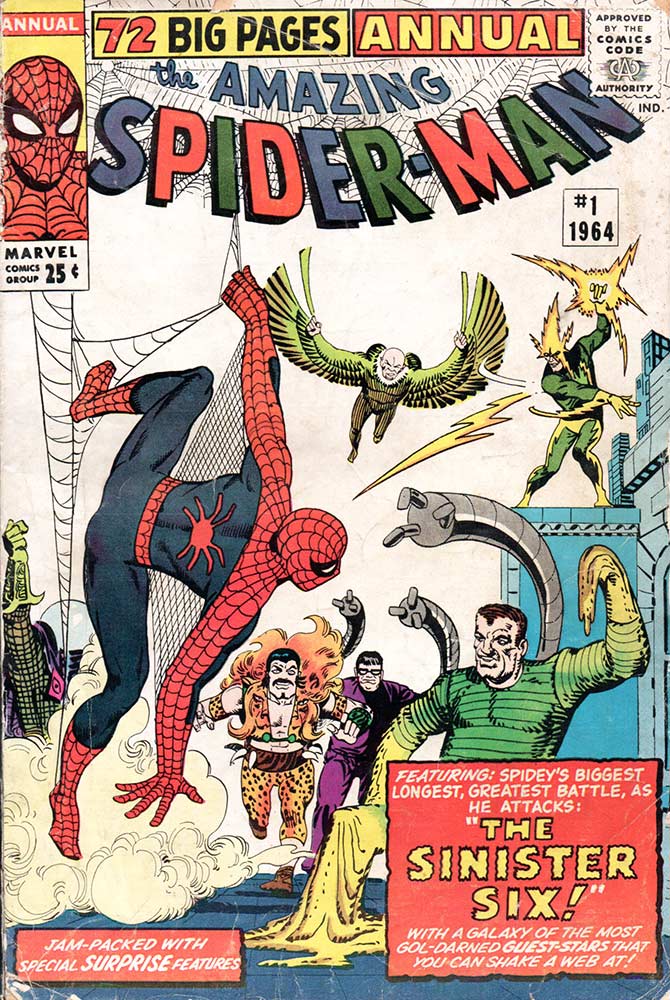
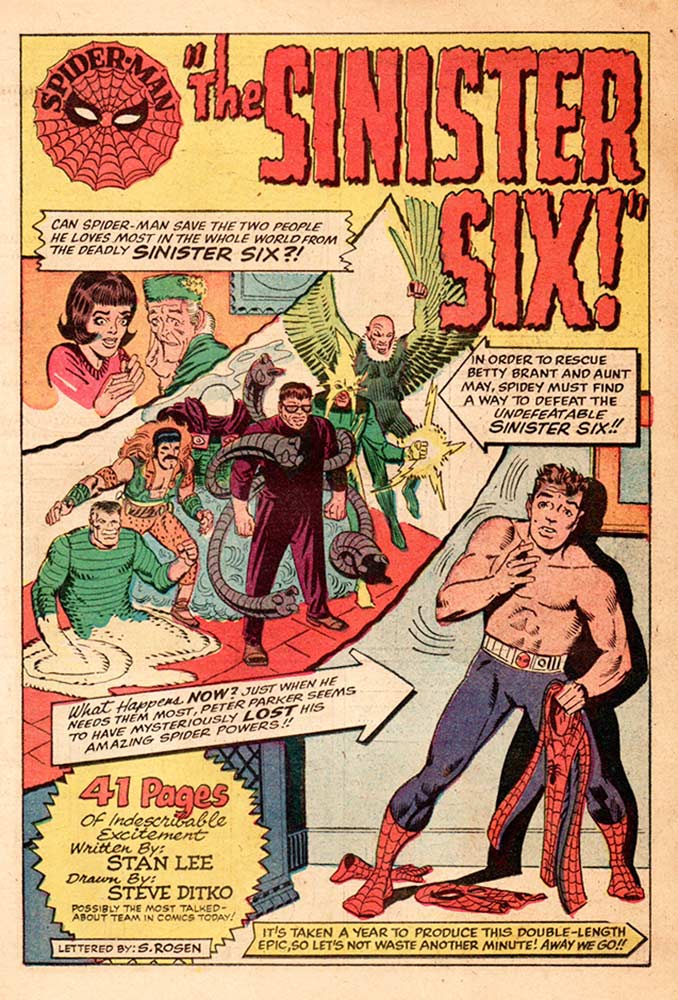

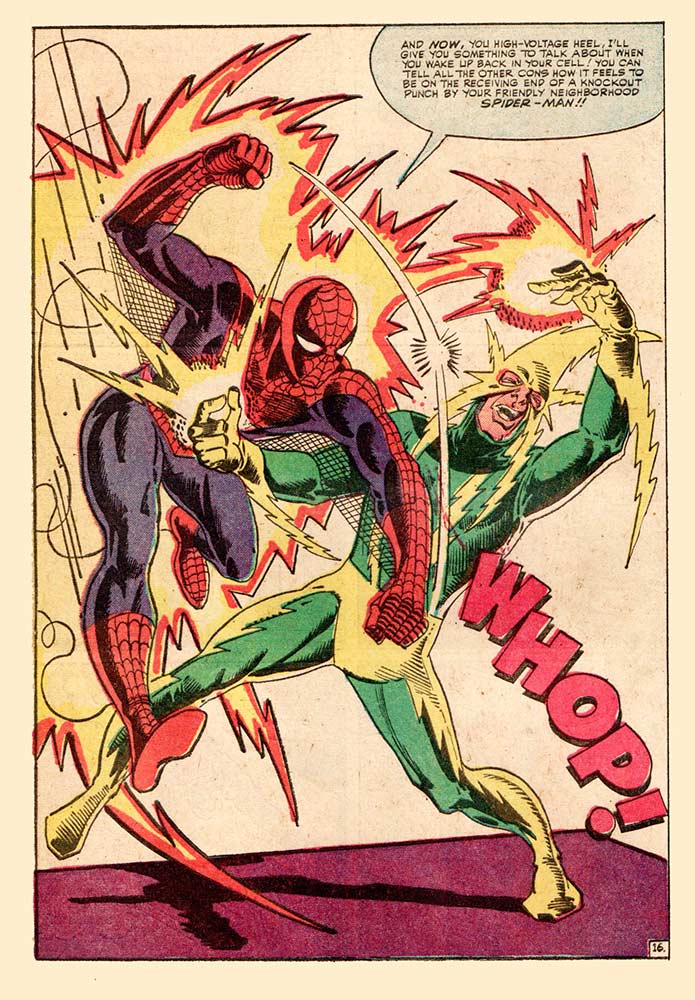
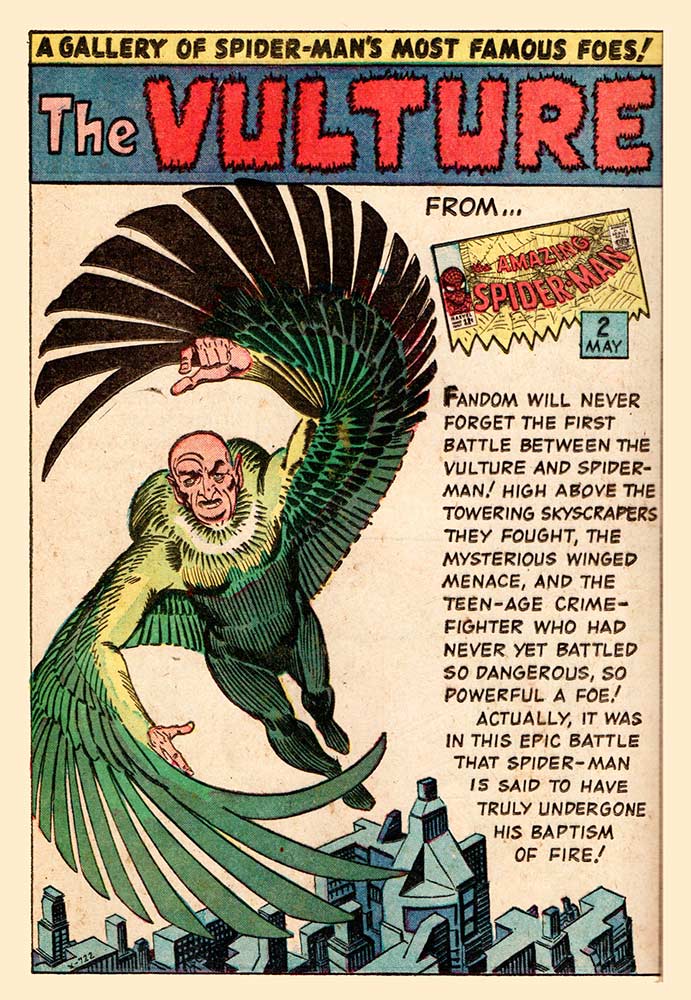
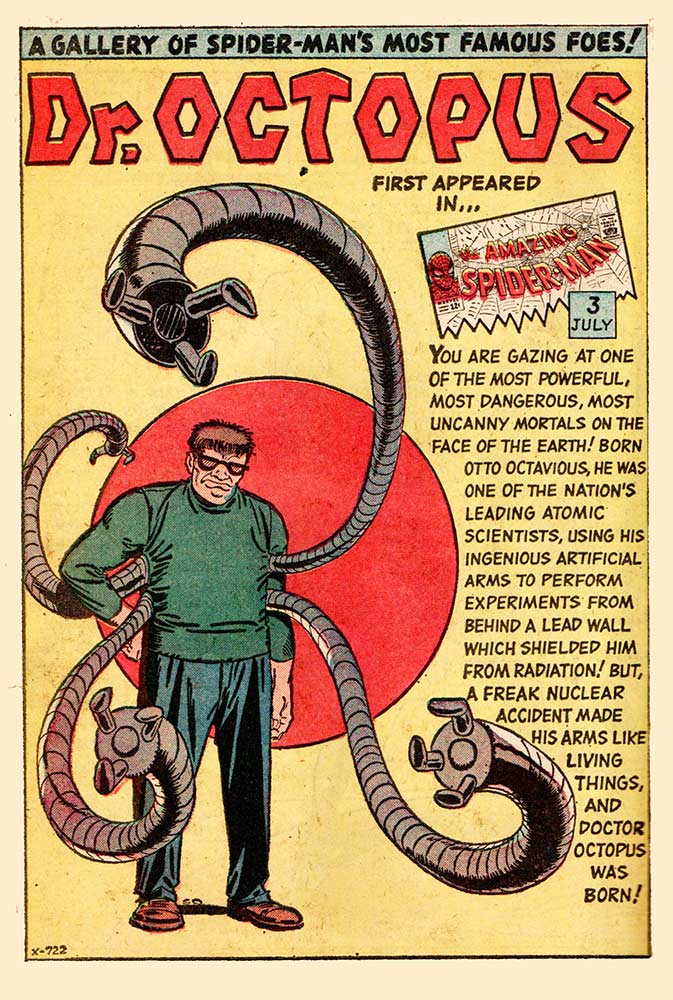


That summer, Marvel released four annuals. The first one out of the gate was Amazing Spider-Man Annual #1 (released on June 11, 1964, between Spidey’s regular title #s 16 and 17). It’s Marvel’s first all-new annual (superhero division), featuring a 41-page lead story “The Sinister Six,” which teams up six of the ol’ Webhead’s most, um … sinister, I guess, foes (Dr. Octopus, Electro, Kraven, Mysterio, Sandman, and Vulture) in a bravura tale from Stan Lee and Steve Ditko (emphasis added on the latter, please). Ditko’s incredible art included six full-page “money-shots” of Spidey fighting each of the villains. In addition to this giant story, this book also contained a 14-page “Gallery of Spider-Man’s Most Famous Foes,” covering all the baddies from Amazing Fantasy #15 (“The Burglar”) through Amazing Spider-Man #15 (“Kraven the Hunter”); a 9-page “Secrets of Spider-Man” feature; five pages of pin-ups; and a 3-page “How Stan Lee and Steve Ditko Create Spider-Man!,” in which Stan and Steve—apparently still getting along at this point—poke fun at each other.
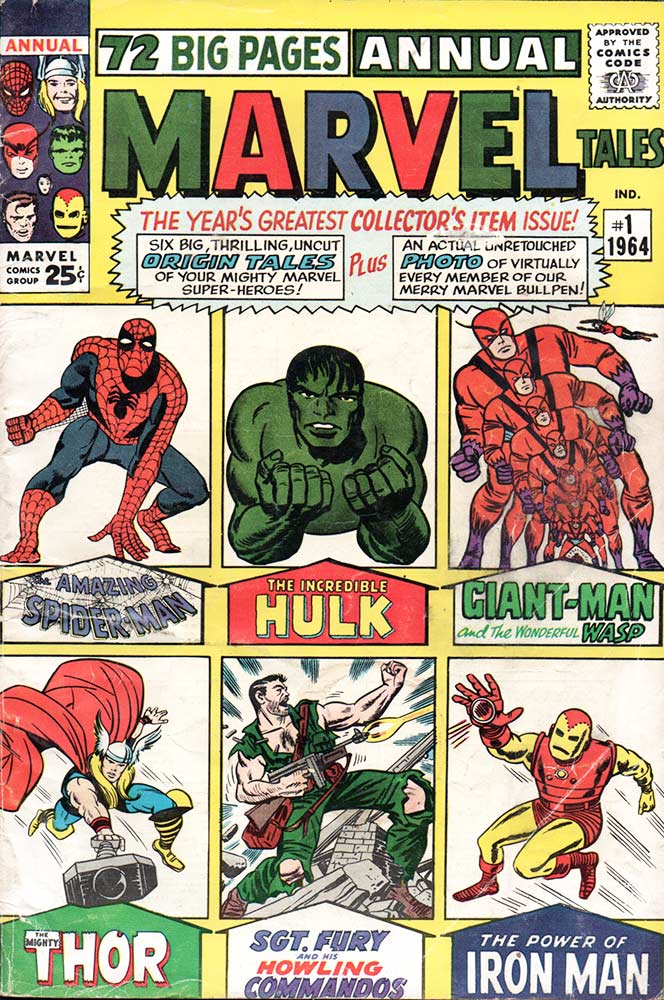
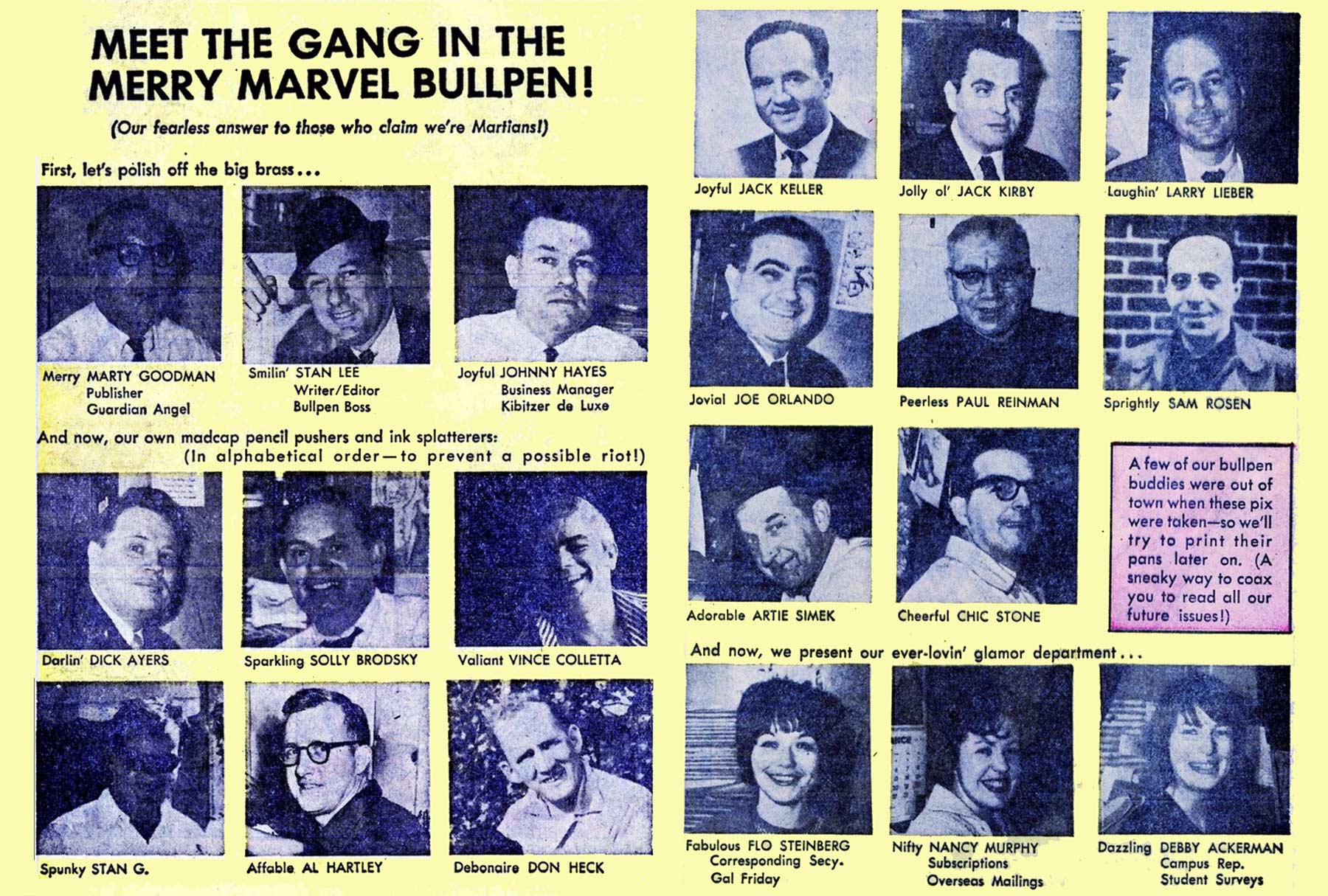
The first Spidey Annual was followed by the first Marvel Tales Annual #1 (released also on June 11, 1964), an all-reprint affair, thus starting Marvel’s love affair with reprinting its past. To be fair, this was a good thing; with spotty newsstand-only distribution, many of the early Marvel titles didn’t make it into the hands of fans, and Stan and company quickly learned there was a market for such reprints. Marvel Tales Annual #1 contained origin tales of Spidey (from Amazing Fantasy #15); the first chapter from The Incredible Hulk #1, recounting his gamma bomb origin; “The Return of Ant-Man” (from Tales to Astonish #35), Hank Pym’s origin story as a superhero, along with two pages from Tales to Astonish #49, in which Ant-Man became Giant-Man; the first six pages from Sgt. Fury and His Howling Commandos #1, introducing the squad; the origin of Iron Man from the first story in Tales of Suspense #39, plus four pages from ToS #48, revealing the creation of Iron Man’s new costume; the complete origin of Thor from Journey Into Mystery #83; and finally—the moment we were all waiting for—a two-page spread of photos of the members of the fabled Marvel Comics Bullpen!
Marvel’s other two 1964 annuals debuted on July 2: Millie the Model Annual #3 and Fantastic Four Annual #2. Millie #3 was most likely an all-reprint affair, while FF Annual #2 included a 12-page new story, “The Fantastic Origin of Doctor Doom,” which opened the book; six pages of “Gallery of Famous Foes,” covering the bad guys from FF issues #18-30; five pin-ups (Mr. Fantastic, Sue Storm, Human Torch, Thing, Alicia Masters); and to close the book, a 25-page story, “The Final Victory of Dr. Doom.” Sandwiched in the middle of the annual was a reprint of FF #5, the very first Doctor Doom tale (you know, the one with pirates!). The new stories—once again totaling 37 pages, like FF Annual #1—were by Stan Lee and Jack Kirby, with inks by Chic Stone. This second FF Annual was a little bit of a letdown—for me, at least—as it didn’t have as many special feature pages as the first one, but it sure was a sight to behold on my local newsstand in the middle of summer 1964.
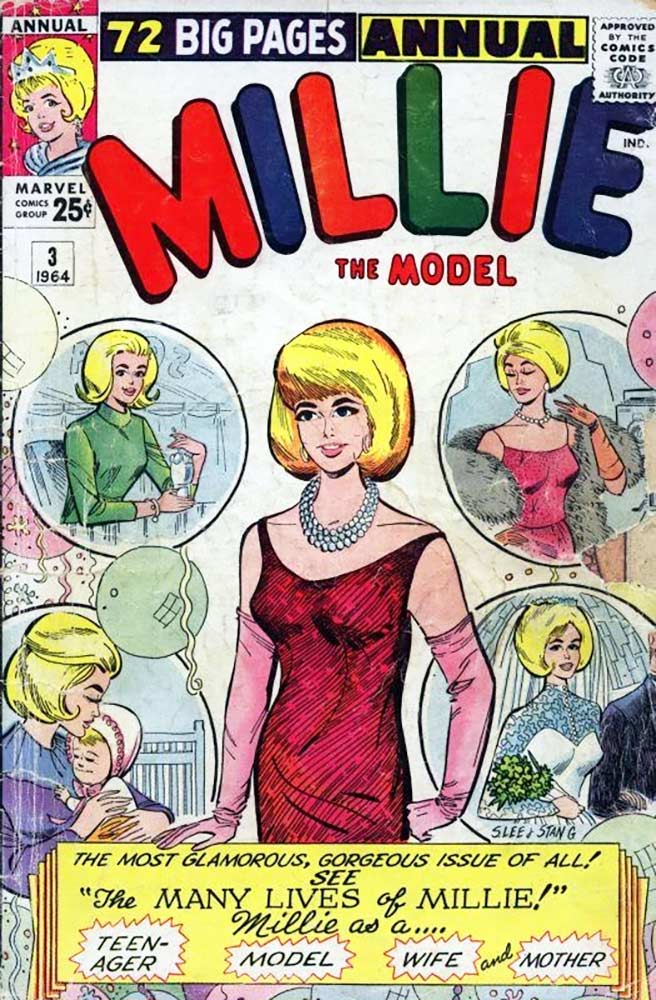


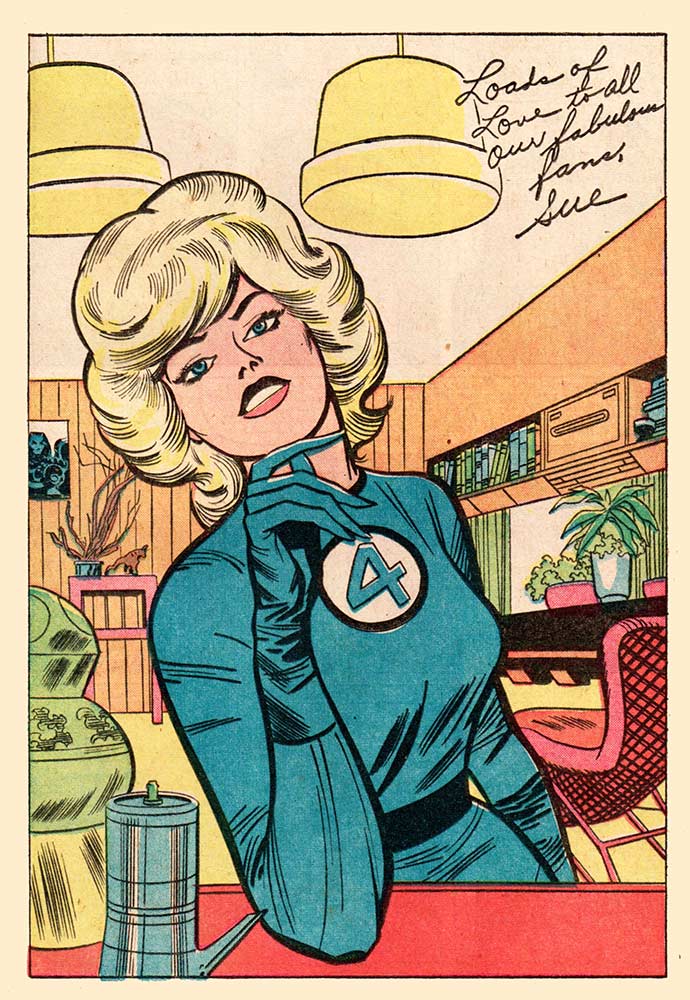
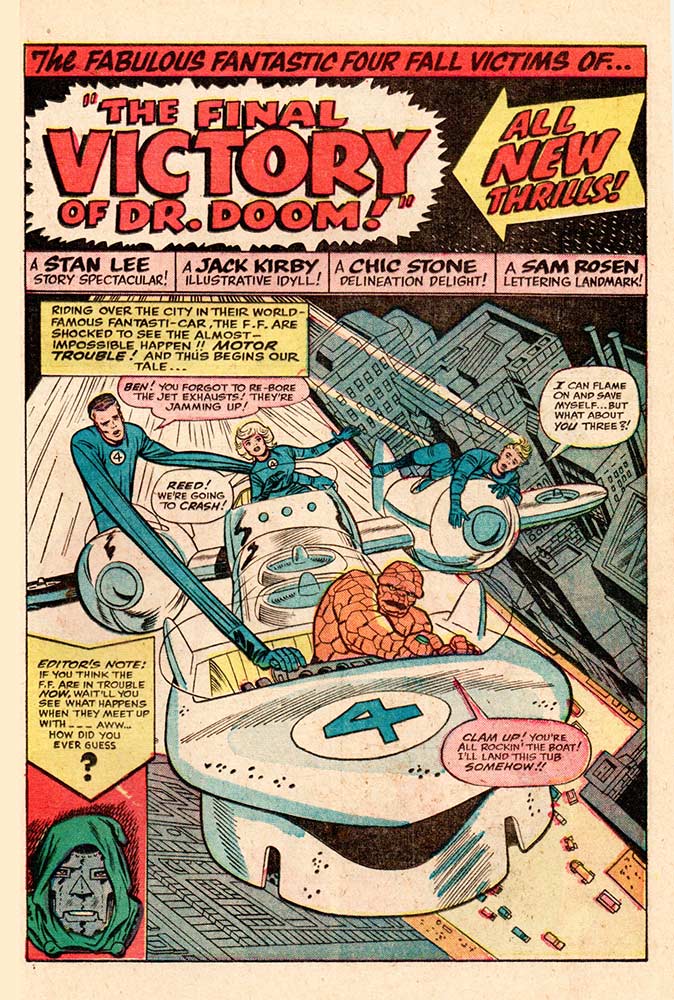
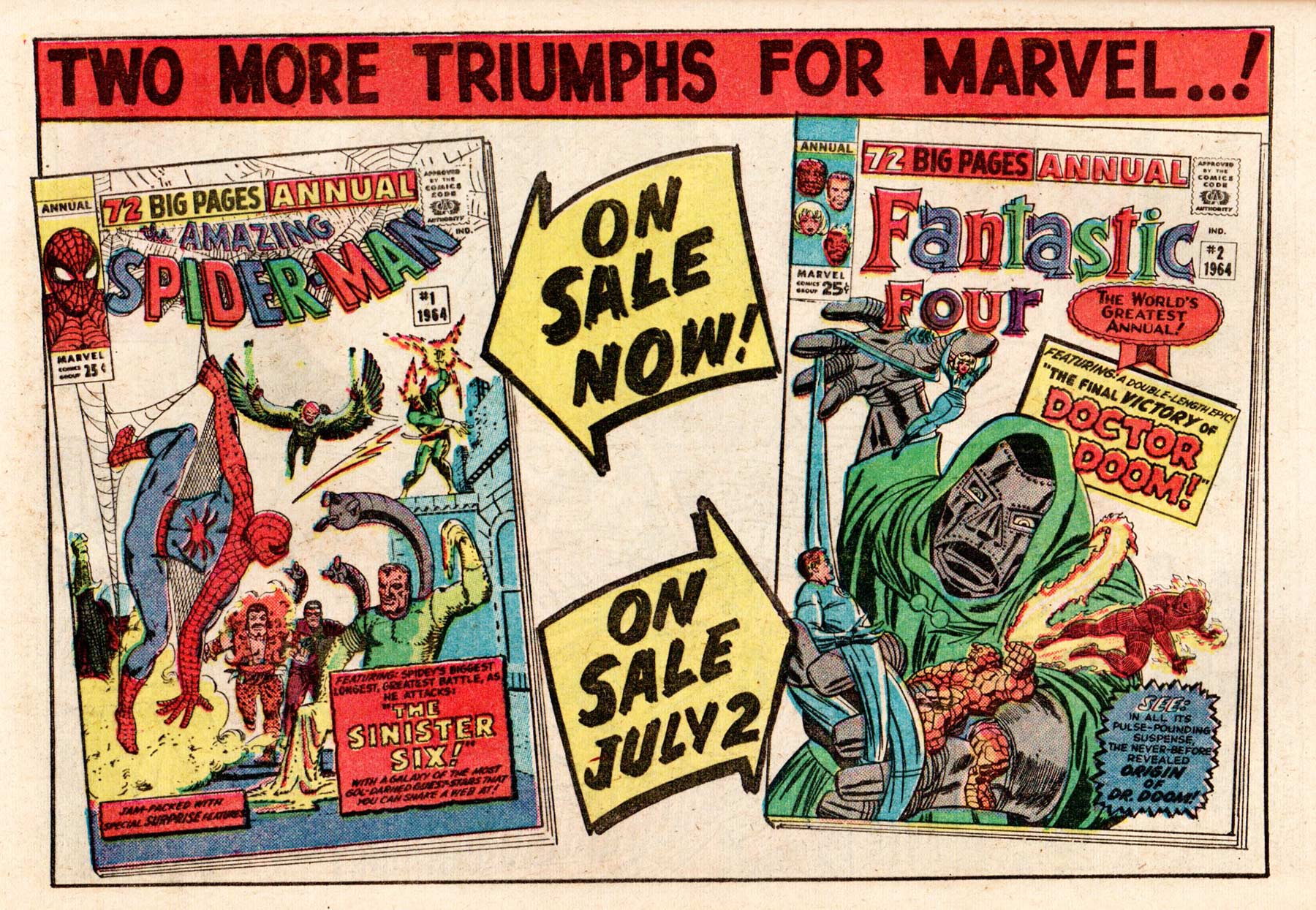
The Big Two of Marvel’s 1964 Annuals!
1965 saw the Marvel Age of Comics at its peak. In May of 1965, ongoing series for both Sub-Mariner and Nick Fury, Agent of S.H.I.E.L.D. debuted in Tales to Astonish #70 and Strange Tales #135, replacing the moribund Giant-Man and Human Torch/Thing features, respectively. And by the end of 1965, Journey Into Mystery ceased to exist with issue #125 (published on Dec. 2), and finally became The Mighty Thor with issue #126, published on January 4, 1966. The Marvel Universe was alive and thriving.
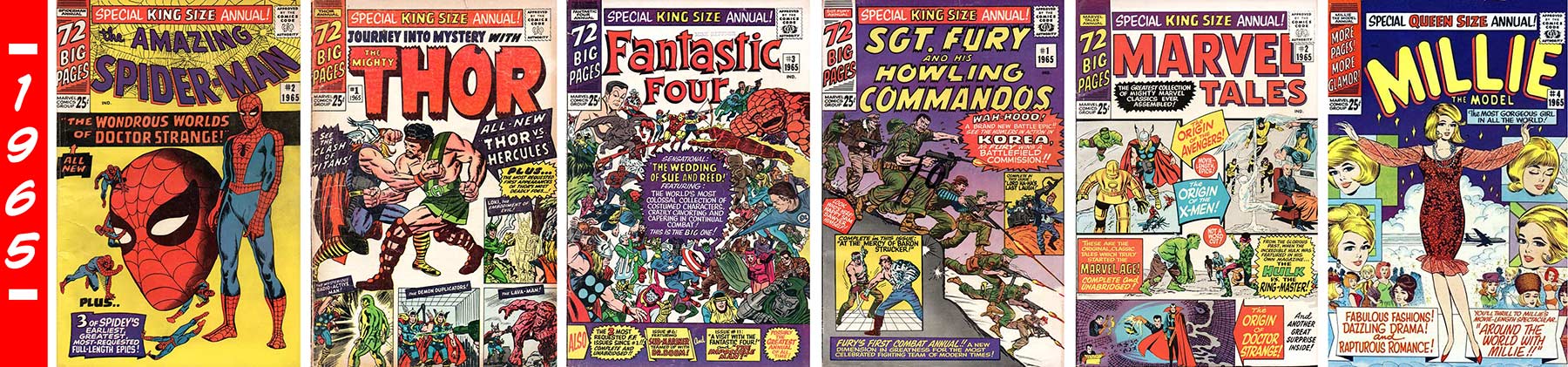
Marvel released six annuals in the summer of 1965, but the amount of new features went down precipitously. All their superhero annuals included just one new story, ranging in size from 15 to 23 pages—about the size of a regular full issue—and special features were kept to a minimum. This year’s crop of publications was called “Special King Size Annual” across the top of the book and the usual, world-famous Marvel Comics corner boxes, previously based on the regular titles’ ones on the annuals, instead heralded “72 Big Pages,” as a reminder of the special-ness of these special annuals, king size, no less.

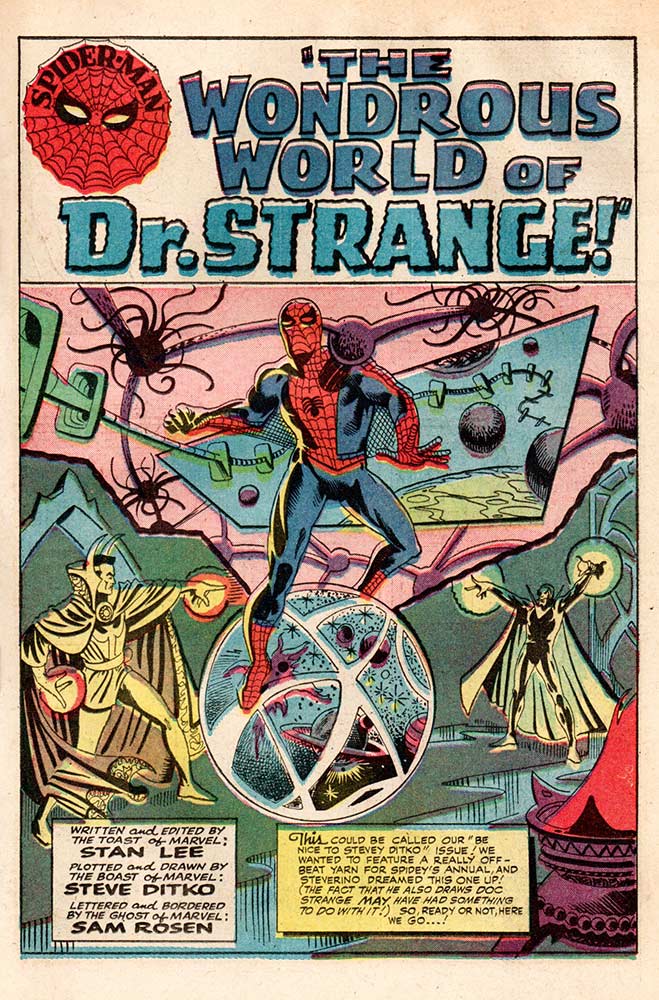
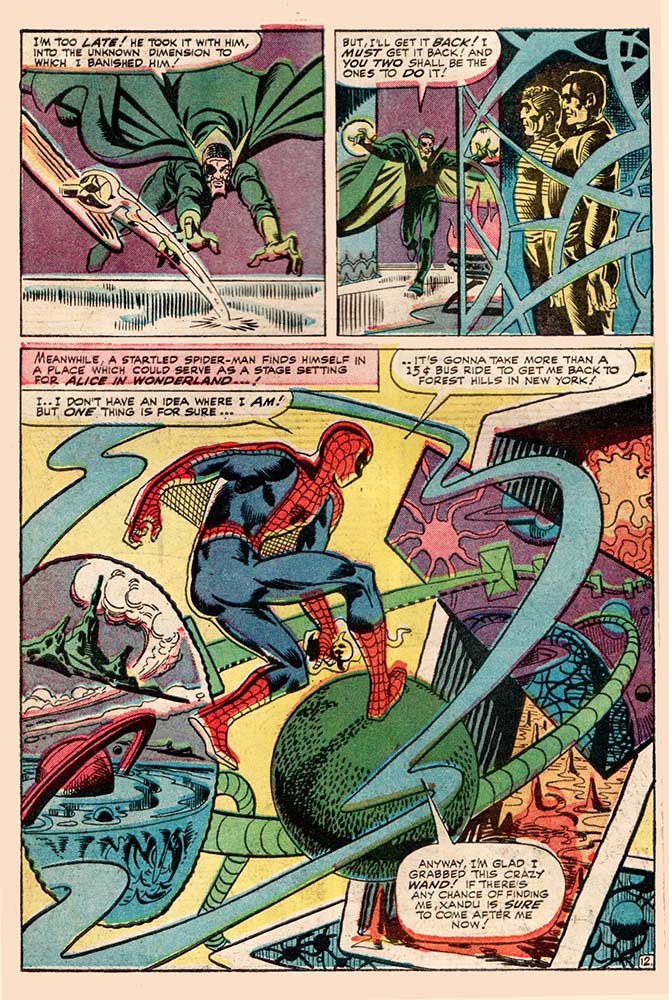
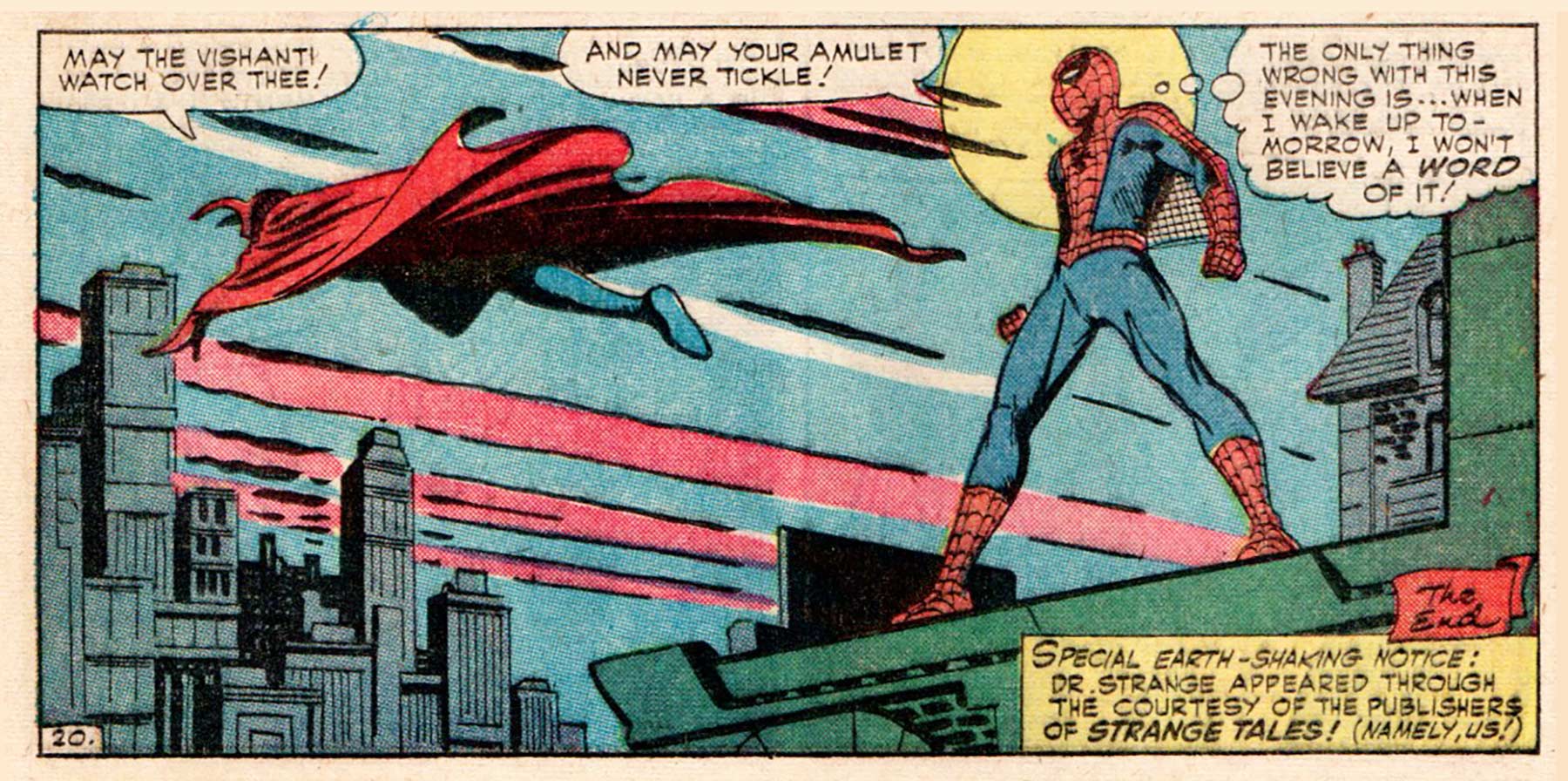
First on the newsstands in 1965 was the Amazing Spider-Man Special King Size Annual #2 (released on June 1, 1965, between ASM #28 and 29), featuring the 20-page story, “The Wondrous World of Doctor Strange” plotted and drawn by Steve Ditko (with script and editing by Stan Lee), and it was indeed wondrous, especially Ditko’s art. It also featured 5 more pages of the“Gallery of Spider-Man’s Most Famous Foes,” featuring the villains from ASM issues #16 through 26. There were more pages devoted to reprints, a sad occurrence across the 1965 Annuals. This one included the first story from ASM #1 and the second story from ASM #2 (“The Uncanny Threat of the Terrible Tinkerer”), and all of ASM #5, when Spidey first met Doctor Doom.
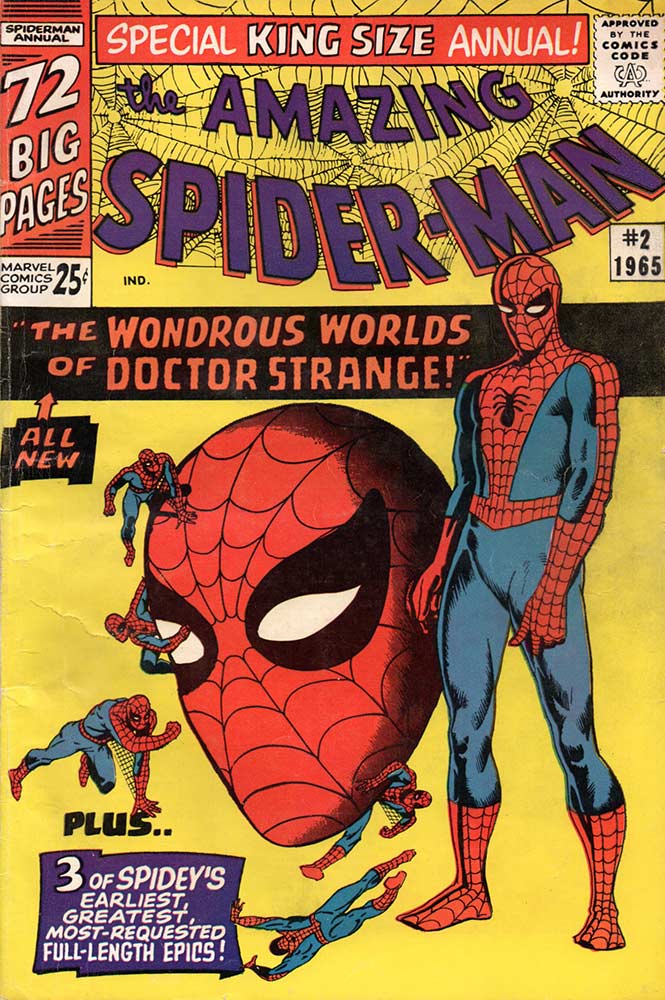
Also released on June 1, Journey Into Mystery with The Mighty Thor Special King Size Annual #1 (quite a mouthful!), which fell between JIM #123 and 124 and contained the 15-page story, “When Titans Clash! Thor vs. Hercules!” by Stan Lee and Jack Kirby, inked by Vince Colletta; a two-page map of Asgard, and reprints of Thor stories from JIM #85, 93, 95, and 97.


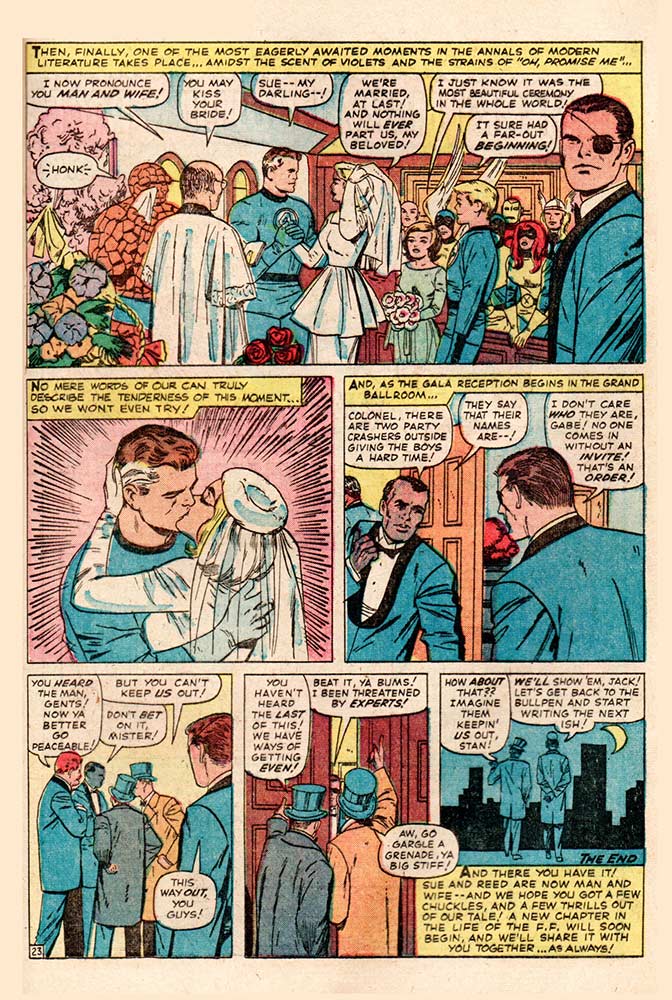
Fantastic Four Special King Size Annual #3 was up next (released on July 1, 1965, between FF #43 and 44). This issues featured the legendary wedding of Reed Richards and Sue Storm in a 23-page story titled “Bedlam at the Baxter Building,” by Stan Lee and Jack Kirby, with inks by Vince Colletta (this, thankfully, would be the last of Colletta’s inks on FF, with the amazing Joe Sinnott coming on board for FF #44 and staying pretty much throughout the remainder of Kirby’s run, close to 60 issues). It also featured reprints of the complete stories from FF #6 (the Sub-Mariner/Doctor Doom team-up and #11 (“A Day in the Life of the Fantastic Four” and the introduction of the Impossible Man). Sadly, there were no other special features.



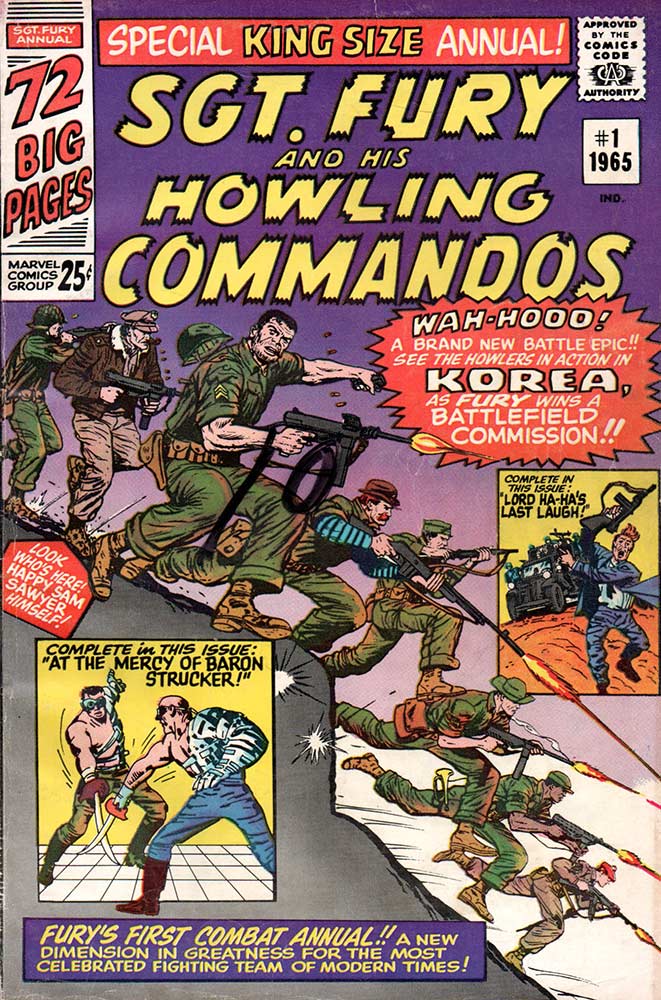
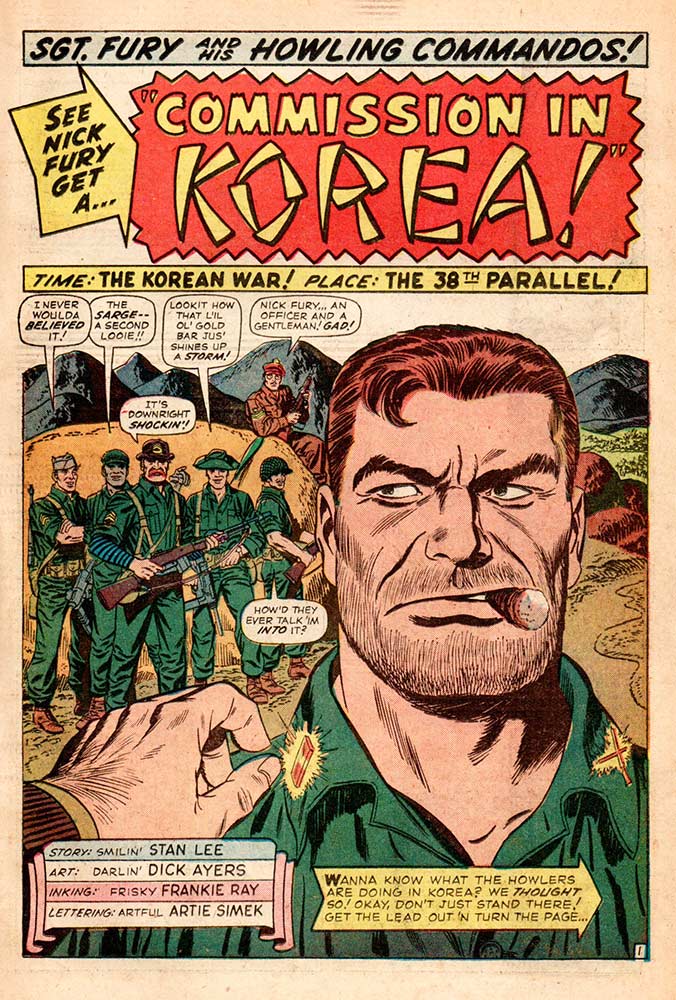
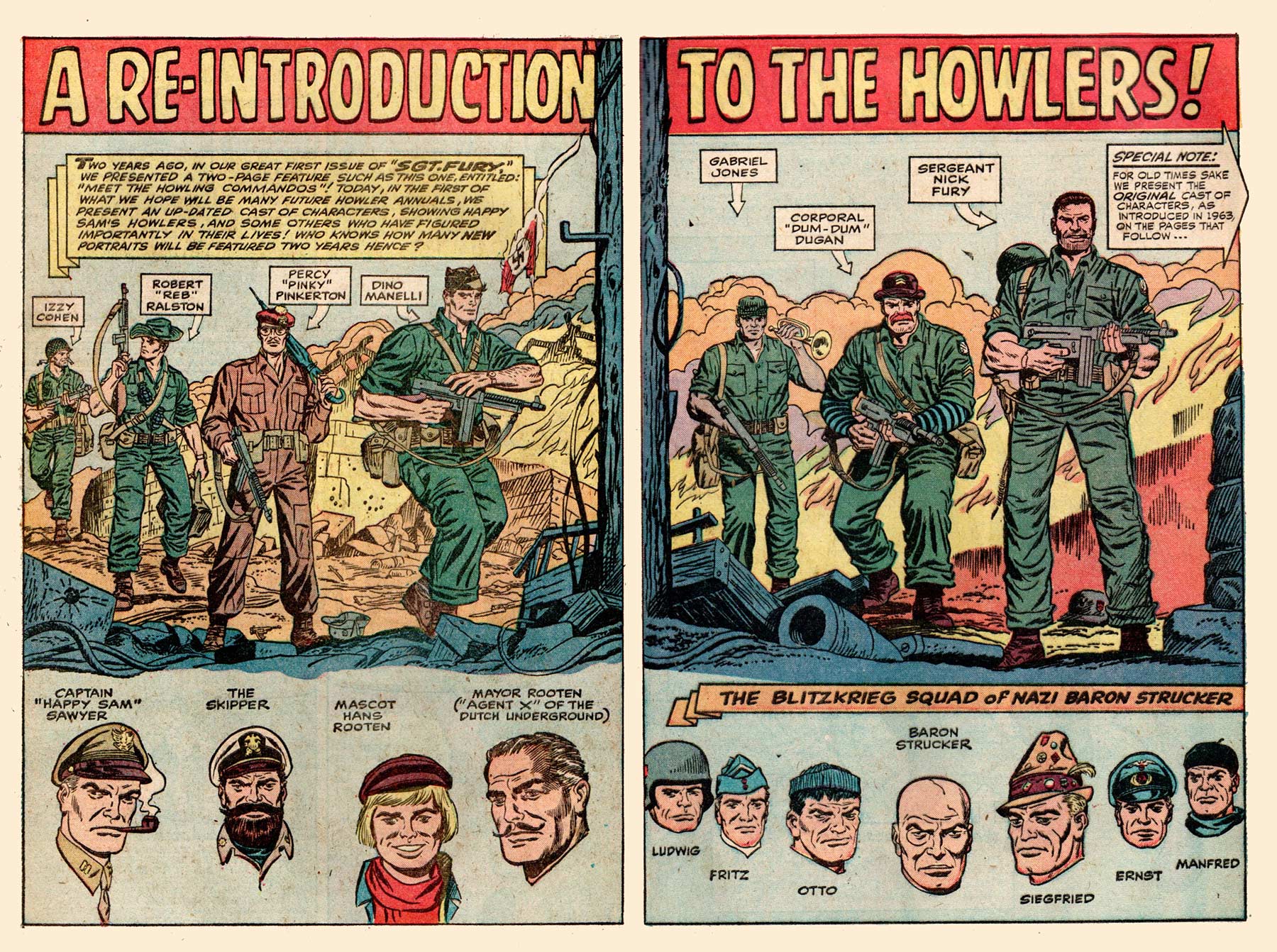
Also releasing on July 1, Sgt. Fury and His Howling Commandos Special King Size Annual #1 was the very first annual appearance of Marvel’s World War II hero, with a 15-page story, “Commission in Korea,” which brought Fury and the Howlers ten years ahead into the Korean Conflict of the 1950s. It’s also featured a number of pin-up type pages, including a two-page “Reintroduction to the Howlers,” “Bird’s-Eye View of H.Q. Able Co. at Fury’s Base in Britain!,” “Plane’s-Eye View of Base Tactical Area, Sub-Pen, Dock and Air-Strip,” and the unforgettable “Combat Arm and Hand Signals.” It reprinted Sgt.Fury #4 (“Lord Ha-Ha’s Last Laugh”), and #5, featuring the introduction of Baron Strucker, Fury’s Nazi arch-nemesis and future founder of HYDRA. Interestingly, it also contained a two-page ad heralding the new “Nick Fury, Agent of S.H.I.E.L.D” feature in Strange Tales, which would debut in issue #135 in August, just one short month away.

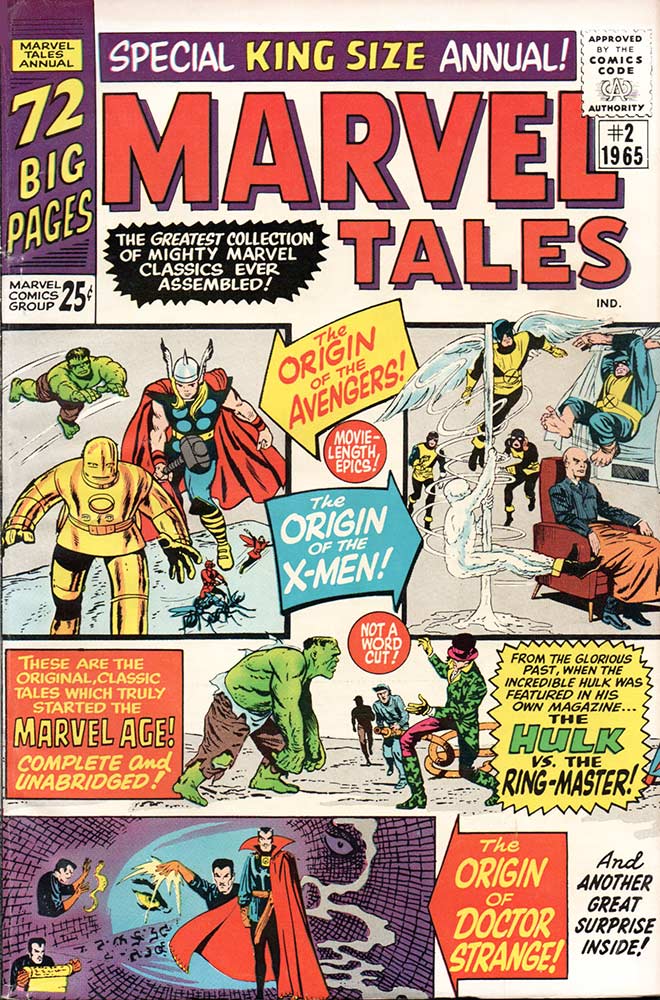
Marvel’s final two 1965 annuals were released on August 3. The inevitable Millie the Model Annual #4, a “Special Queen Size Annual,” featuring “More Pages! More Glamor!” debuted on that day, right alongside Marvel Tales Special King Size Annual #2, which continued the mighty Marvel reprint tradition with reprises of X-Men #1, Avengers #1, a story from Incredible Hulk #3 (which introduced the Ringmaster), the origin of Dr. Strange from Strange Tales #115, and an apparent bit of filler material with “A Monster Among Us,” a story from Amazing Adult Fantasy #8. Marvel Tales would end its run as an annual with this issue and become a full-fledged bi-monthly title with issue #3 in April 1966, featuring Spider-Man, Thor, Ant-Man, and Human Torch reprints at first; it kept its 25-cent price tag and larger format until issue #34, cover-dated May 1972, and would keep on reprinting Spidey stories until its demise with issue #291 in November 1994.

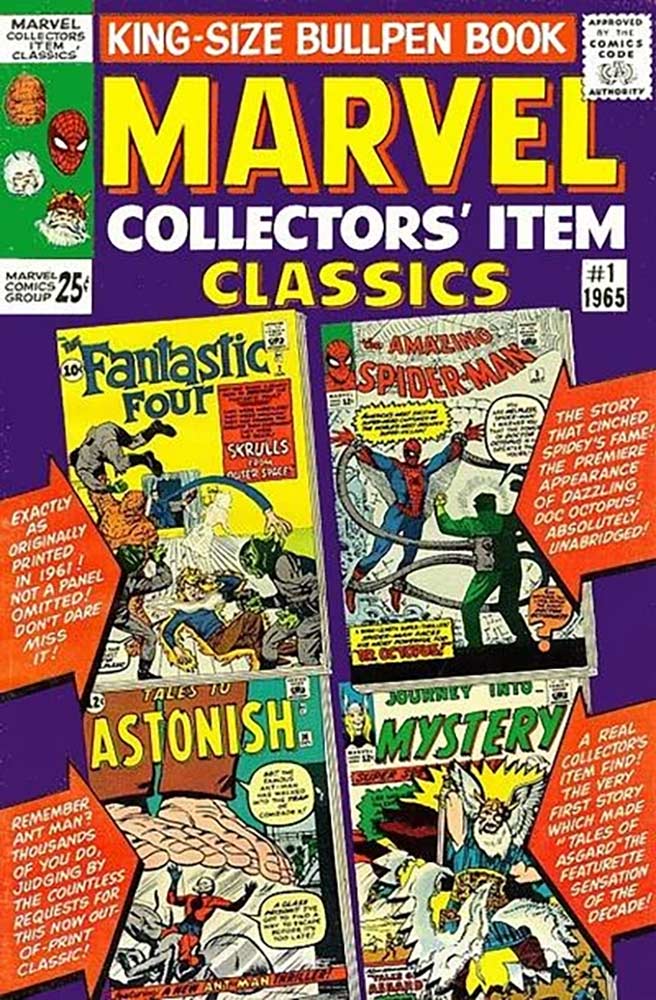
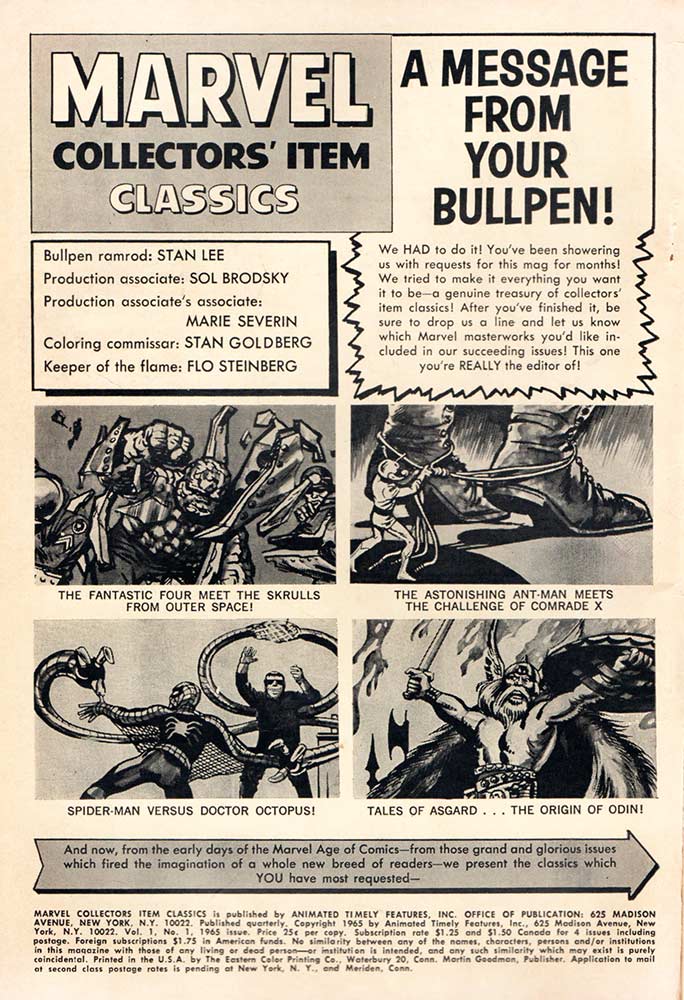
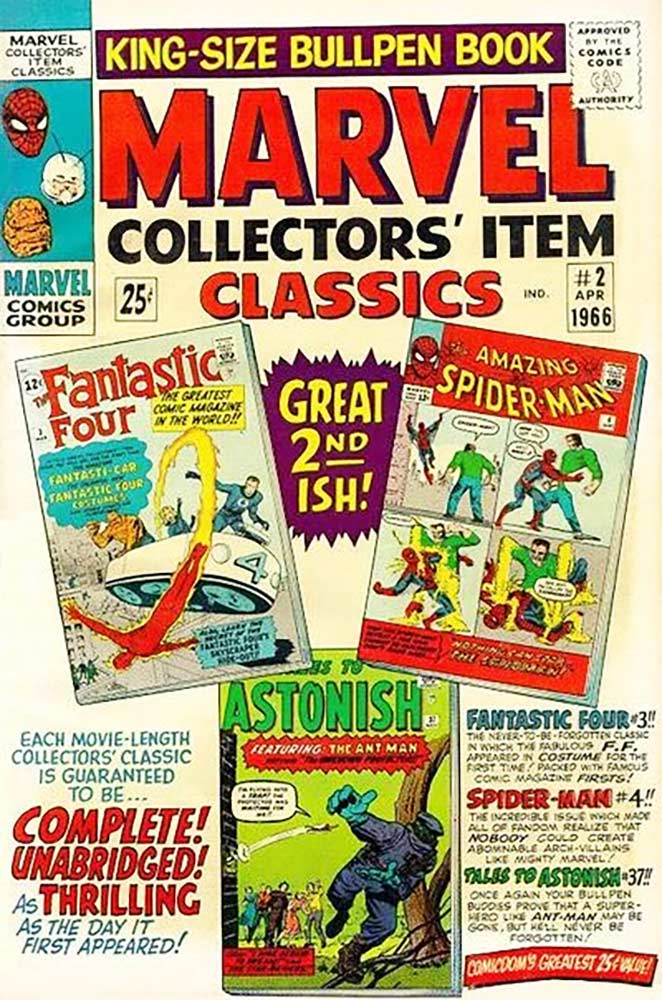
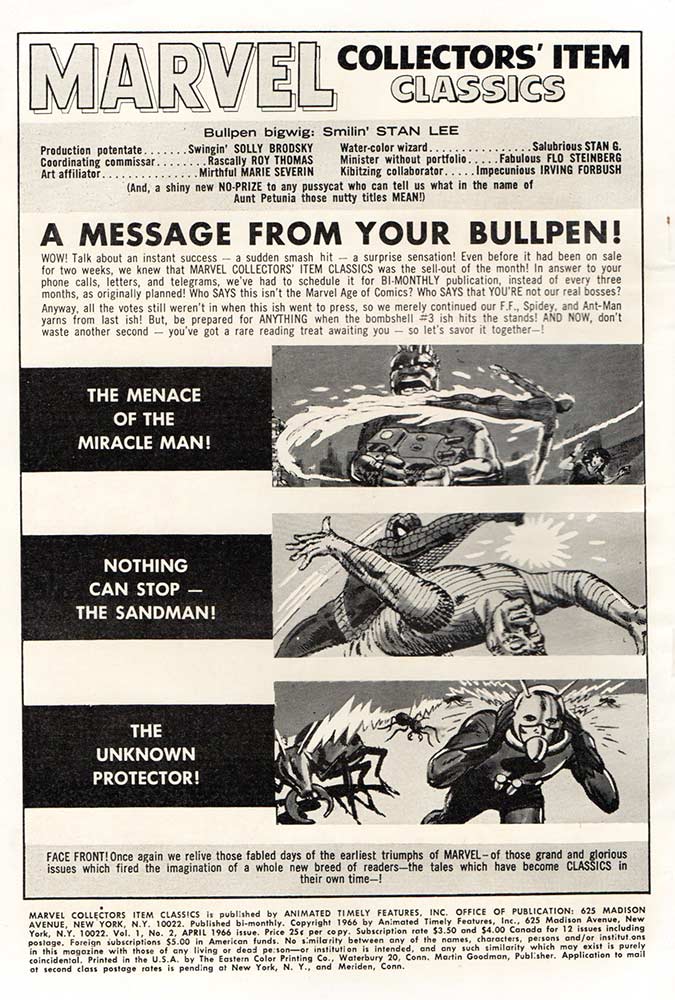
The success of the Marvel Tales Annuals undoubtedly inspired the creation of Marvel Collectors’ Item Classics, which debuted later in 1965 after “Annual Season” had ended. Another 25-center, it was published on October 5 and was followed three months later by issue #2 on January 4, 1966. It was billed as a “King-Size Bullpen Book,” and while those first two issues included “1965” and “1966” boxes on their respective covers, this was not another Annual; it was the start of a regularly-scheduled (bi-monthly) reprint book. MCIC lasted 22 issues, and then was retitled as Marvel’s Greatest Comics, which lasted an additional 74 issues. At Marvel, sometimes it may look like an Annual and feel like an Annual, but it really isn’t an Annual. One thing, though: They added a spiffy inside front cover gray-tone introduction page, which would carry over into all the Marvel Annuals in 1966, 1967, and 1968.
All in all the Marvel Annuals of 1964 and 1965 were a bit of a mixed bag, but still head and shoulders over their Distinguished Competitors 25-cent fare, which still contained only reprints.
| 1964 ANNUALS (“72 BIG PAGES ANNUAL”) | RELEASE DATE | ORDER |
| Amazing Spider-Man Annual #1 | June 11, 1964 | ASM #16 & 17 |
| Marvel Tales Annual #1 | June 11, 1964 | N/A |
| Fantastic Four Annual #2 | July 2, 1964 | FF #30 & 31 |
| Millie the Model Annual #3 | July 2, 1964 | N/A |
| 1965 ANNUALS (“SPECIAL KING SIZE ANNUAL”) | RELEASE DATE | ORDER |
| Amazing Spider-Man Annual #2 | June 1, 1965 | ASM #28 & 29 |
| Journey Into Mystery with Thor Annual #1 | June 1, 1965 | JIM #123 & 124 |
| Fantastic Four Annual #3 | July 1, 1965 | FF #43 & 44 |
| Sgt. Fury and His Howling Commandos Annual #1 | July 1, 1965 | SF #23 & 24 |
| Marvel Tales Annual #2 | Aug. 3, 1965 | N/A |
| Millie the Model Annual #4 | Aug. 3, 1965 | N/A |
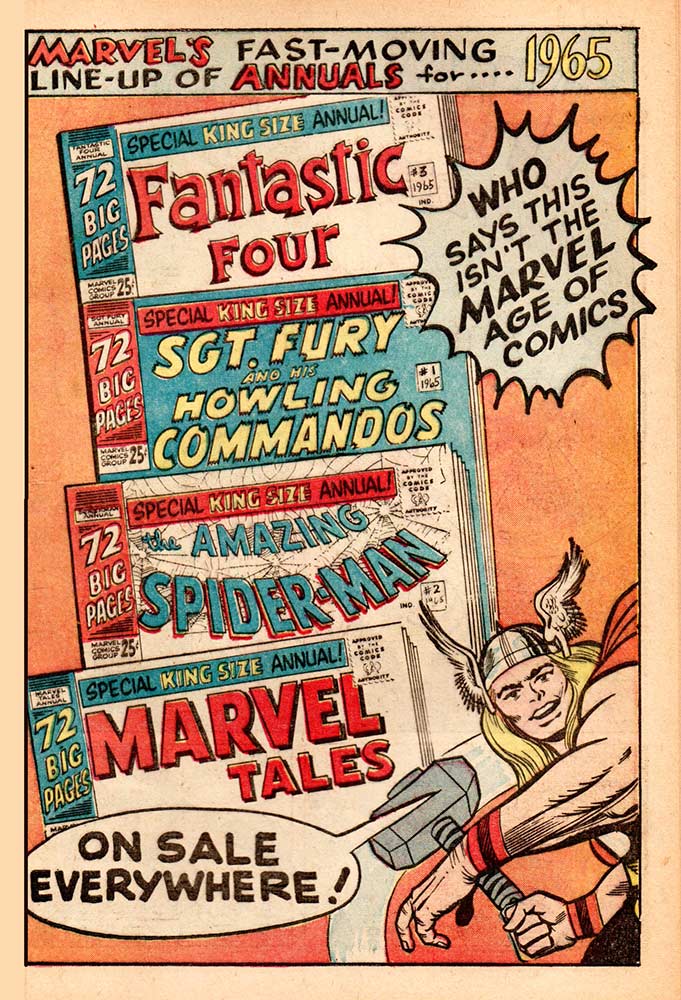

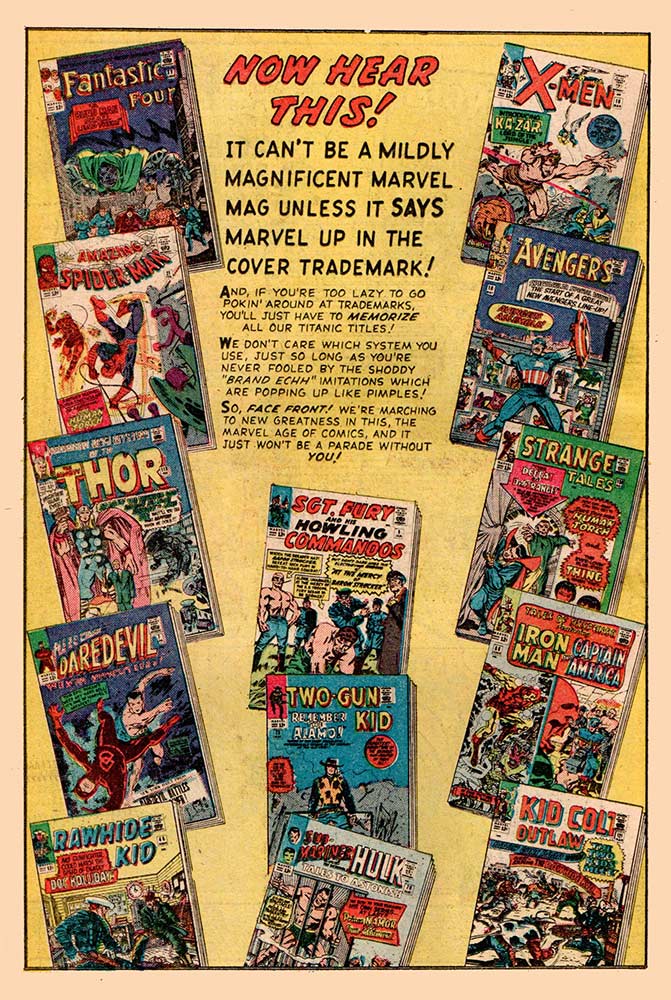
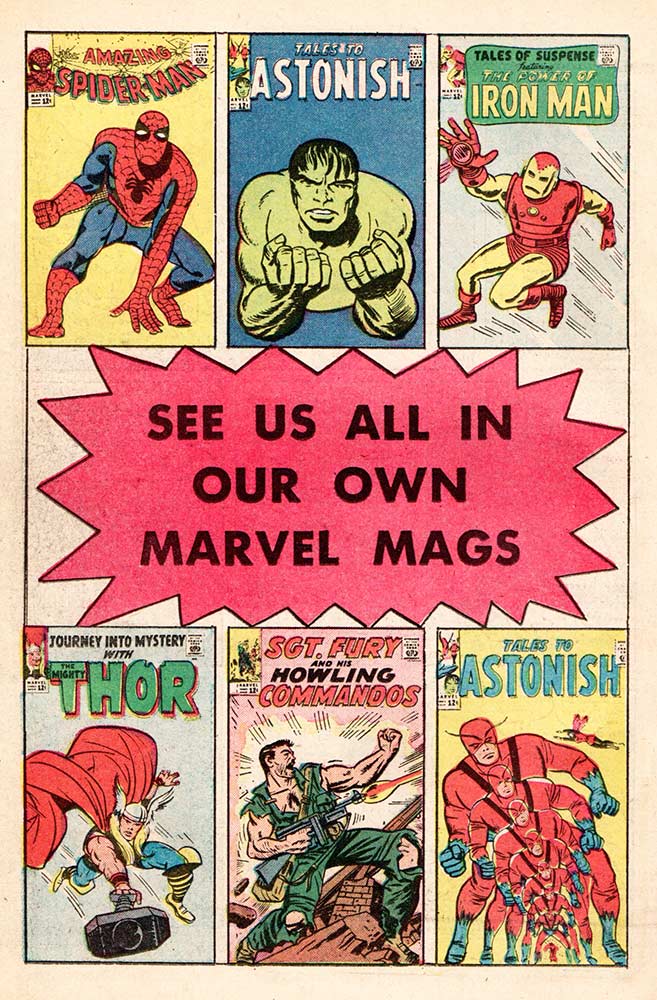
A trio of ads appearing in Marvel Annuals in 1965, including one touting the entire line (far right).
Next time: We’re more than halfway there! Join us next week when we take a look at the Marvel Annuals from 1966 and 1967, a return—dare I say it?—to greatness!

To read all the “Tales from My Spinner Rack” posts, click here!

instagram.com/talesfrommyspinnerrack/
 @innocent-bystander.com
Leave a comment