
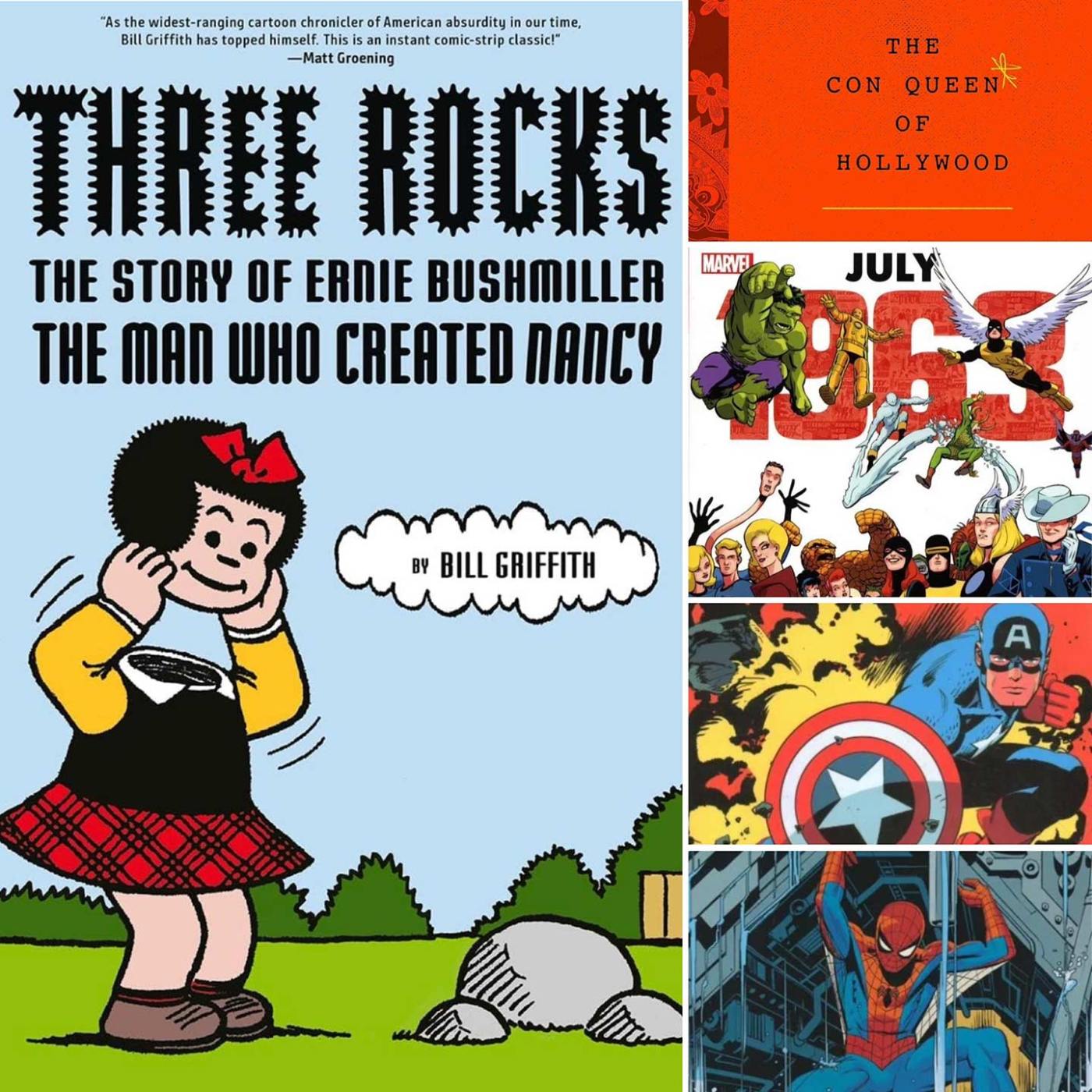
A bit of a strange month for me … I was so busy with my Comic-Con panel presentation that I didn’t have a lot of time for reading, so I’m falling a bit behind on my goal of 75 books this year. The bulk of this month’s reading is graphic novels … well, more like reprints of individual Marvel issues, to be honest.
July 1963 Omnibus
Marvel continues their series of omnibus books which reprint an entire month of comics, each volume focusing on an historical one. This time it’s July 1963 which saw the premiere of not one, not two, but THREE Marvel milestones: The Avengers #1, X-Men #1, and Fantastic Four Annual #1, all of which are included in this volume. I love these books, even if some of the comics included—I’m talkin’ about you Millie, Patsy & Hedy, and Kathy, the Teenage Tornado—are hard to read (but nice to look at, with great Stan Goldberg and Al Hartley art). My one criticism of the book is the lack of historical material. This volume has a two-page intro by comics writer Roger Stern, but that’s pretty much it, except for reprints from Son of Origins on the Avengers and X-Men debuts by Stan Lee, in full-on “Stan was the creator” mode (there are also a lot of original art pages and various covers). Still, I love the idea of this series (which includes August 1961—FF #1—and June 1962—Amazing Fantasy #15, the first appearance of Spider-Man) and I will buy the next one, February 1964, which will feature Daredevil #1.
Mighty Marvel Masterworks: Captain America Vol. 2 by Stan Lee, Jack Kirby, and Gil Kane
This is peak Jack Kirby Captain America stuff, folks. This volume includes stories from Tales of Suspense #s 78 through 94, plus a “Charlie America” spoof from Not Brand Ecch #3. Of the 17 Cap stories, 12 are by Kirby and inked by two of his finest inkers, Joe Sinnott and Frank Giacoia; four stories are by Gil Kane, and one by a very out of place Jack Sparling. All except the Sparling story are written by Stan Lee (and he’s very wordy in most of them). These stories feature the creation of the Cosmic Cube, the return of the Red Skull, and the introduction of MODOK. They’re amongst my favorite Kirby Cap stories of the 1960s, and even if Stan drones on a bit, the art is some of the absolute best of Kirby at Marvel.
Mighty Marvel Masterworks: Amazing Spider-Man Vol. 3 by Stan Lee and Steve Ditko
This is the end for Steve Ditko on Spider-Man; this volume collects Amazing Spider-Man #29-38, when Ditko left the book—and Marvel—leaving behind one of his signature co-creations in comics. It’s a mixed bag of stories, too. On the one hand you have what many people regard as the pinnacle of Ditko’s Spidey work, the “Master Planner” three-part story arc in issues 31, 32, and 33; on the other hand, there are a few mediocre at best stories, featuring “The Uncanny Looter,” a robot, and “Just a Guy Named Joe,” not Ditko’s finest hour. As a kid, I much more appreciated John Romita’s Spider-Man, which will start in the next volume, with issue #39, and I wasn’t alone:: it was Romita’s art that propelled Spidey to become Marvel’s top seller. Still, Ditko’s mark on the character and his plotting contributions made it such an unusual book. Who knows what might have happened if he had stayed on the title.
The Con Queen of Hollywood: The Hunt for an Evil Genius by Scott C. Johnson
I found the premise of this true crime book to be fascinating. Someone was impersonating high-level Hollywood talent, like Spider-Man movie producer Amy Pascal, sending people around the world and bilking them out of their—and their family’s—savings with promises of high-end show biz jobs. But the book falls apart and gets really tedious when it concentrates on the “villain,” and his backstory and examines his psychological reasons and history to try and explain why he does what he does. The author also inserts himself too much into the story; I felt the book was at its best when it dealt with the person investigating the crimes for a private firm. I eventually finished it, but it was a bit of a slog at times. Everyone is raving about it, though … which kind of baffles me.
Three Rocks: The Story of Ernie Bushmiller, The Man Who Created Nancy by Bill Griffith
Cartoonist Bill Griffith’s cartoon biography of cartoonist Ernie Bushmiller, the comics genius behind the syndicated comic strip, Nancy, is a fascinating graphic novel that’s equal parts comics history lesson and life story. I’ve never been a fan of Griffith’s Zippy the Pinhead—I feel if you’ve read one Zippy strip or comic, you’ve read them all—although I’ve always admired his drawing skills. And Nancy … well, Nancy is the comic strip I love to hate. Corny, gaggy, stilted, and from a different era that it never seemed to escape under Bushmiller, Nancy was like a car crash in the comics pages to me: I just had to read it every day. Bushmiller is a fascinating character in and of himself, from an age when being a syndicated cartoonist really was the height of the comics profession. Griffith explores Bushmiller’s storytelling, his art, and his times in this amazing book … I wish there were illustrated bios like this for a lot more cartoonists from the golden age of comic strip art.
Currently reading: Bogie and Bacall: The Surprising True Story of Hollywood’s Greatest Love Affair by William Mann
 @innocent-bystander.com
Leave a comment