
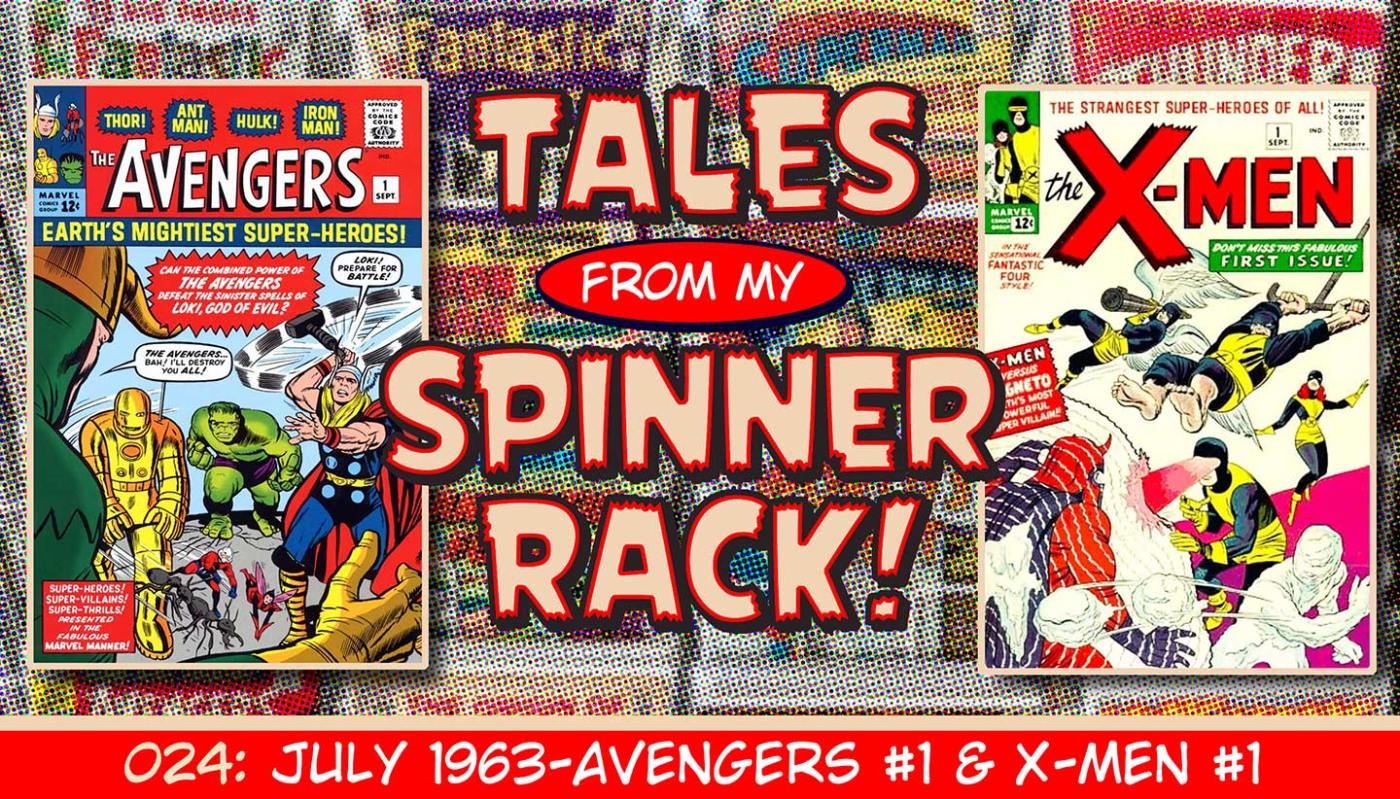
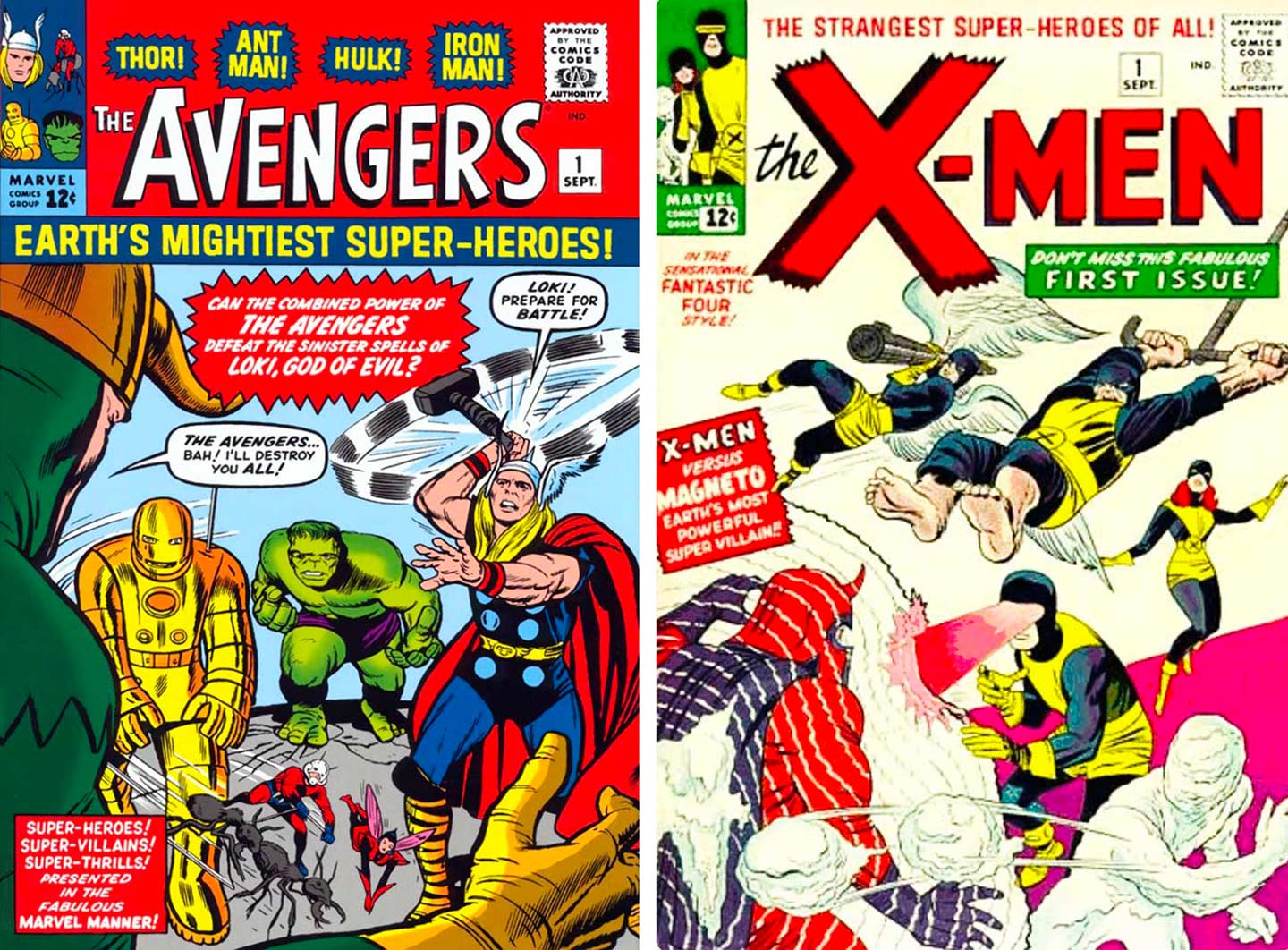
Avengers #1 and X-Men #1, September 1963. Covers by Jack Kirby. All art in this post ™ & © MARVEL.
On July 2, 1963, two new comic books debuted which would have far-reaching success in other media in the future, becoming household names from their successful movie appearances. Those two books were The Avengers #1 and The X-Men #1, the newest teams in the Marvel Age of Comics. How they came to both debut on the same day is an interesting story … and one that has evolved over the years.
Part of this story is fairly certain: Marvel Comics had come into their own and publisher Martin Goodman wanted to publish two new books that capitalized on his own success for once, not someone else’s. Goodman had a habit of copying whatever was selling for other comics publishers, ad infinitum; if one cowboy comic did well, five would be even better, hence Two-Gun Kid, Rawhide Kid, Outlaw Kid, Ringo Kid, and the imaginatively titled Kid Colt, Outlaw. Both Fantastic Four and Amazing Spider-Man were doing great business for the publisher, so naturally he wanted another superhero team and another solo hero like Spidey. On the latter, he very specifically wanted the new character to be called Daredevil, after the old Golden Age comic published by Lev Gleason. Goodman evidently felt that was a great name for a hero that had a proven publishing track record.
So Stan Lee had his marching orders, but here’s where things get a bit fuzzy. According to our friend Mark Evanier in a post from 2013 (the 50th anniversary of the debuts of Avengers and X-Men), Goodman cancelled two bi-monthly books—Gunsmoke Western and Love Romances (is there any other kind of romance?)—to make room for the two new books. But according to Tom Brevoort (who we don’t know personally, but whom we like very much) in a post from 2019, Goodman had made a deal with his distributor, Independent News, to add two new titles to his line-up. IND, as it was known on the covers of Marvel Comics back then, was owned by DC Comics (known then as National Periodical Publications, despite the DC logo on every cover), and had restricted Marvel’s monthly output of books to a specific number—eight, which Goodman got around by publishing 16 bi-monthly titles; Fantastic Four made 17, but evidently nobody noticed. So there seems to be some difference of opinion—by two well-known and well-respected comics historians/pros—whether Goodman cancelled two books or got the go-ahead to add two books.
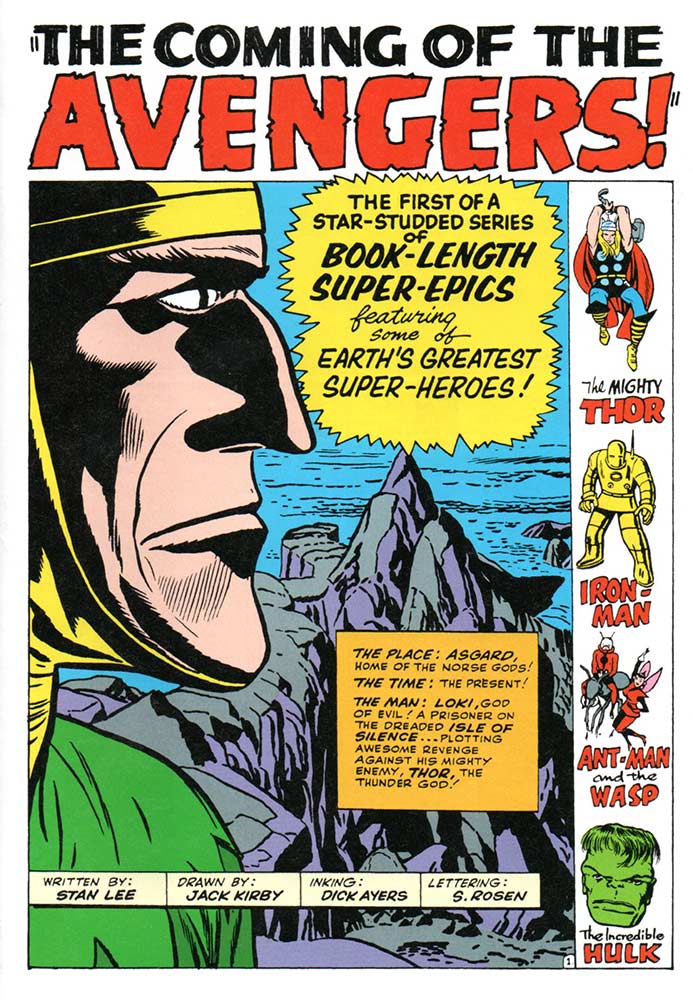
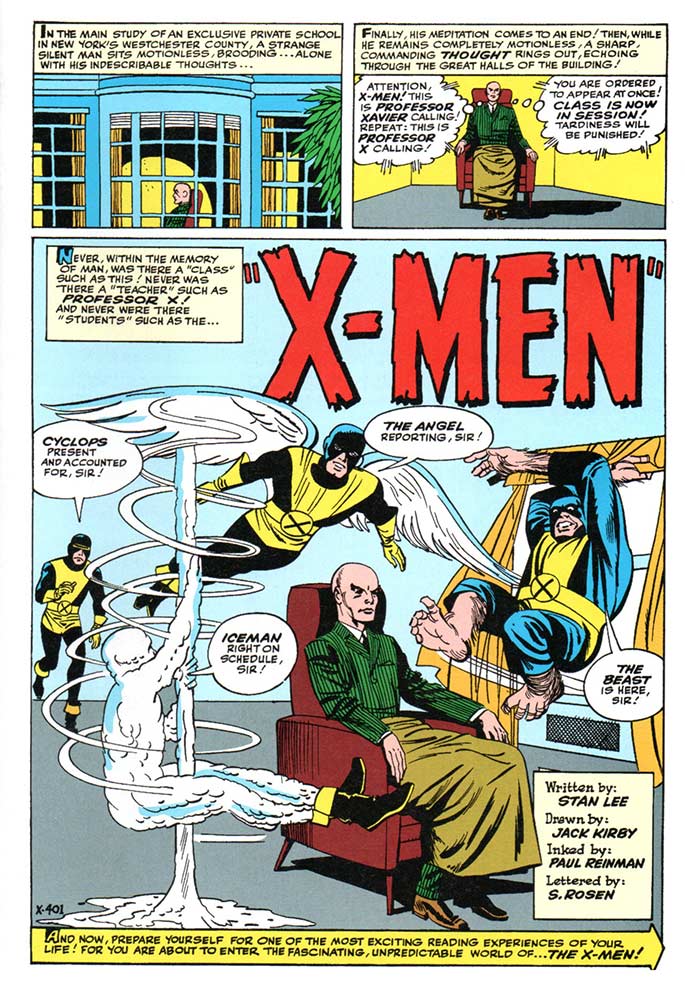
The splash pages of Avengers #1 and X-Men #1, taken from their recent facsimile editions.
Either way, two books were added, and while Evanier’s version makes sense as to why both Avengers #1 and X-Men #1 debuted on the exact same day because they replaced two cancelled books that also appeared on the exact same day every other month, there’s no debate as to why they were both superhero team books. The other book that Stan Lee had marching orders to publish, Daredevil, experienced birthing pains that delayed it until early 1964. Lee had tapped artist Bill Everett—creator of the Sub-Mariner, way back in 1939—to draw the new comic, and he was having problems getting it done. Everett at the time was working for a greeting card company and battling alcoholism and hadn’t worked in comics for close to a decade. The new “Marvel Method” of creating comics—where a plot was given to the artist and it was up to them to pace the story over 20 or so pages—was certainly a different way of producing the books, so maybe that was a contributing factor. Whatever the reason, Daredevil was not going to make its summer of ’63 publishing date, and Stan Lee and company needed something quick to fill the schedule and make sure they didn’t lose their spot at the printer.
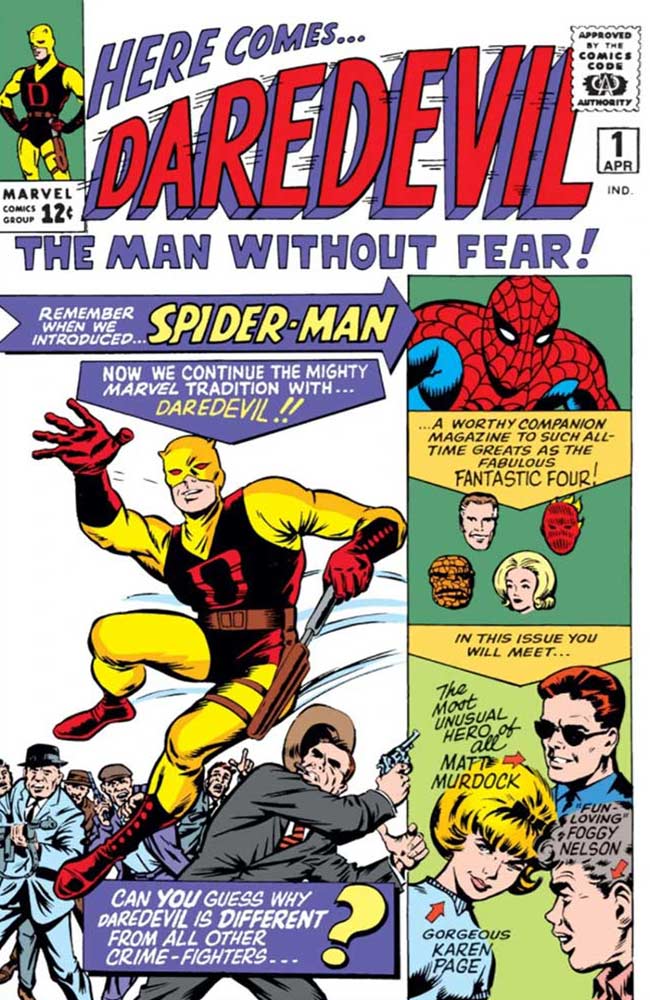
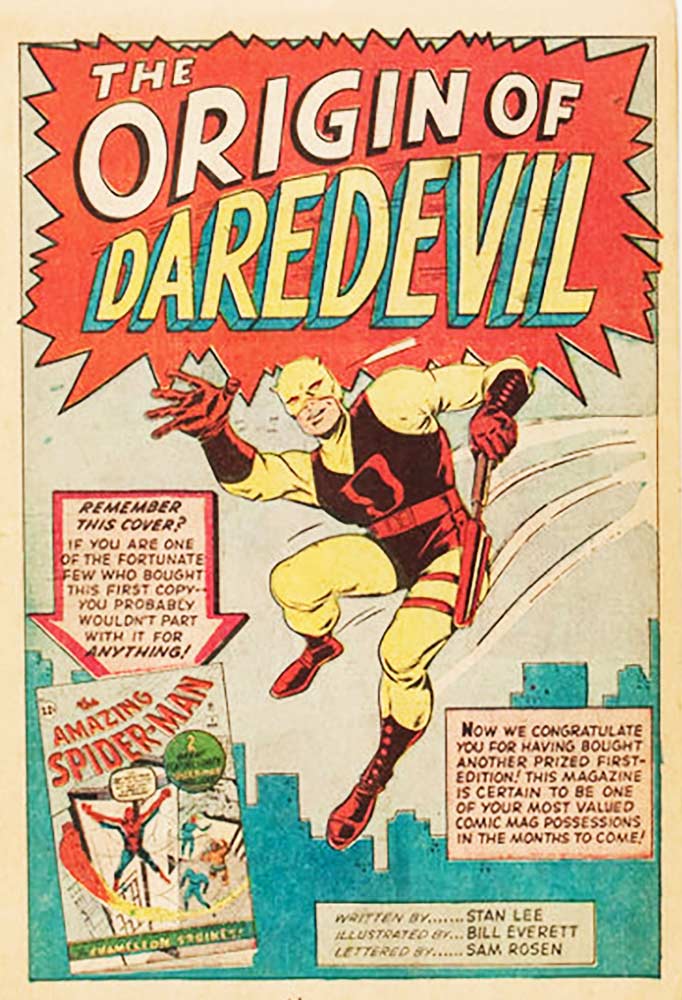
Daredevil‘s problematic debut would have to wait until February 1964, and even then the book seemed rushed, especially the splash page which seemed to be cobbled together from pre-existing artwork.
And here’s where things get really fuzzy, because for years the popular conception was Avengers #1 was a book cranked out to fill that schedule hole. But lately, the thought has been leaning towards X-Men #1 as the last-minute book for a number of reasons. In that December 28, 2019 post, Brevoort talks about the Avengers being an easier job for Kirby, since all the characters already existed—including Hulk, iron Man, Ant-Man, the Wasp, Thor, and villain Loki—so it was a quicker book to produce. He also points out that inker Dick Ayers’s work on Avengers #1 isn’t as polished as his other work on Kirby. Ayers also inked Sgt. Fury #3 that month, in addition to Fantastic Four #19 and the very first Fantastic Four Annual, which featured a 37-page story, not to mention providing pencils and inks for the Human Torch story in Strange Tales #113 (13 pages), and pencils and inks for both Rawhide Kid #36 and Two-Gun Kid #66 (almost the complete books), so it’s easy to say that he was a tad over-worked when it came to books published in July 1963 … maybe that’s why Avengers #1 is a bit unpolished.
But in a post on February 16, 2020, Brevoort has a slight change of heart … maybe X-Men #1 was the book created in haste to fill the Daredevil-sized hole in the schedule. While he doesn’t totally commit to this theory, there is a bit of circumstantial evidence to back it up. It seems that another comics historian, Will Murray—whose articles in the sorely missed Comic Book Marketplace and in various TwoMorrows magazines like Alter Ego I’ve always enjoyed—uses the inter-office job numbers that appear on the splash pages of early Marvel comics to track that Avengers #1’s number comes well before the job number on X-Men #1, thus revealing it was most likely in production before the X-Men. And that would more than likely make X-Men #1 the book hastily put together to plug the schedule hole. There’s a bit more circumstantial evidence on that too: X-Men #1 does look rushed, with very few panels with backgrounds and indifferent inking by Paul Reinman. There is a lot more heavy-lifting involved with this book, though, with the creation of seven new characters (Professor X, Cyclops, Marvel Girl, Beast, Angel, Iceman, and Magneto), so it’s difficult to imagine it just being cranked out quickly. Daredevil #1 eventually came out on February 4, 1964, making it the last big Marvel solo title to debut in the initial Marvel Age of Comics (and becoming an 18th book in Marvel’s line-up, once again two more books than Goodman’s deal with Independent News allowed). Both Brevoort’s and Evanier’s takes on this “Mighty Marvel Mystery” are fascinating peeks behind the scenes and I urge you to go read both of their complete posts on this topic by clicking the links above.
Meanwhile, what about little old me? I was a newly-minted eight-year-old when Avengers #1 and X-Men #1 entered my life on or around July 2, 1963. I wish I recalled more about that, but I am sure that both those books left Moser’s Newsstand in downtown Tamaqua, PA and came home with me—or my big brother, Rick—during a long summer of “no more pencils, no more books, no more teachers’ dirty looks.” I didn’t swim or have a bike in those days—nor do I now—so a lot of my long, languid summer days were spent reading comic books. At eight years old, I kind doubt I was allowed to make the relatively short trip to the downtown shopping district of my hometown on my own; after all I wasn’t allowed to swim or ride a bike, so the reins were kind of tight. But a twice per week newsstand trip was accomplished either alongside my brother or with a parent—or my brother just showed up with a bag of comic books. I’m sure if those two brand-new Marvel comic books were displayed on the comics rack, both were snapped up instantly, and they remained proud members of our collection for decades. In addition, it looks like Fantastic Four Annual also came out on July 2, so that made an already banner day even better. I sure hoped I-—or my brother—had 50 cents to spare. FF Annual #1 is a seminal book for me, and I’ve written at length about it in an earlier Tales From My Spinner Rack post; click here to read it.
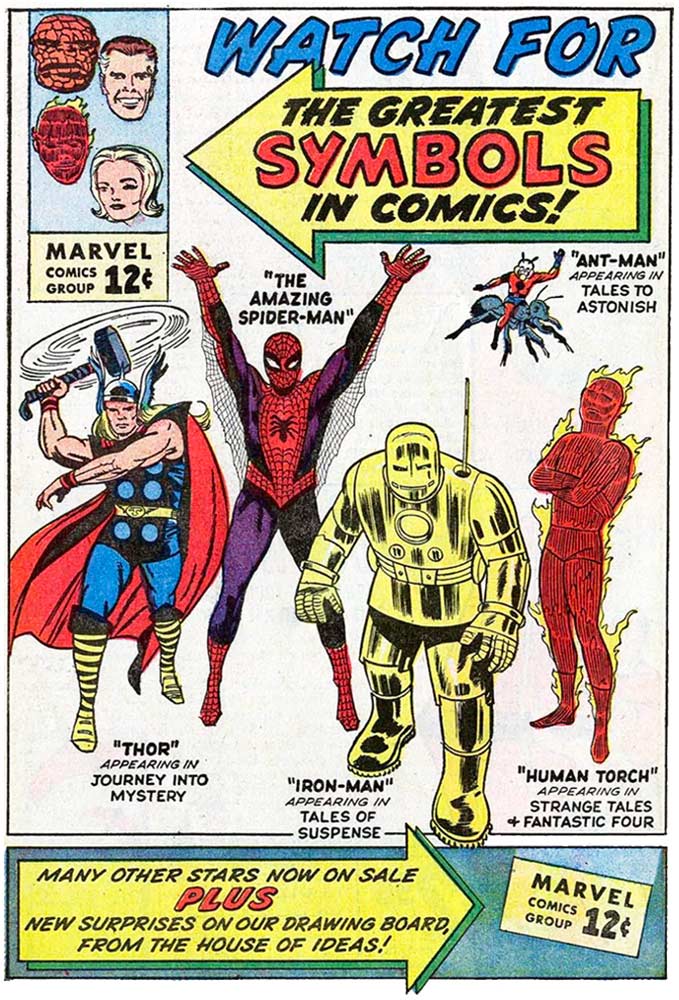
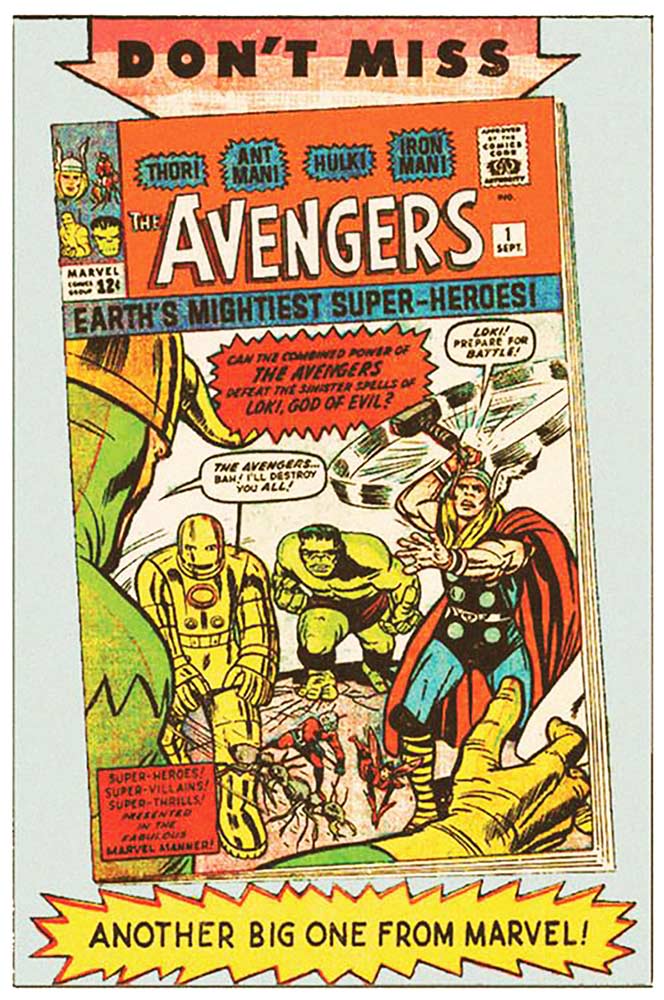

The Marvel Age of Comics was also the Marvel Age of House Ads, memorable glimpses of books to come, sometimes the only advance notice we got of a new book.
The other uncertainty is whether or not I knew they were coming. For the most part, the only information I had about upcoming comics was from house ads, and Marvel Comics certainly had a lot of them, usually one or two in each and every issue. I just recently got the Marvel Omnibus, July 1963, which reprints that entire month’s Marvel output—even the Millies, Patsy and Hedys, and cowboys—Rawhide Kid and Two-Gun Kid—along with the house ads inside the books. So it’s possible I knew of the coming of the Avengers and/or the X-Men from Fantastic Four Annual #1 or other Marvel books. But if I did, it was with very short notice. Mentions of the two new books was also included in the letter columns of Fantastic Four and Amazing Spider-Man, in the “Special Announcement Section” at the end of each column; the famed Bullpen Bulletins page and Mighty Marvel Checklist had not yet started. It’s possible I saw them mentioned there, but—yuck!—too many words on those pages for an eight-year-old!
And that was what was thrilling about going to the newsstand back then: You never knew what you were going to find. It was a choose your own adventure kind of thing: What’s Doctor Solar? What’s Magnus, Robot Fighter? What’s The X-Men? Just by looking at the cover, I immediately knew what The Avengers was: It was Marvel’s Justice League of America, all their heroes on one team. Well, not all—no Spider-Man or Dr. Strange—but most of them. But The X-Men … this was all new to me.

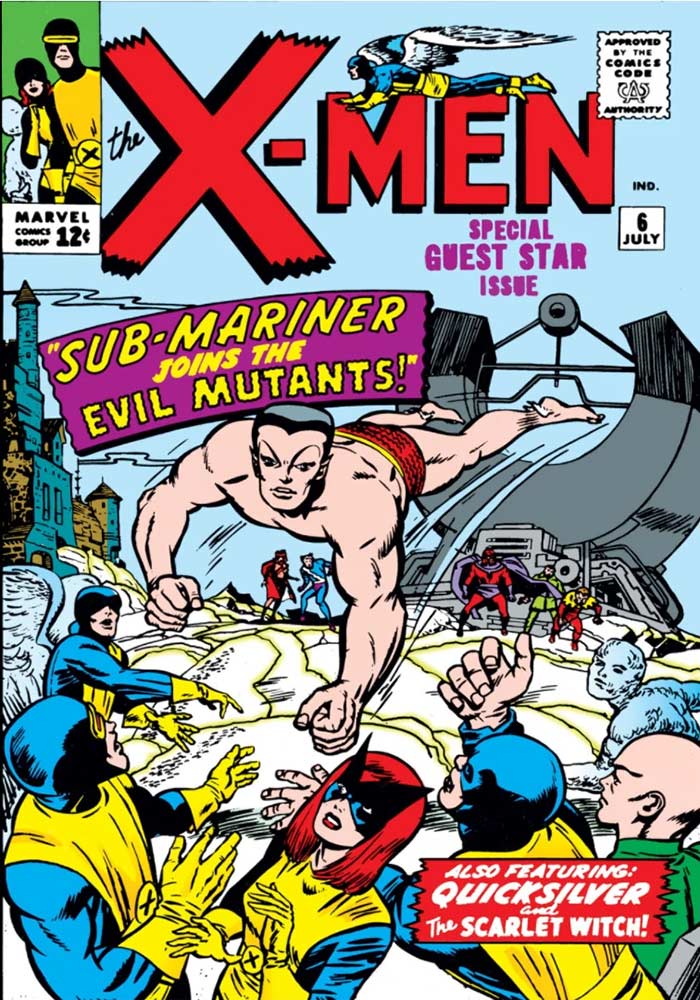
Definite memories of a spring day in 1964 … I bought both these books at our local newsstand before going with my dad to a local golf course. I think it was a bribe to keep my mouth shut about the golf course trip to my mom.
I do remember buying Avengers #6 and X-Men #6 on the same day: May 5, 1964, according to the Marvel database. It was a warm spring day and my father, an avid golfer, wanted to go to White Birch Golf Course, a few miles outside of my hometown, and I was somehow dragged along on this outing. Either I cajoled him into stopping off at the newsstand first—or he realized I’d be bored to tears and my usual whiny self while he practiced his golf swing and putting skills—and I suddenly had both those issues to sit and read while he did his thing. I was fascinated by both Jack Kirby covers. Kirby had a thing for covers crowded with characters, and Avengers #6 fit that bill as the team took on the “Masters of Evil,” a bunch of second-tier Marvel villains, but nonetheless thrilling to me. And that X-Men cover—with Sub-Mariner looming large—mystified me. Why was Sub-Mariner with the X-Men? Those two books are forever linked in my memory, along with a sunny day and the fact that if I read them while the car was moving, I would undoubtedly get sick and yack all over them. Yeah … I was like that even then.
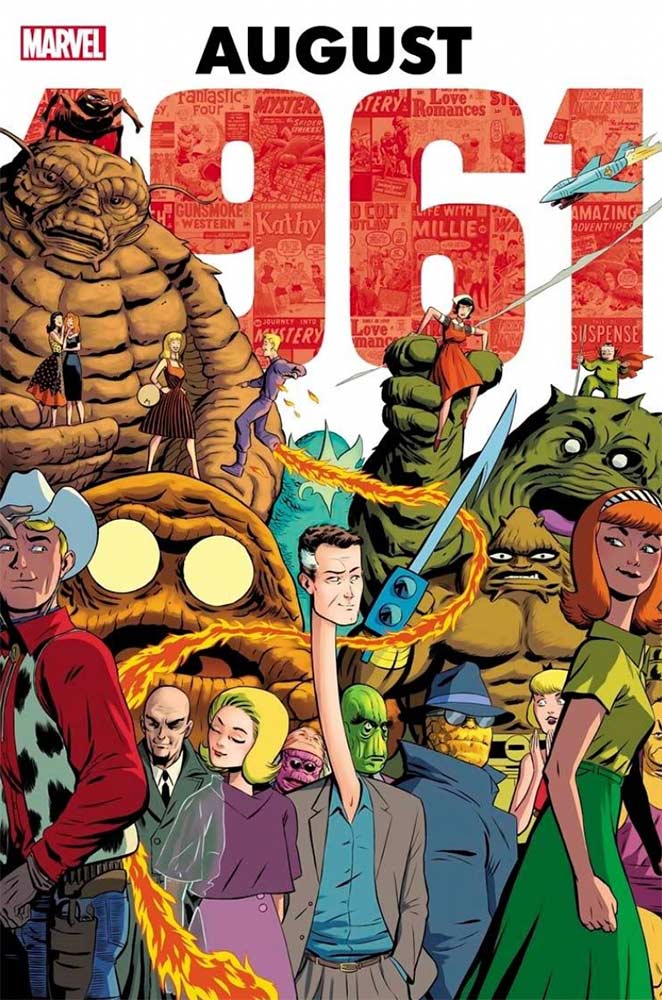
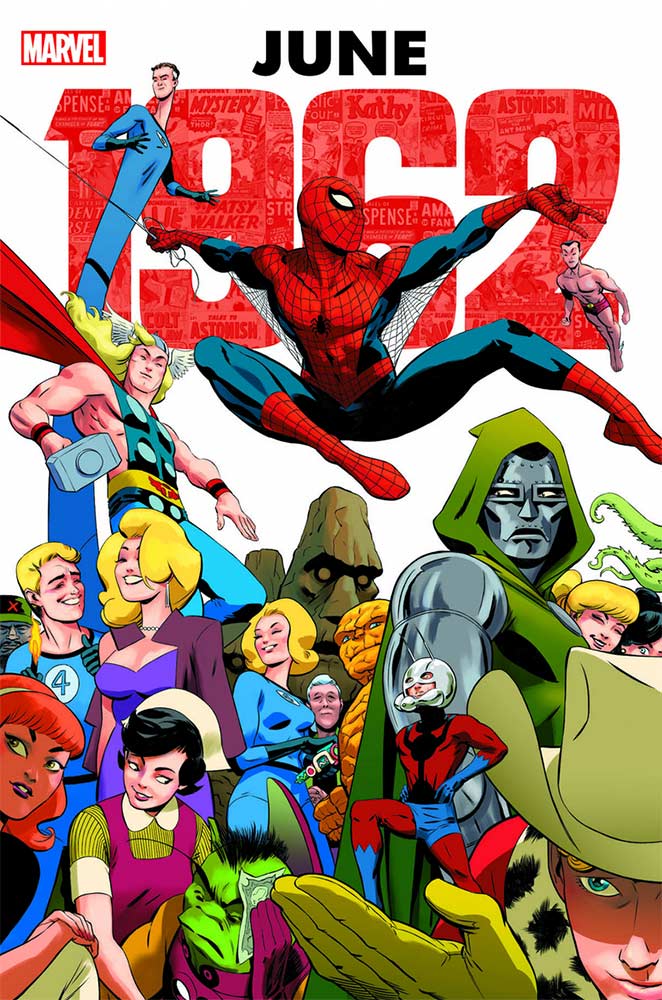
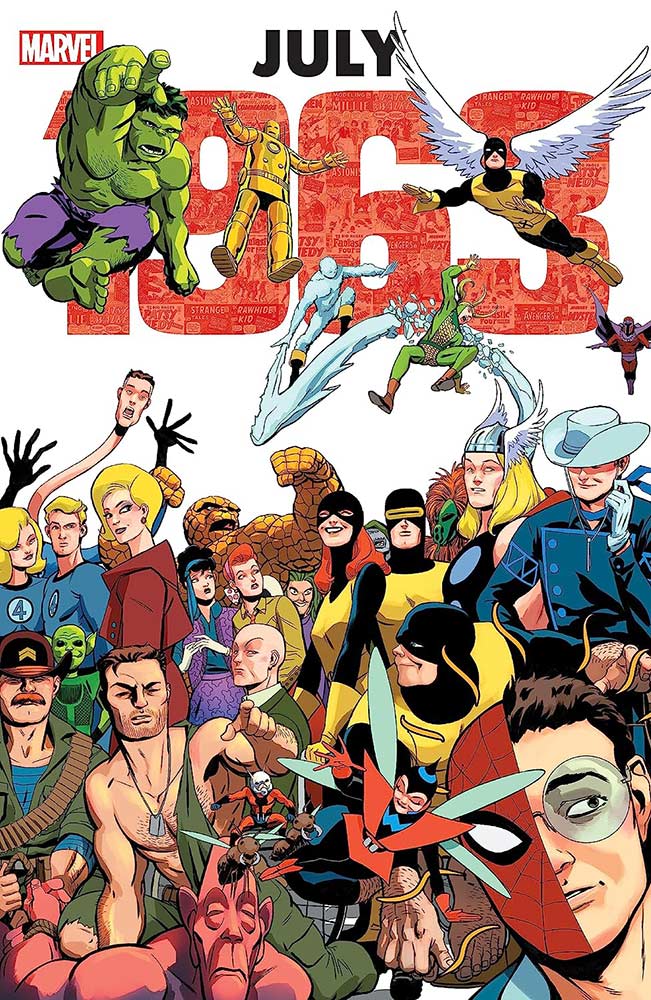
Marvel has been publishing these anniversary omnibuses based on the original publication dates of some of their most famous titles, and I own all three, even though I hate the omnibus format. They are August 1961, June 1962, and the latest one, July 1963. Each book reprints the entire monthly output of Marvel for the month that Fantastic Four #1, Amazing Fantasy #15, and Avengers #1 and X-Men #1 appeared. It’s a fascinating look at a microcosm of Marvel Comics, and my only gripe about the book is the lack of historical articles that appear in each. For example, Tom Brevoort’s blog posts on Avengers #1 and X-Men #1 and their tangled history would have been extremely appropriate in the July 1963 volume; instead we get reprints of Stan Lee’s introductions to the Avengers and X-Men stories in the Sons of Origins collection from 1975, which features Stan in full-on “Stan the Creator” mode. These omnibus editions, while pricey ($100 each, but you can find them cheaper online if you do some hunting), are manageable, clocking in at less than 800 pages; anything above that is hernia inducing. They also include some house ads and letter columns where applicable.
I no longer own Avengers #1 or X-Men #1, at least not those original copies. I do own the recent Marvel reprints, though. I have a strange fascination for these facsimile copies, which include the original ads—Marvel house ones and the ones for other various products, no longer valid, if existing at all—and pick them up when I see them. They’re not the same as the originals. The paper is much better and I’m no longer eight years old, caught up in a fascination bordering on obsession with a still relatively “new” company—at least one that called itself Marvel, not Timely or Atlas—one that gave me a new adventure, a new flight of fantasy, each and every time I visited the newsstand. I’m still borderline obsessed with the Marvel comics of this era, but now they call it nostalgia.
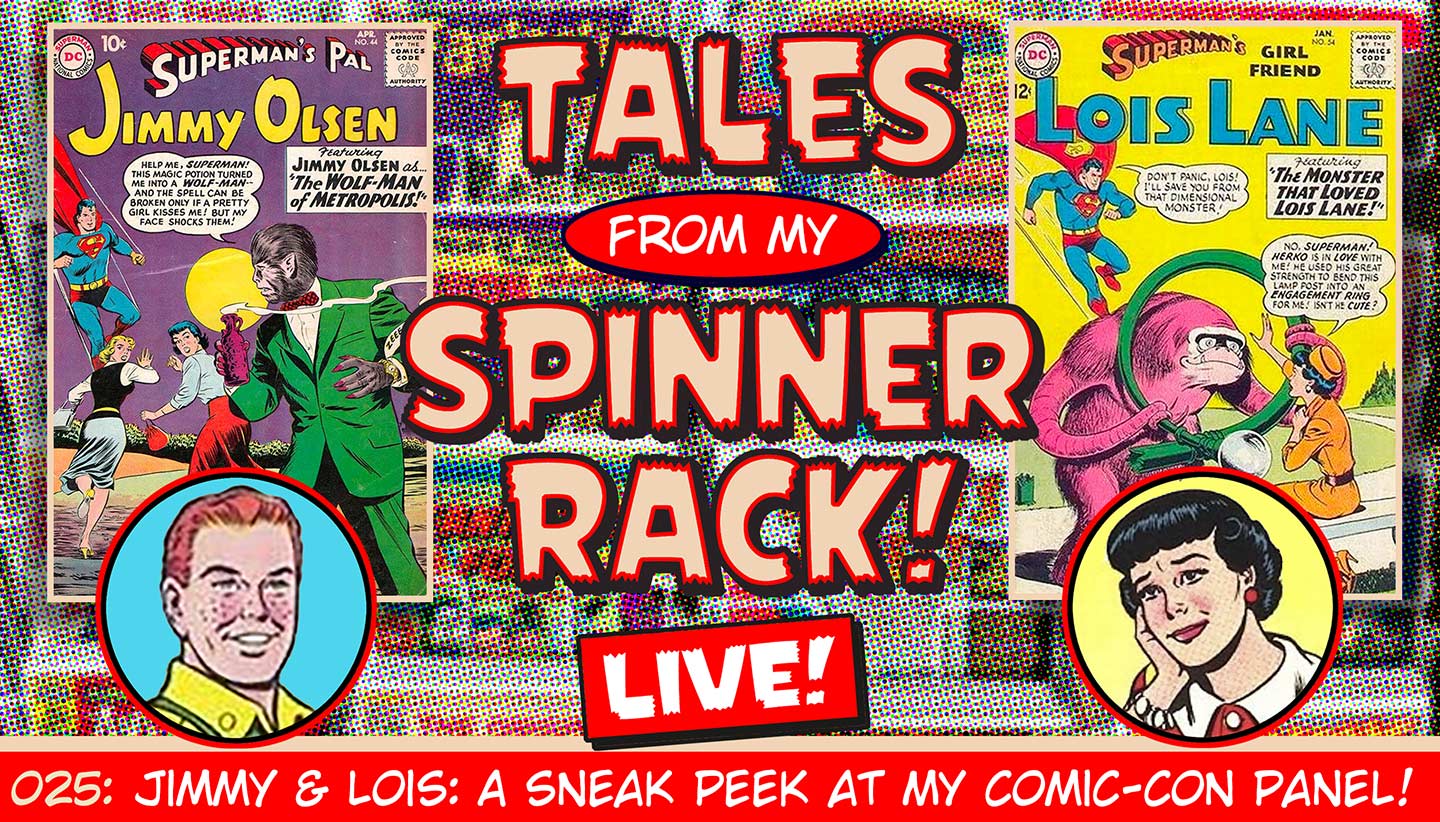
Next time: IT’S PANEL TIME! (Which is just like Hammer Time, but I don’t wear the baggy pants or dance funny.) If you’re attending Comic-Con on Friday, July 21, please come see my panel, “Tales from My Spinner Rack LIVE!” at 2:00 PM in Room 29AB. The topic is the heart-warming and nostalgic “Jimmy & Lois: Still Crazy After All These Years!” Tune in next week for a sneak peek!
To read all the “Tales from My Spinner Rack” posts, click here!

instagram.com/talesfrommyspinnerrack/
 @innocent-bystander.com