

Continuing our look back at Comic-Con 15 years ago, when the organization still utilized printed promotional magazines as the main form of communication with their attendees.
Click on the images below to see them larger on your screen!
Art & Photos © Respective Copyright Holders.
Comic-Con and the Comic-Con logo are registered trademarks of San Diego Comic Convention.

At the end of 2007, I had three issues of Update magazine under my belt (click here to read Countdown Part 1), but I wanted to upgrade the comics-sized magazine. At that point in time, Comic-Con was printing 250,000 copies of their mail-distributed (plus placed in comics shops by Diamond) magazines three times a year: Winter (Ferbruary), Spring (May), and (Fall) October. I pitched a new, standard magazine-sized publication called Comic-Con Magazine, and lo and behold, my boss went for it. “I always wanted to do a magazine,” she said (evidently she didn’t consider Update to be such). I wanted to do more exclusive content, in addition to the promotional stuff for all three shows: Comic-Con, WonderCon, and APE, the Alternative Press Expo. The chief purpose of these publications was to get the word out about those events, and generate excitement and interest. For the newly-formatted magazine, I did more interviews with guests (issue #1 for 2008 featured one with Comic-Con special guest Bryan Hitch, who was drawing a much-ballyhooed version of the Fantastic Four for Marvel, written by current “it” writer Mark Millar), and an interview with Israeli comics creator Ruta Modan (Exit Wounds), who was also scheduled to be a special guest at Comic-Con 2008. I also added some review columns, utilizing both pros and Comic-Con staffers to talk about what they were reading and watching, and a feature that showcased some of the many volunteers at the show. An upfront section called “CONnotations” showcased news about the upcoming events and other features. Finally, I wanted there to be more comics history in this magazine, which helped fulfill Comic-Con’s mission statement, “dedicated to creating awareness of, and appreciation for, comics and related popular art forms …”, so I started a series called “Comics History 101.”
While there was still a “Multi-purpose Form” for people to use to register for badges for Comic-Con 2009 (at least in the Fall 2008 issue for, which urged attendees to “Save time! Register Online!), more and more of those operations—including hotel reservations—were slowly switching to online. (In the meantime, in 2008, you could still attend Comic-Con and opt to stand in line all day to register for badges for Comic-Con 2009, if that was your idea of a good time.) I believe that 2008 was the first year Comic-Con completely sold out; there may have still been badges available for walk-up purchase at the door, but that was most likely the final year for that. (My standard response to people who STILL complain about this by saying, “I remember when you could just walk up to the ticket office and buy a badge on a Saturday!” is “And I remember when gas was 35 cents a gallon.”)
Here’s some excerpts from the first three issues of Comic-Con Magazine, all published in 2008. Most of this material hasn’t been seen since it first appeared. No one is reprinting it, and while some of it is, of course, dated, it still offers a fascinating view of what Comic-Con—and comics and pop culture—was like 15 years ago.
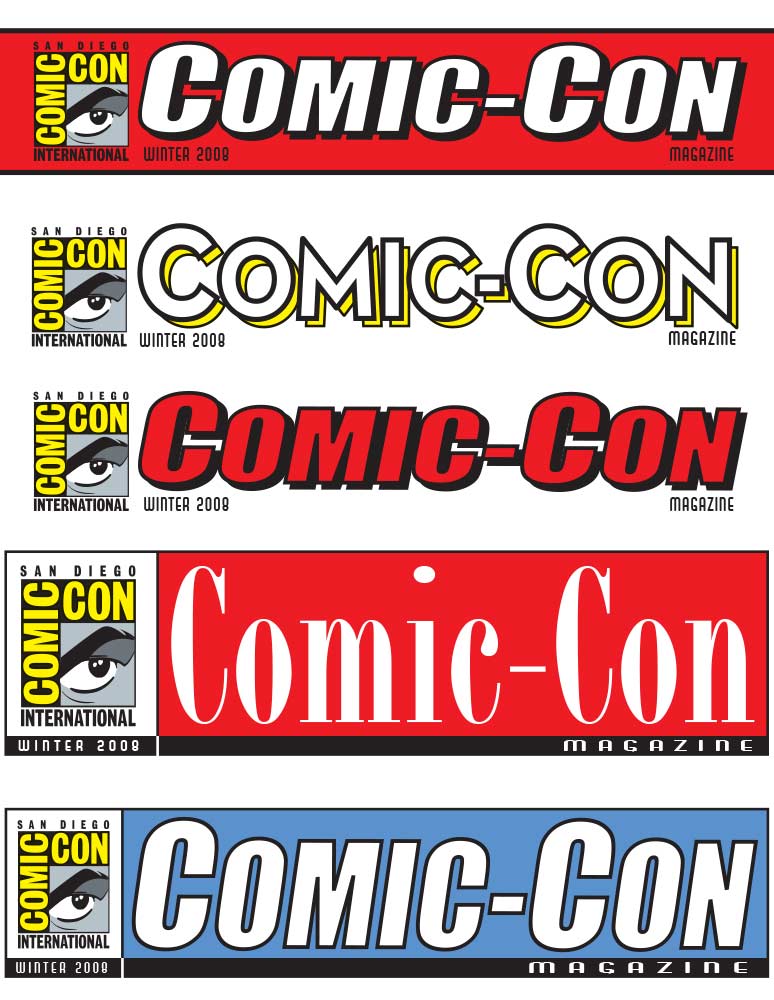
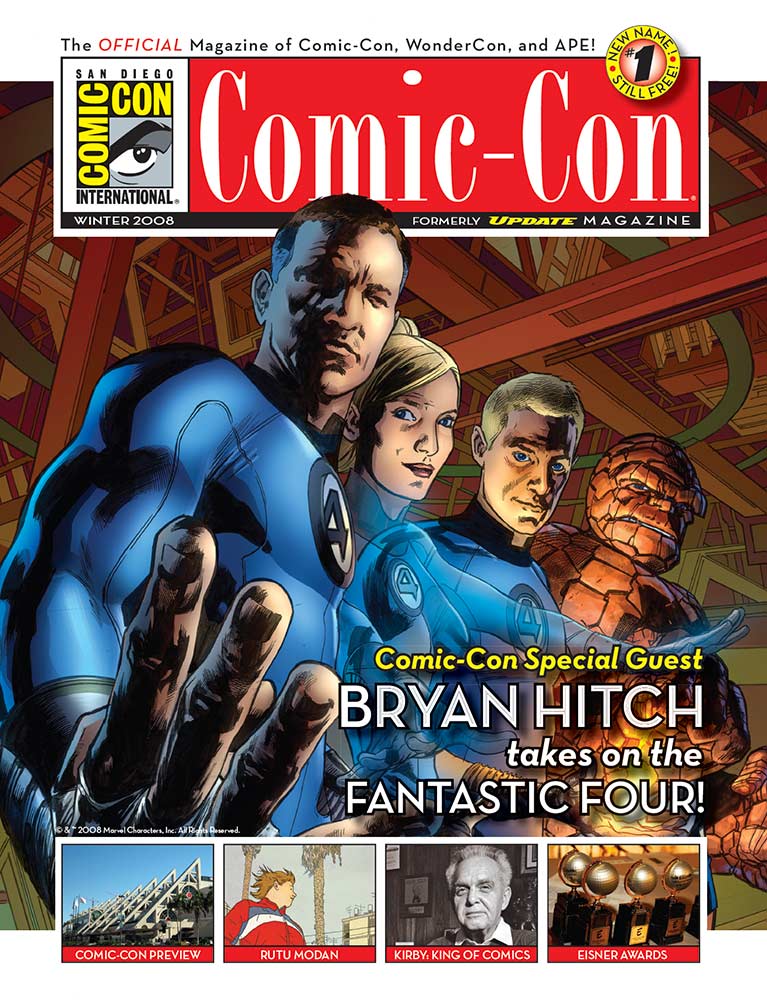


Comic-Con Magazine went through an extended birthing process. Here are the designs for the cover title, and the first cover. I wanted something reminiscent of a comic book or strip on the cover, hence the little boxes across the bottom. This kind of ended after the first two issues, but I still like it and wish I had continued doing it. The third image (lower left) is of the new “CONnotations” feature, which showcased the still-new novelty of Comic-Con’s Icon Award being given out on a cable TV channel (the long-gone and barely remembered Spike TV channel) as part of their annual Scream Awards show, in addition to info about the upcoming APE show, and other pertinent tidbits. The page on the lower right is the beginning of the section on Comic-Con 2008, which included interviews with some show attendees, the anniversary celebrations for programming and the Souvenir Book, the first announcement of 2008’s special guests, and another new feature, “Comic-Con A to Z,” which offered a comprehensive look at everything we knew about the show up to that point. It would include much more detail in the Spring 2008 issue.
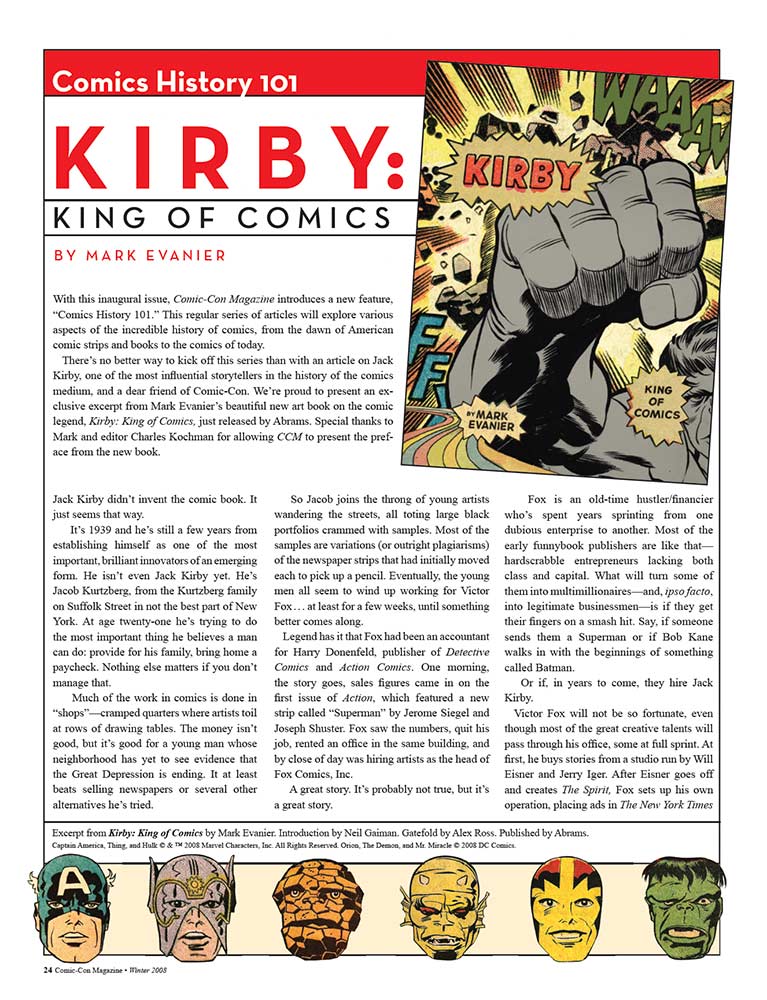
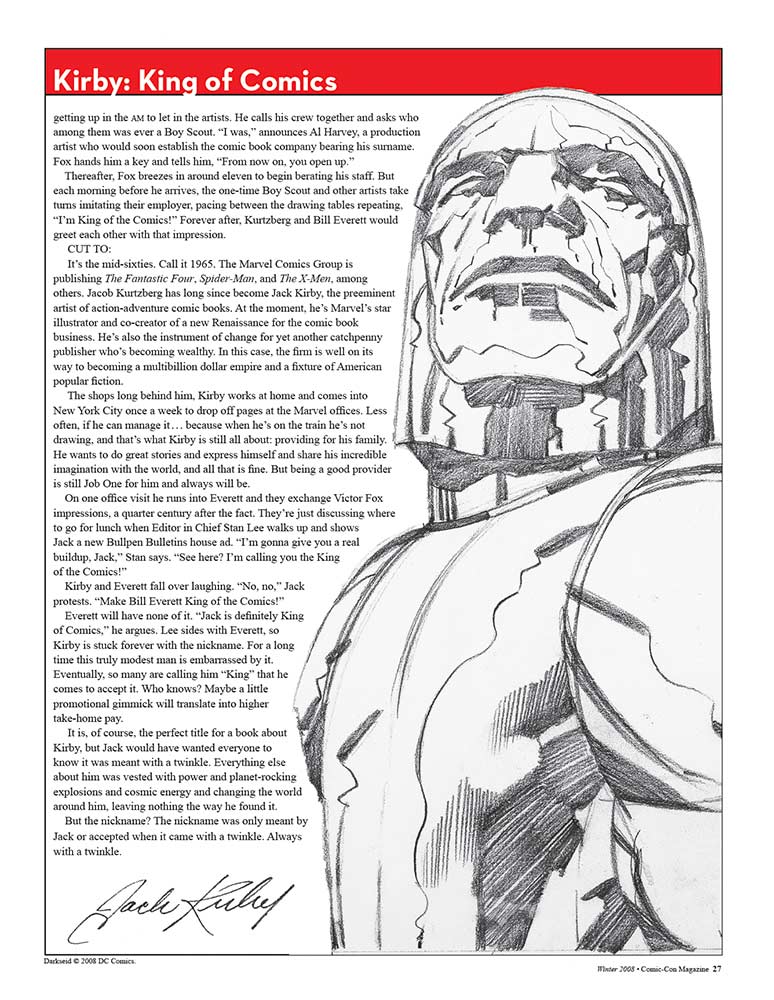
The first comics history article in CCM happened to be about Mark Evanier’s new book, Kirby: King of Comics, which was about to be published (as I recall, it debuted at WonderCon that year, which was in San Francisco on February 22-24). This was an excerpt from the book, published by Abrams, and its shown here in its entirety. Kirby was an integral part of Comic-Con from its inception until his death, and Mark Evanier continues to be a fixture at the show, hosting numerous panels. The book remains the definitive biography about comics’ most influential creator, and a great visual record of his career.


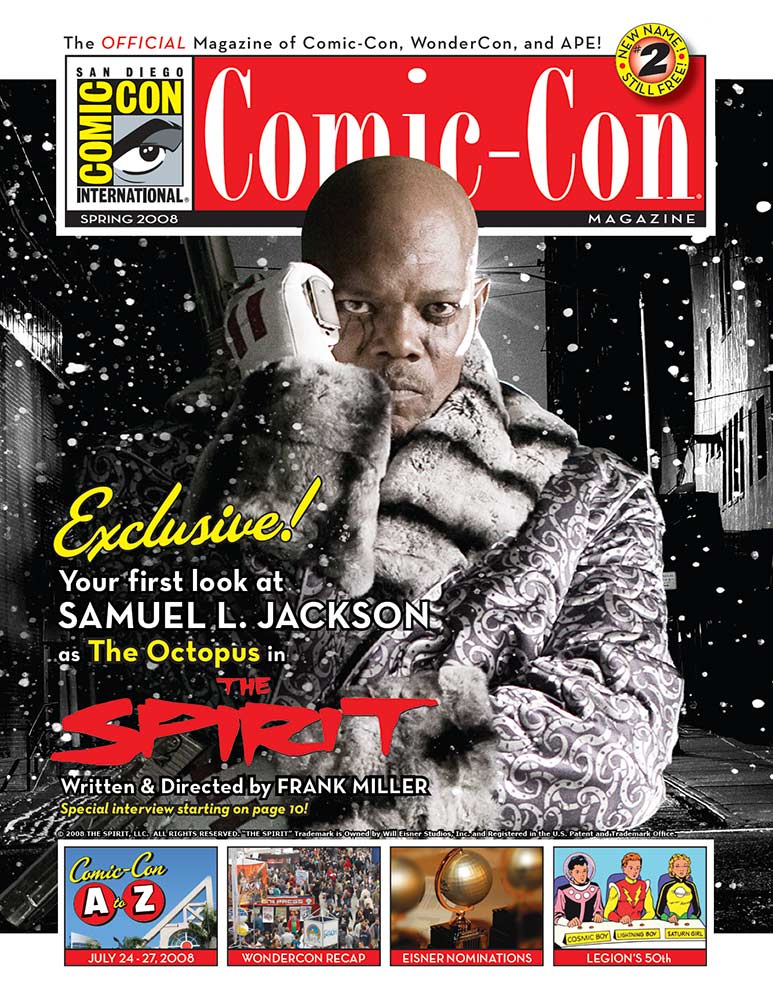
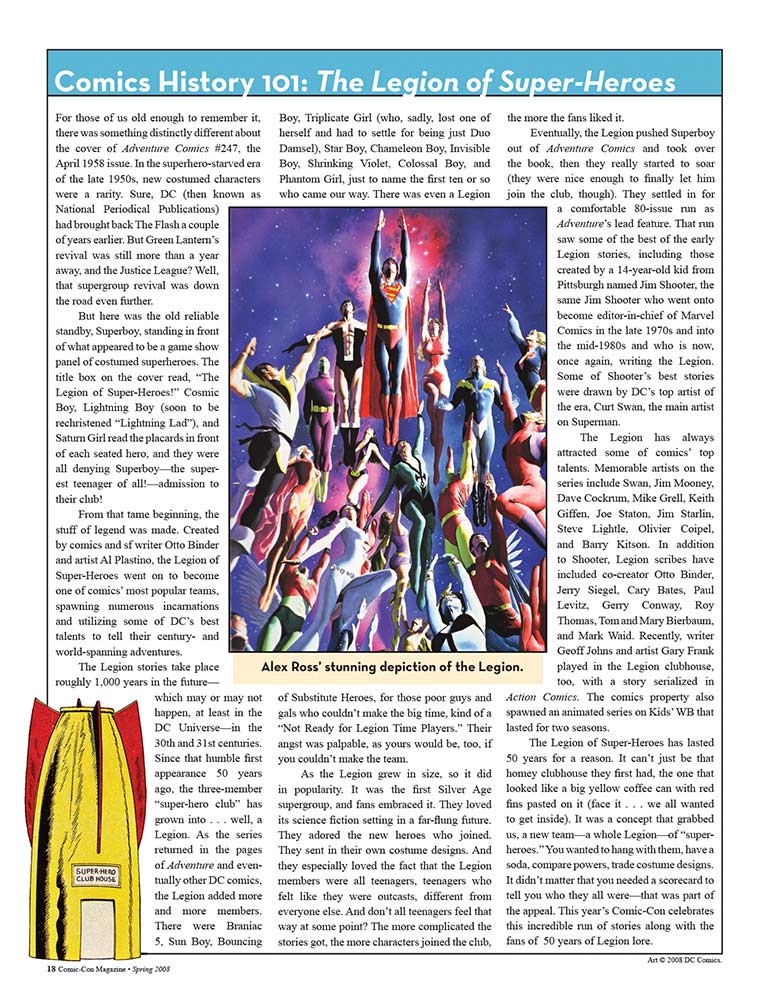
Comic-Con Magazine #2 premiered in May of 2008, with—what we were told—was an “exclusive” cover photo featuring Samuel L. Jackson as The Octopus in Frank Miller’s upcoming movie based on Will Eisner’s The Spirit (the photo appeared elsewhere before we published, so, so much for an exclusive). I interviewed Miller at the offices of Odd Lot Entertainment, the film’s producers, in Culver City for this cover story. Expectations were high for this movie, but the less said about it, the better, I suppose, but Frank was cordial and very forthcoming on his directorial debut. I wrote a couple of historical pieces on Spirit creator Will Eisner for this issue, including one on his appearances at Comic-Con (I did a similar one-page feature on Jack Kirby in issue #1). I also wrote a “Comics History 101” feature on DC Comics’ Legion of Super-Heroes, which was celebrating its 50th anniversary in 2008.

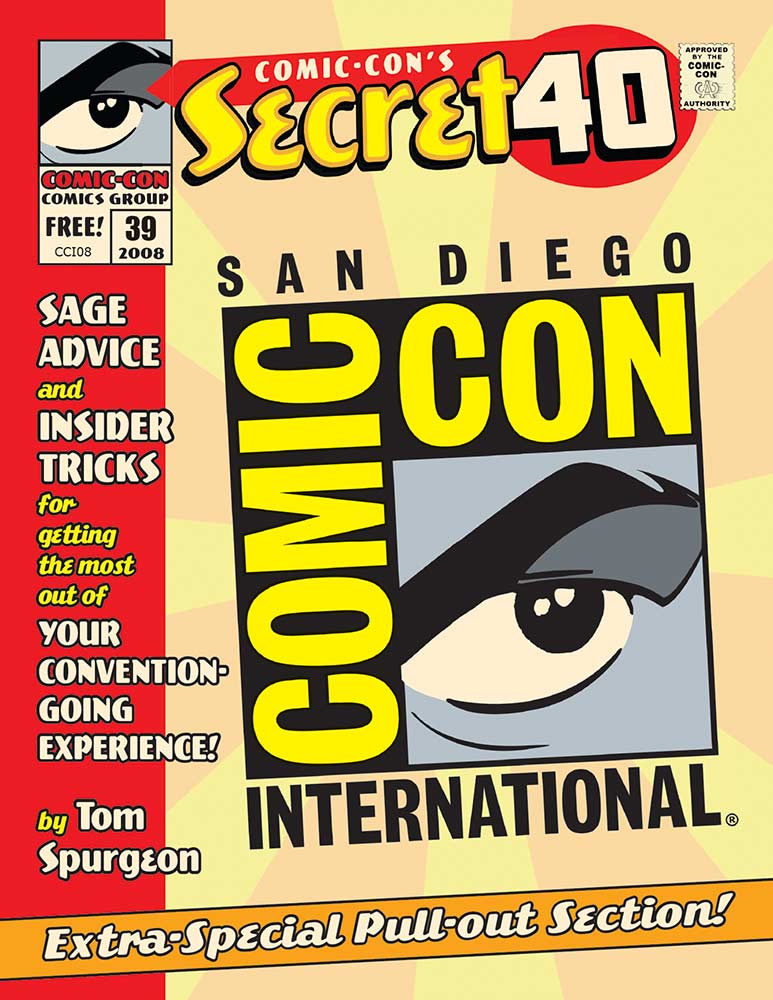
I liked doing pullout sections in the magazine and for this issue, appearing just two short months before Comic-Con, I asked the late Tom Spurgeon if he’d compile his top 40 (!) tips for attending Comic-Con. Tom, who was known as a journalist, editor (The Comics Journal), author (books on Stan Lee, the Romitas, and the history of The Comics Journal), and a comics historian who had his own website (The Comics Reporter; click here to read about Tom who passed away in 2019). Tom was someone I turned to a number of times to write for the Comic-Con Souvenir Book. I thought he did an excellent job on this four-page pullout section and it holds up, even 15 years later, with sound advice for the attendee, so here it is in its entirety.


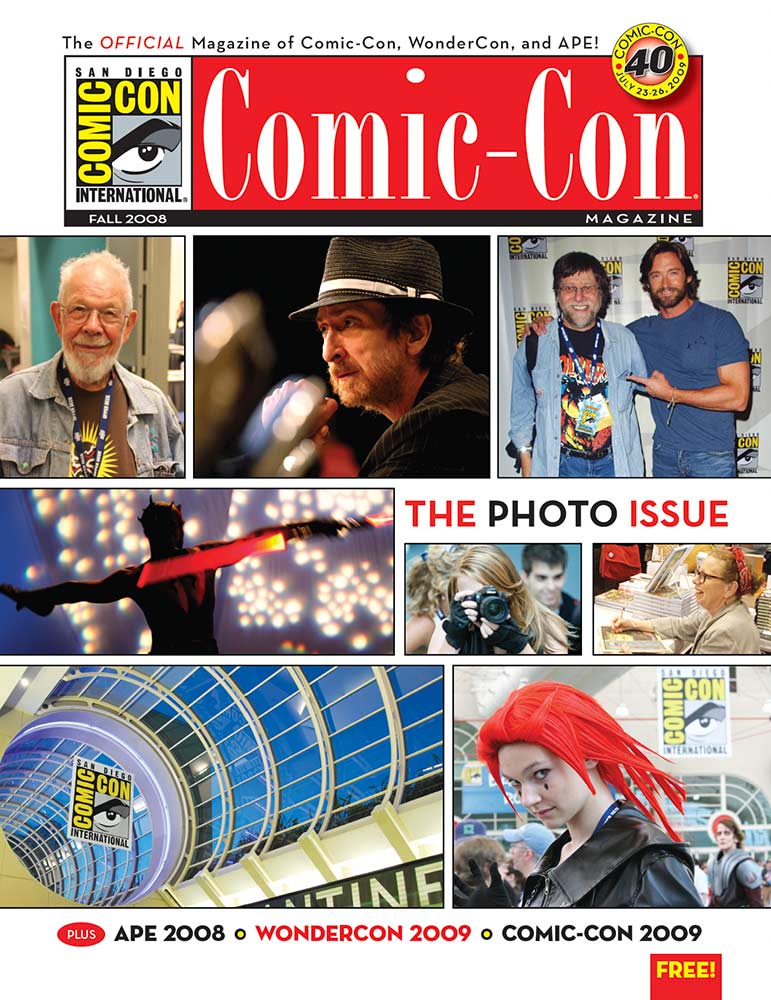
Comic-Con Magazine #3 debuted in the fall of 2008, and was the big recap issue. I took it upon myself to try and cram as many photos as possible into this issue (over 160 including the cover and 28 interior pages). Comic-Con utilized a great team of volunteer photographers (they still do), who chronicle the show each year. Here’s a look at the fabled Comic-Con Exhibit Hall circa 2008 and some other parts of the show, including coverage of the comics-related guests and Inkpot Award winners that year, and what was hot in Movie and Television programming.
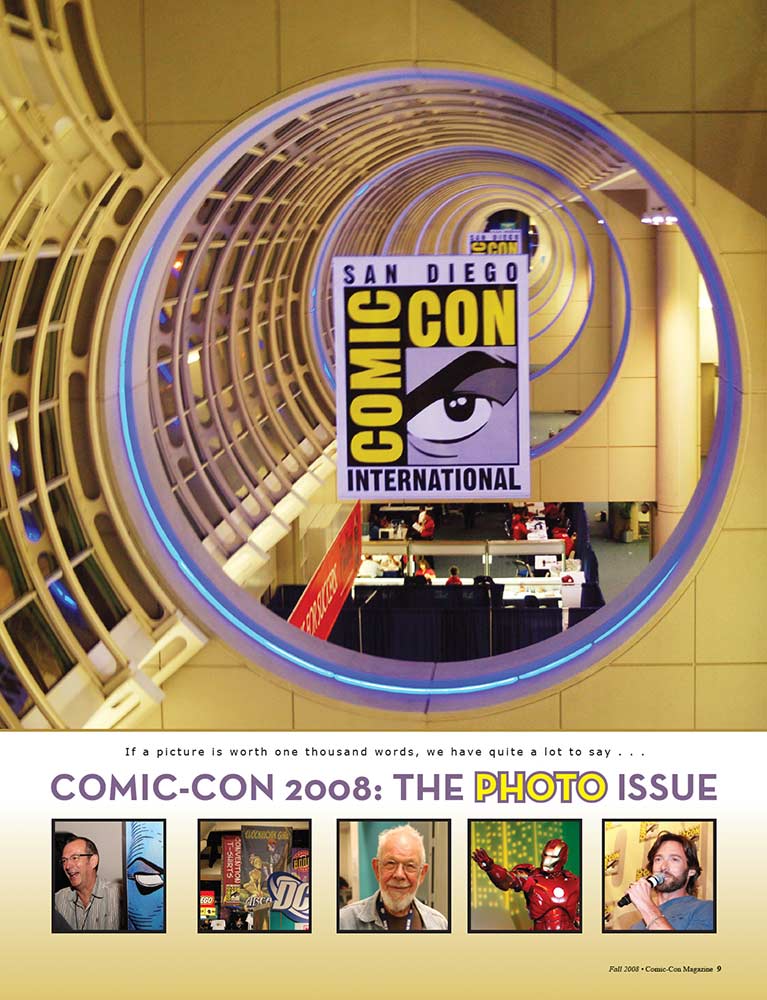
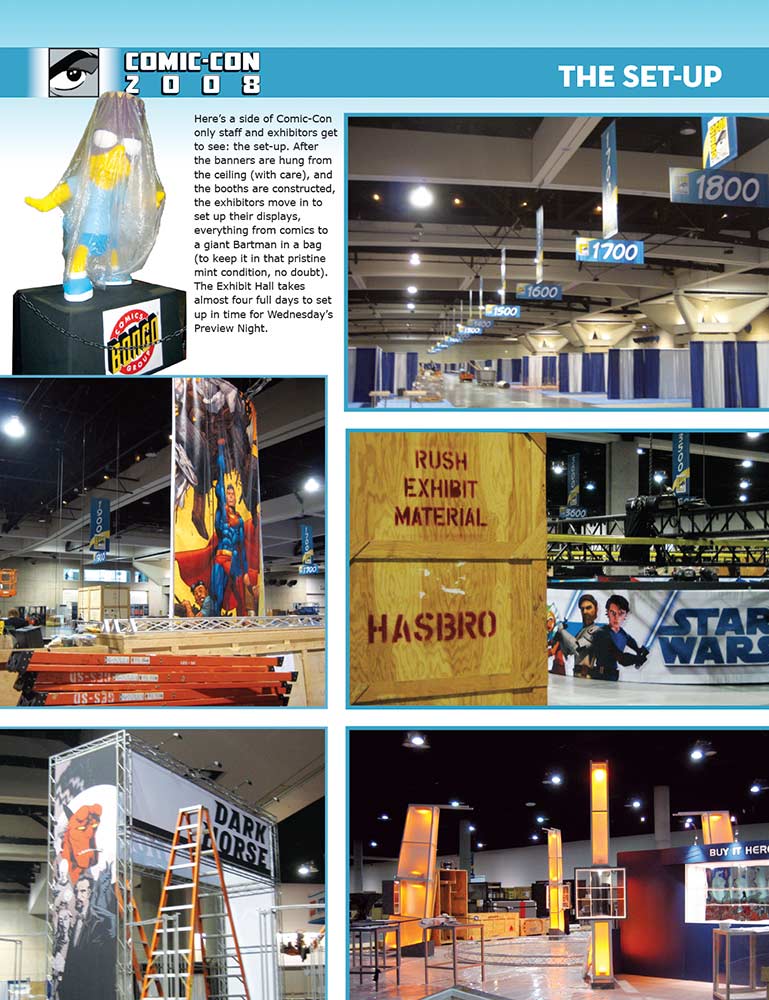
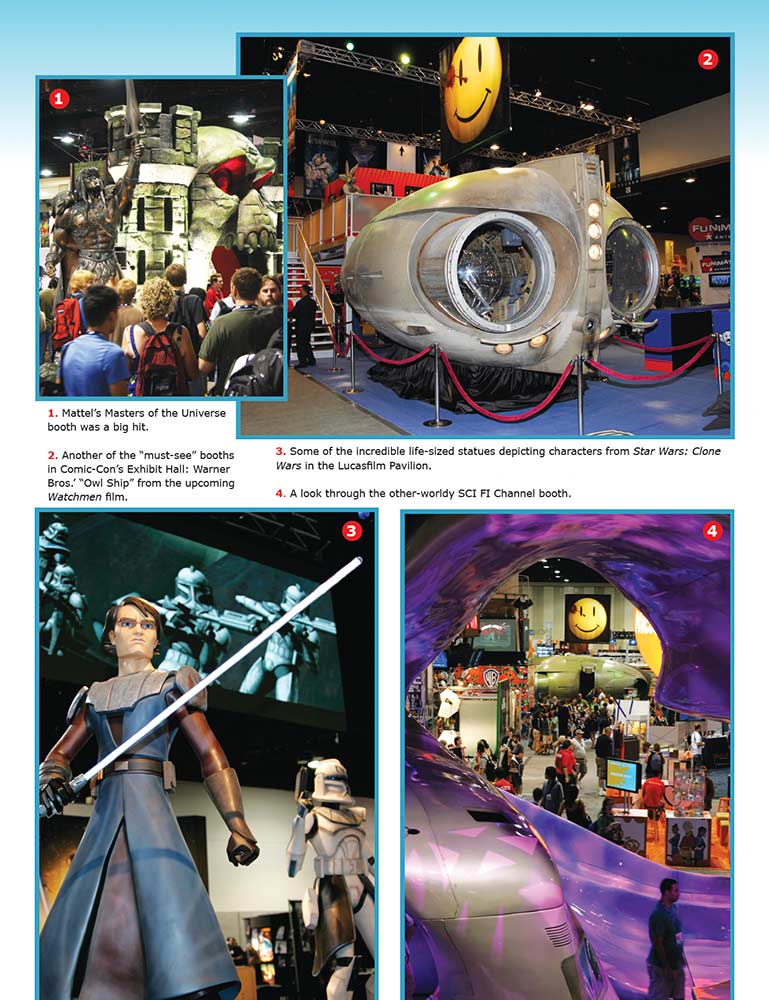

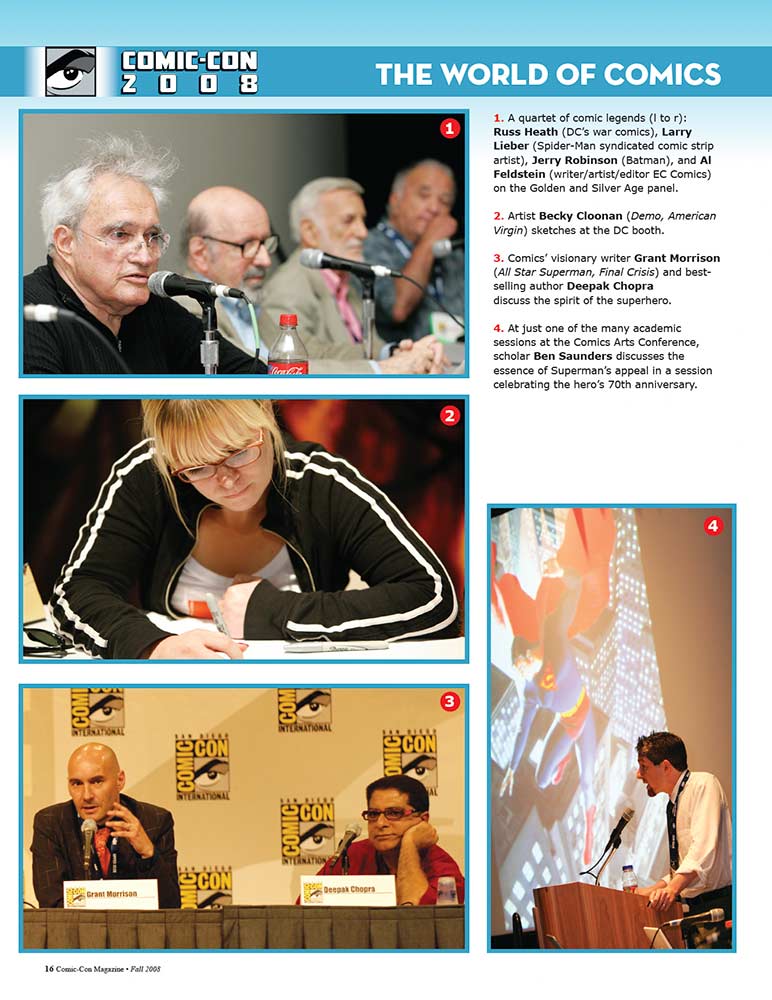
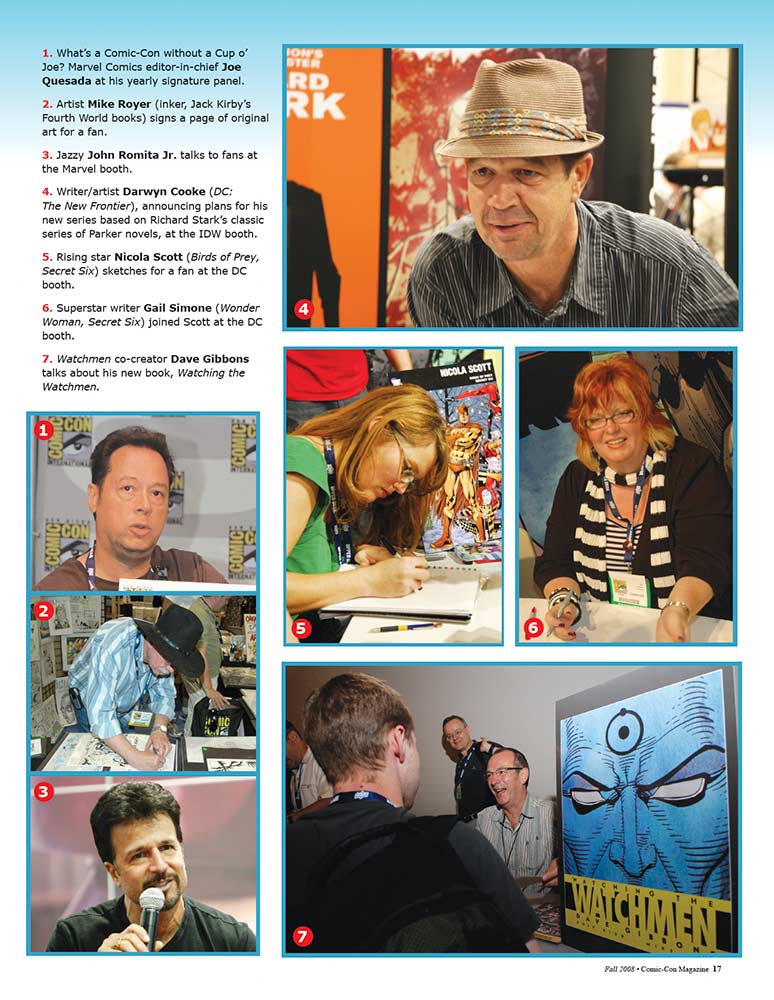

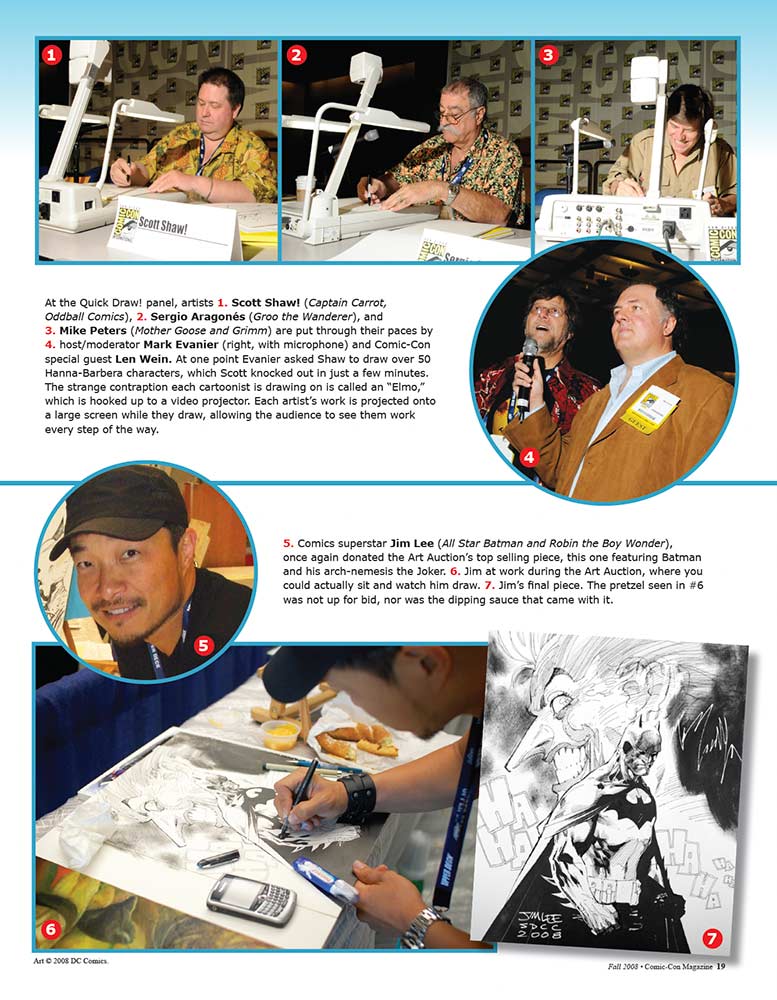

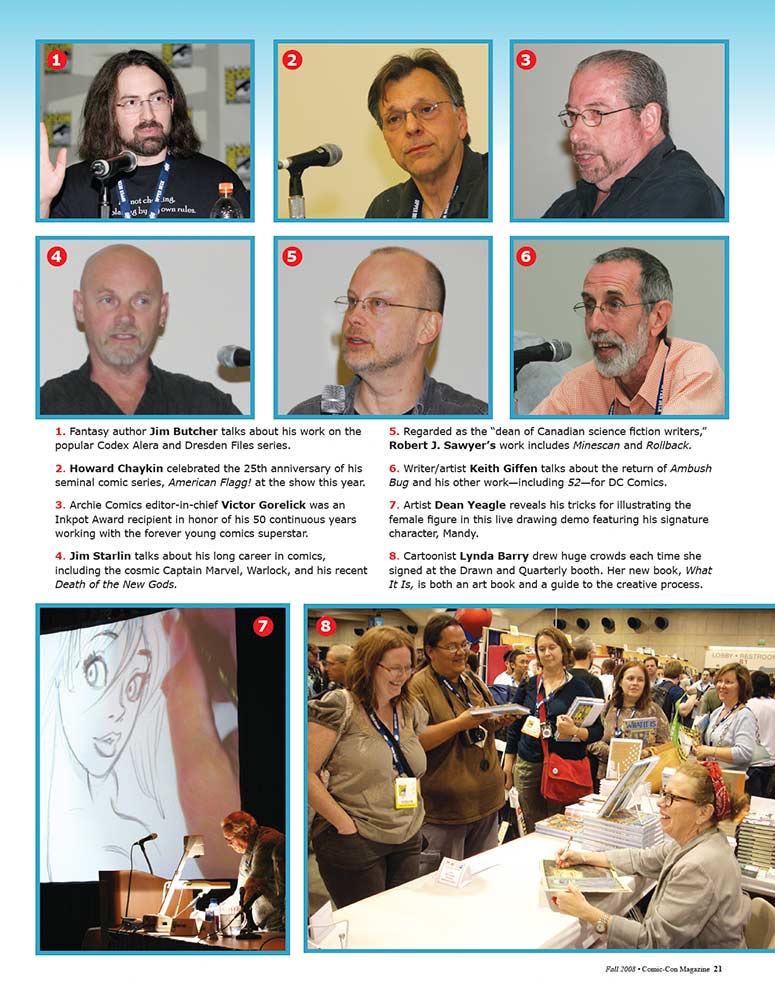


Photos on photo album pages © 2023 SDCC.
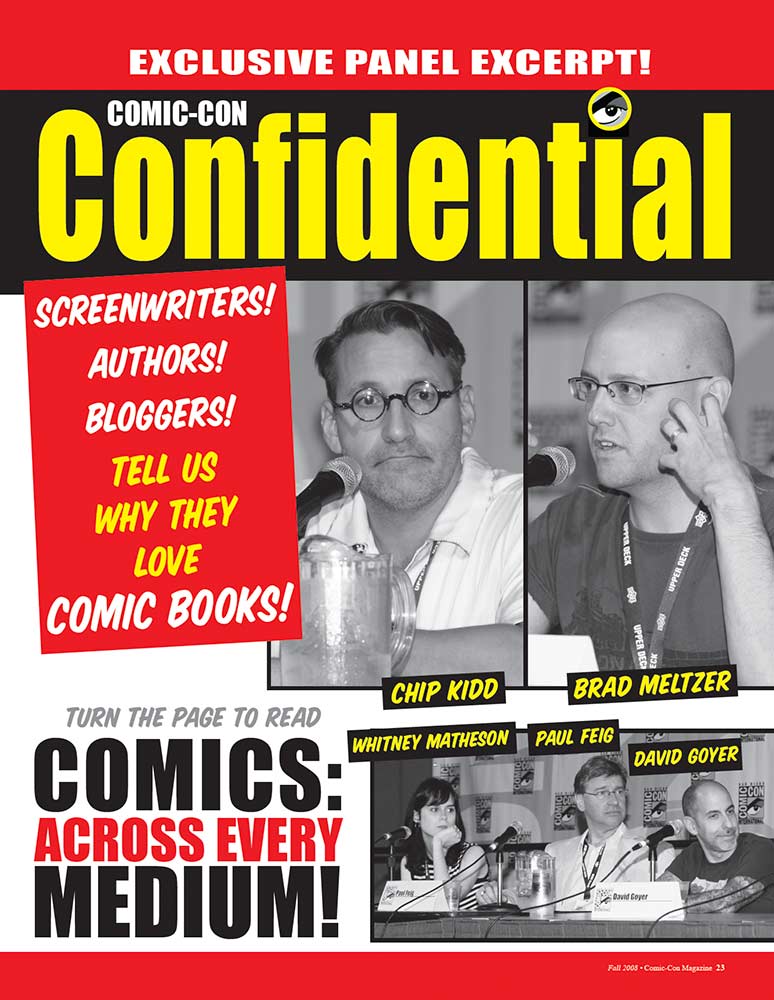
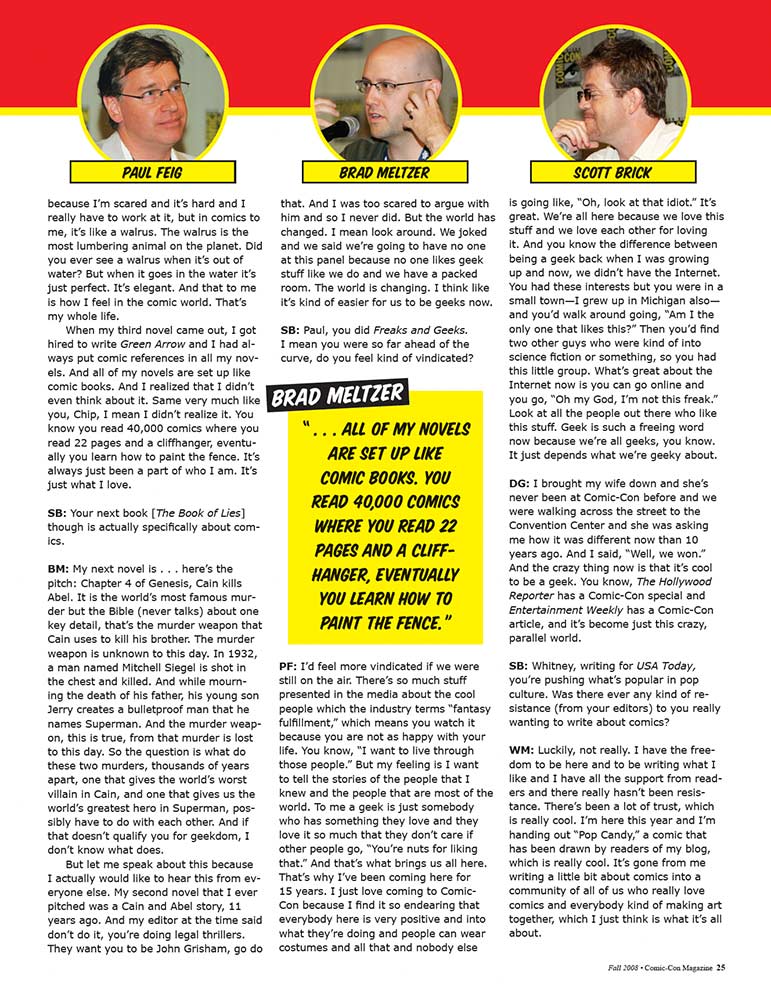
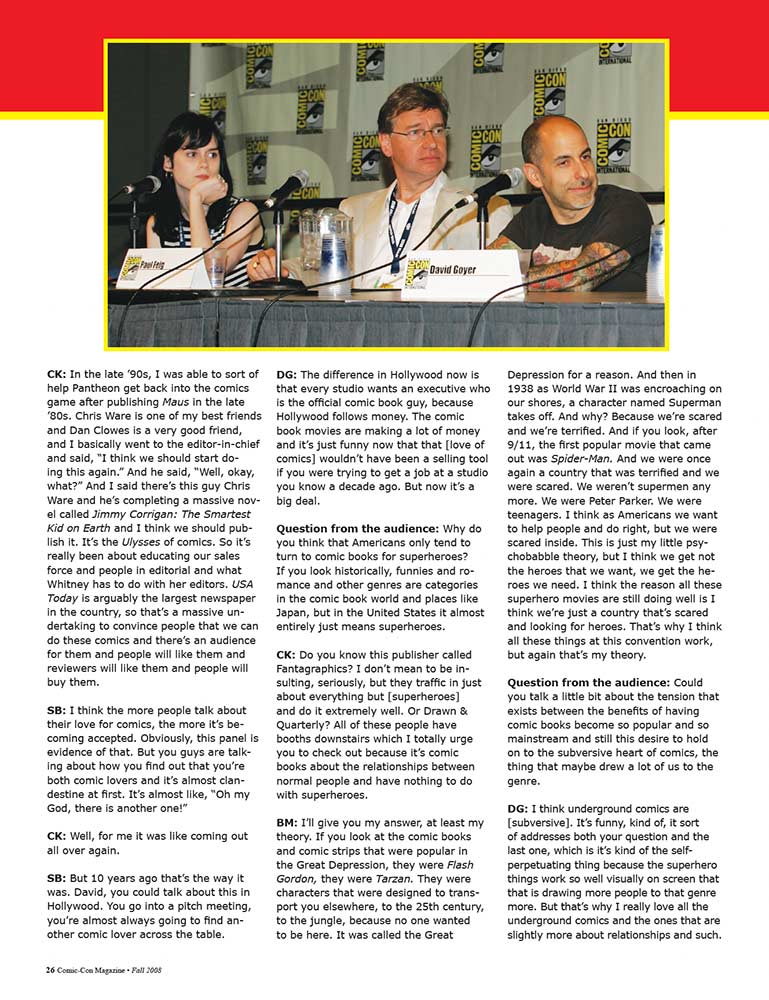
One of my favorite panels at Comic-Con 2008 was “Comics: Across Every Medium.” Author and comics writer Brad Meltzer pitched this idea to the programming department, and it featured a number of people from different media who love comics, including Meltzer, book designer and author Chip Kidd, blogger Whitney Matheson, screenwriter and director Paul Feig, screenwriter David S. Goyer, and moderator Scott Brick, who was an award-winning audio book narrator. It was an affectionate look at comics by people who loved them, and I included as much of the panel’s transcript as possible, using a 1950s-style Confidential magazine cover to start off the five page article. It’s reproduced here in its entirety, too.


Next time: We look at Comic-Con Magazine in 2009 and 2010 as the event’s mailed magazines start to wind down and the internet rears its ugly head.
 @innocent-bystander.com
Leave a comment